



India Updates BIS Requirements for LED Lamps Standard 2026
5. March 2026India has introduced a regulatory update for the BIS certification for LED lamps, following the publication of the revised safety standard IS 16102 (Part 1): 2026. The Bureau of Indian Standards (BIS) has issued official implementation guidelines requiring manufacturers of self-ballasted LED lamps to transition from the previous 2012 version of the standard to the newly revised requirements.
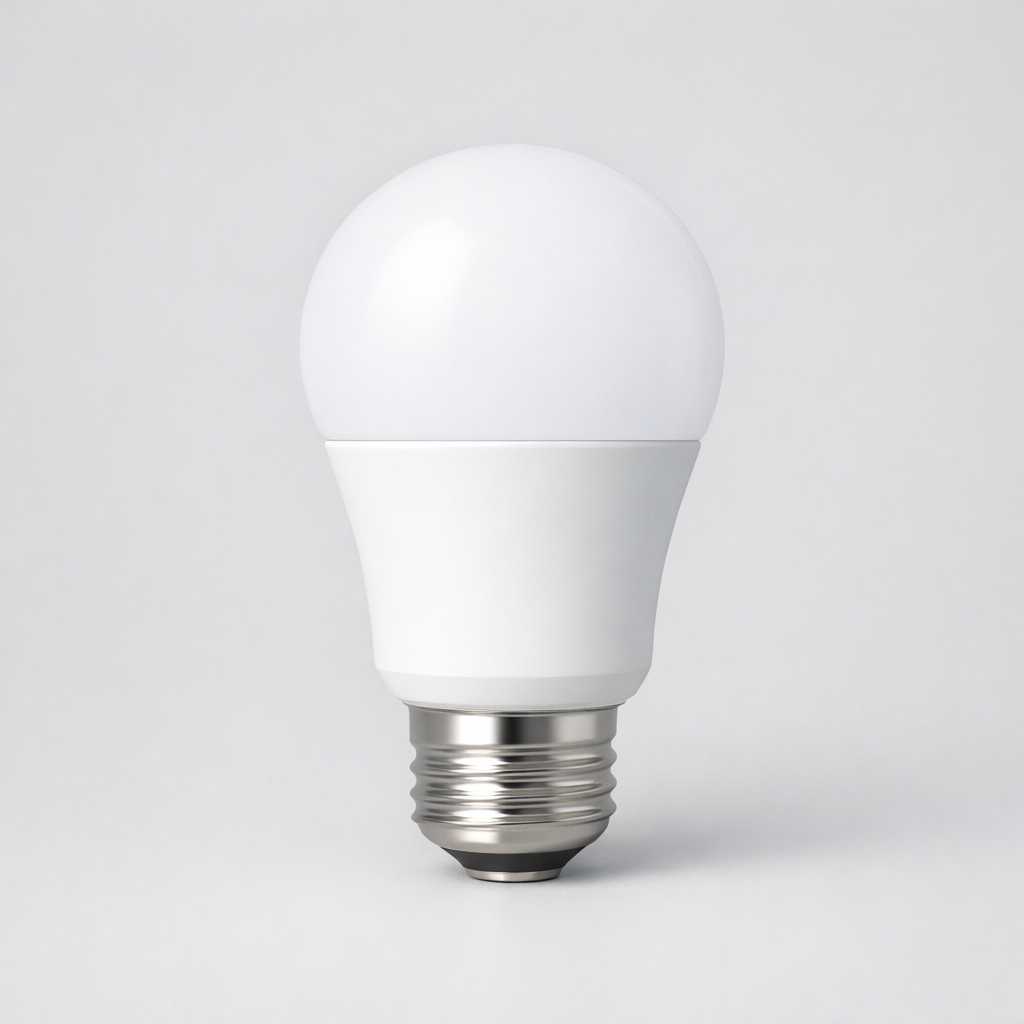
According to the announcement released on 24 February 2026, the earlier IS 16102 (Part 1): 2012 standard will remain valid only for a limited transition period. The previous version will be formally withdrawn after 2 August 2026, after which compliance with IS 16102 (Part 1): 2026 will become mandatory for all applicable products. The implementation guideline took effect immediately, giving manufacturers a defined timeline to update testing, documentation, and certification activities. Self-ballasted LED lamps usually require BIS certification in order to be approved for import and sale in India.
Key Technical Updates in the Revised Standard
The updated IS 16102 (Part 1): 2026 introduces several new technical requirements and expands the scope of products covered by the standard. One of the notable changes is the extension of the rated input power range for LED lamps from 35 W to 60 W, broadening the applicability of the regulation.
Additional safety provisions have also been introduced. The revised standard now requires photo-biological safety testing and corresponding product markings. New testing provisions address abnormal operating conditions and revise fault condition testing requirements to enhance product safety evaluation.
The standard also introduces ingress protection (IP) testing requirements and adds specific labeling obligations for lamps that are not suitable for water contact. Furthermore, LED lamps equipped with non-removable rechargeable batteries are now explicitly included in the scope of the regulation.
Mechanical safety testing has also been strengthened. For example, the revised standard introduces testing requirements for the axial strength of Edison caps to verify mechanical integrity under specified conditions.
Compliance Timeline and Impact on Manufacturers
Manufacturers holding existing BIS licenses must transition their products to the revised standard before the deadline of 2 August 2026. As part of the transition process, license holders are required to submit complete test reports for lead models based on the new standard and provide an undertaking confirming that all series models comply with IS 16102 (Part 1): 2026.
Failure to complete the transition within the specified timeframe may result in regulatory consequences. BIS may cancel the existing license or remove non-compliant models from the scope of the certification.
For new certification applications, products already undergoing testing may continue under the 2012 version of the standard during the transition phase. However, applicants must submit a declaration confirming their intention to adopt the revised requirements before the deadline. After 2 August 2026, BIS will no longer grant new licenses based on the previous standard.
Manufacturers planning changes to the scope of an existing license should also consider the transition timeline, as applications under the earlier standard will only be accepted until the license is updated to the revised requirements or until the implementation deadline is reached. Early preparation, including updated testing and documentation, can help ensure continued market access and uninterrupted certification status in India.
If you are interested in understanding what requirements are needed for your product to be imported into India, please do not hesitate to contact us by email or phone (Europe: +49-69-271 37 69 261, US: +1 773 654-2673). If a certification need is discovered we can provide a quotation to make sure that all your certification needs are covered.
If you have any questions you can also use our chat-window in the bottom right. (Please check your browser settings if you can’t see the window)
For more information about BIS certification, please refer to our free brochure “BIS Certification Made Easy“.