



BIS (ISI) Certification for Electrical Household and Building Technology Appliances in India
2. April 2026Certain electrical appliances used in household infrastructure and building technology are subject to mandatory BIS (ISI) certification in India. The requirements are defined by the Bureau of Indian Standards (BIS) and ensure that electrical products comply with applicable Indian safety, quality, and performance standards.
For many appliances in this category, certification is based on the Indian Standard IS 302 (Part 1):2024, which is aligned with the international standard IEC 60335-1:2020 for the safety of household and similar electrical appliances.
Manufacturers intending to sell, install, or import these products in India must obtain BIS certification under the ISI Scheme. The certification confirms compliance with the relevant Indian Standards and generally includes product testing in BIS-recognized laboratories and factory inspections conducted by BIS authorities.
BIS (ISI) Certification under IS 302 (Part 1):2024 / IEC 60335-1:2020 – Safety of Electrical Appliances for Building and Infrastructure Applications
The standard IS 302 (Part 1):2024, harmonized with IEC 60335-1:2020, establishes general safety requirements for electrical appliances used in household and similar environments. This includes appliances with permanent installation, infrastructure-related functions, or building technology applications.
The standard addresses essential safety aspects such as:
- protection against electric shock
- mechanical safety and structural integrity
- temperature limits and overheating protection
- fire hazards and insulation requirements
- safe operation under normal and abnormal conditions
Manufacturers of appliances within the scope of this standard must obtain BIS certification under the ISI Scheme. Compliance is verified through product testing according to the applicable standard and an inspection of the manufacturing facility conducted by BIS.
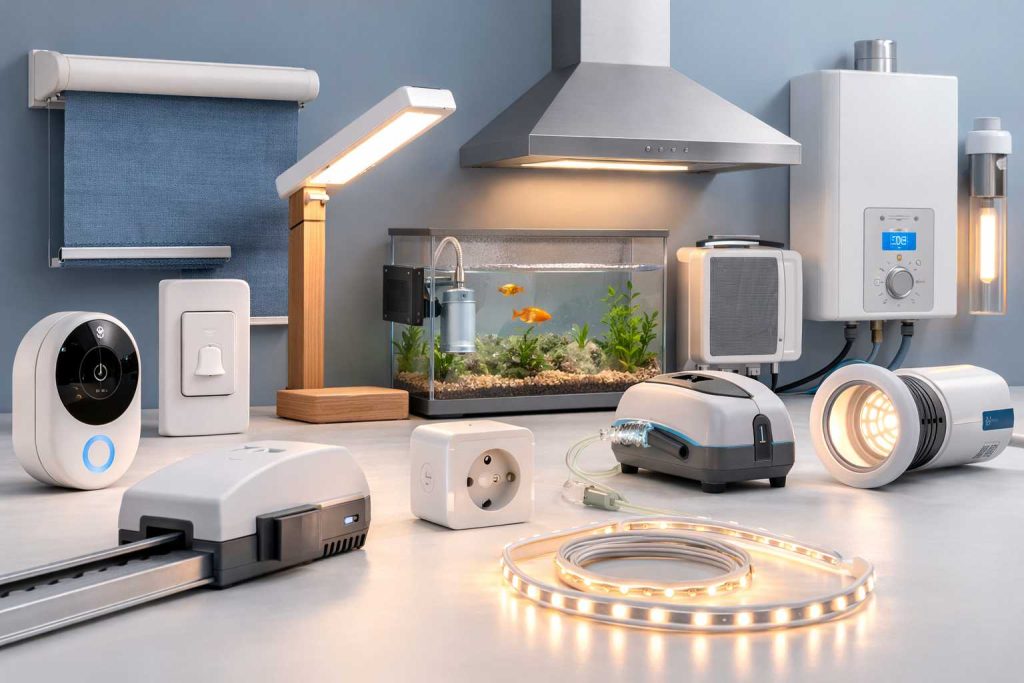
Products typically covered include:
- drives for vertically moving garage doors
- electric call bells and buzzers
- furniture with electrically motorized parts
- commercial electric hoods
- gas, oil, or solid-fuel appliances with electrical connections
- electrical appliances for aquariums and garden ponds
- commercial rinsing sinks
- and further electrical appliances with building infrastructure or fixed installation functions.
Depending on the product type, manufacturers may also need to comply with additional product-specific standards within the IS 302 / IEC 60335 series.
Is BIS Certification Mandatory for Electrical Building Technology Appliances in India?
If electrical appliances for household infrastructure or building technology fall under mandatory BIS certification requirements notified by the Indian government, manufacturers must obtain BIS certification before these products can be sold, installed, imported, or distributed in India.
Certified products must bear the ISI mark, which confirms compliance with the applicable Indian Standard and BIS safety requirements.
These requirements apply to both domestic manufacturers and foreign manufacturers exporting electrical appliances to India.
What Is the BIS (ISI) Certification Procedure?
The BIS ISI certification process for electrical household and building technology appliances generally includes the following steps:
- Identification of the applicable Indian Standard (IS)
- Preparation and submission of the BIS certification application
- Product testing in a BIS-recognized laboratory
- Factory inspection conducted by BIS officials to verify manufacturing and quality control processes
- Evaluation of the test reports and inspection findings
- Issuance of the BIS license authorizing the use of the ISI mark
Manufacturers must maintain ongoing quality assurance and compliance procedures after certification.
How Long Does BIS Certification for Building Technology Appliances Take?
The duration of the BIS certification process in India depends on several factors, including:
- complexity of the appliance
- duration of laboratory testing
- completeness of technical documentation
- scheduling of factory inspections
- BIS review and approval timelines
In practice, obtaining a BIS license may take several months.
MPR International GmbH – BIS (ISI) Certification Service for Electrical Household and Building Technology Appliances
MPR International GmbH supports manufacturers in obtaining BIS certification for electrical household and building technology appliances for the Indian market.
As a specialized certification service provider, MPR offers comprehensive support throughout the BIS ISI certification process, including:
- regulatory analysis of applicable Indian Standards for electrical appliances and building technology
- identification of relevant BIS certification requirements
- coordination of product testing with BIS-recognized laboratories
- review and preparation of technical documentation
- coordination of BIS factory inspections
- end-to-end support during the BIS license application process
With extensive expertise in BIS certification India, BIS registration, ISI certification, Indian Standards compliance, and regulatory market access for India, MPR International GmbH assists manufacturers in efficiently obtaining certification and achieving market access in India.