



BIS (ISI) Certification for Hand Tools in India
16. March 2026Certain hand tools are subject to mandatory BIS (ISI) certification in India. The requirements are defined by the Bureau of Indian Standards (BIS) and ensure that tools comply with established Indian Standards for safety, mechanical strength, durability, and performance.
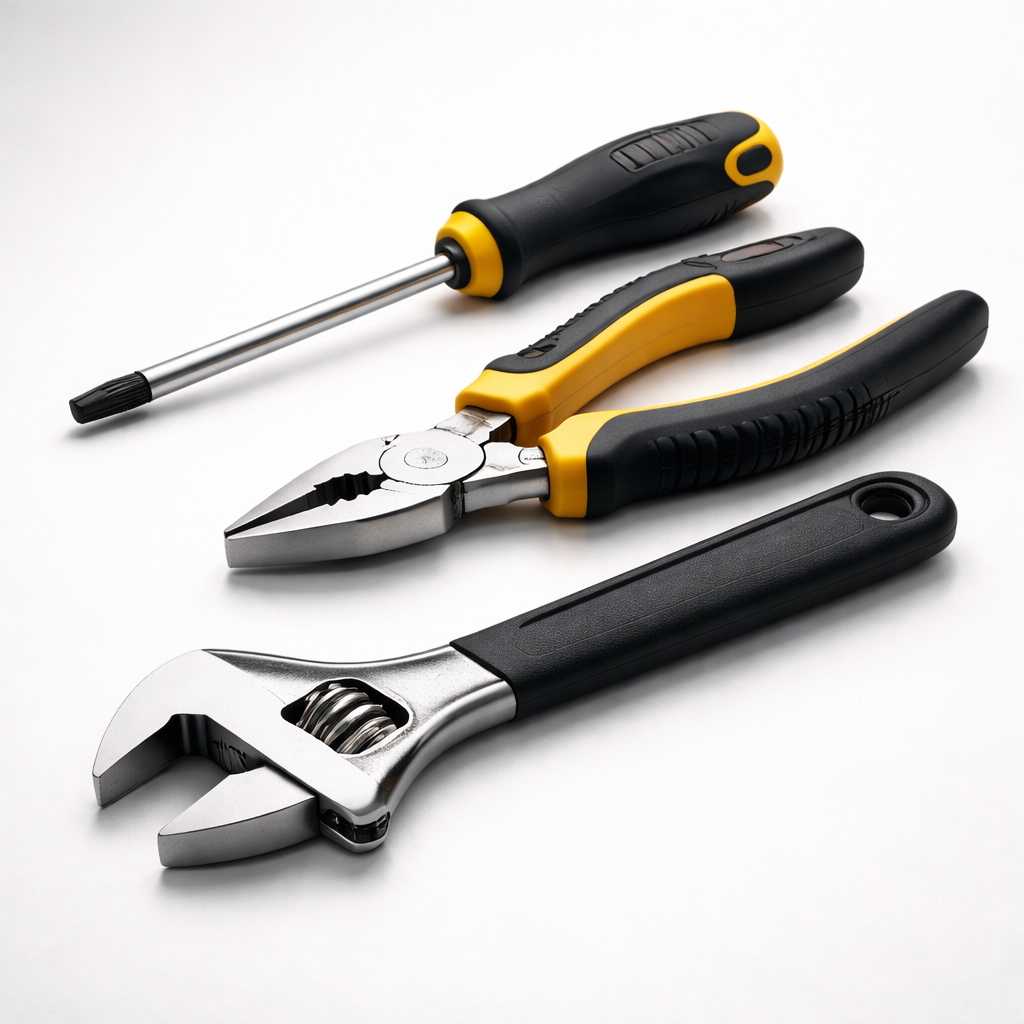
Manufacturers that intend to sell or export regulated hand tools to the Indian market must obtain BIS certification under the ISI Scheme. The certification confirms that the products meet the applicable Indian Standards (IS) and typically involves product testing in BIS-recognized laboratories as well as a factory inspection conducted by BIS.
The following Indian Standards apply to various categories of hand tools.
BIS (ISI) Certification under IS 4123:1982 – Chain Pipe Wrenches
The standard IS 4123:1982 specifies requirements for chain pipe wrenches used for gripping and turning pipes during installation, maintenance, or repair work.
The standard regulates aspects such as:
- material specifications
- mechanical strength
- dimensional requirements
- performance and durability
Manufacturers must obtain BIS certification under the ISI Scheme before placing chain pipe wrenches on the Indian market. Compliance is verified through product testing and factory inspection.
Covered products include:
- chain pipe wrenches
- pipe gripping tools with chain mechanisms
- and further products within the scope of the standard.
BIS (ISI) Certification under IS 4508:1992 – Open Ended Slugging Wrenches (Spanners)
IS 4508:1992 defines requirements for open-ended slugging wrenches, which are designed for heavy-duty applications where hammering force is applied to the wrench.
The standard specifies requirements for:
- material strength
- dimensional accuracy
- impact resistance
- durability during heavy industrial use
Manufacturers must obtain ISI certification to demonstrate compliance with the standard. Certification includes testing and factory inspection under the BIS ISI Scheme.
BIS (ISI) Certification under IS 4509:1992 – Ring Slugging Wrenches (Spanners)
The standard IS 4509:1992 covers ring-type slugging wrenches, which are used in heavy industrial environments requiring high torque and impact force.
The standard addresses:
- mechanical strength
- dimensional tolerances
- material quality
- performance under impact loads
Products falling under this standard require BIS (ISI) certification, including product testing and inspection of the manufacturing facility.
BIS (ISI) Certification under IS 6149:1984 – Single-Ended Open-Jaw Adjustable Wrenches
IS 6149:1984 specifies technical requirements for single-ended adjustable open-jaw wrenches, commonly used in mechanical, maintenance, and assembly applications.
The standard includes provisions for:
- jaw adjustment mechanisms
- mechanical strength
- dimensional tolerances
- durability of moving components
Manufacturers must obtain BIS ISI certification before these tools can be sold or imported in India.
BIS (ISI) Certification under IS 2028:2004 – Open-Jaw Wrenches (Spanners)
The standard IS 2028:2004 defines requirements for fixed open-jaw wrenches (spanners) used for tightening and loosening nuts and bolts.
The standard covers:
- material composition
- dimensional tolerances
- mechanical performance
- durability during repeated use
Compliance with this standard is verified through testing and factory inspection under the BIS ISI Scheme.
BIS (ISI) Certification under IS 2029:1998 – Ring Wrenches (Spanners)
IS 2029:1998 specifies requirements for ring wrenches (spanners) designed to provide secure engagement with nuts and bolts.
The standard regulates:
- strength and hardness of materials
- dimensional accuracy
- torque resistance
- durability
Products covered by this standard require mandatory BIS certification before entering the Indian market.
BIS (ISI) Certification under IS 4003 (Part 1):1978 – Pipe Wrenches (General Purpose)
The standard IS 4003 (Part 1):1978 applies to general-purpose pipe wrenches used for gripping and turning pipes in plumbing and mechanical work.
The standard defines requirements related to:
- material quality
- jaw design and gripping capability
- strength and durability
- dimensional specifications
Manufacturers must obtain BIS ISI certification, including product testing and a BIS factory inspection.
BIS (ISI) Certification under IS 4003 (Part 2):1986 – Pipe Wrenches (Heavy Duty)
IS 4003 (Part 2):1986 covers heavy-duty pipe wrenches designed for demanding industrial applications.
The standard establishes requirements for:
- enhanced mechanical strength
- durability under heavy loads
- robust construction and material quality
Products within this category must comply with the ISI certification requirements before they can be distributed in India.
BIS (ISI) Certification under IS 3650:1981 – Combination Side Cutting Pliers
The standard IS 3650:1981 defines requirements for combination side cutting pliers, which are widely used in electrical installation, mechanical work, and maintenance.
The standard specifies:
- cutting performance
- hardness and strength of the cutting edges
- durability of the tool body
- ergonomic and safety requirements
Manufacturers must obtain BIS certification under the ISI Scheme to confirm compliance with the applicable Indian Standard.
Covered products include:
- combination pliers with side cutting function
- multipurpose gripping and cutting pliers
- and further products within the scope of the standard.
Is BIS Certification Mandatory for Hand Tools in India?
When hand tools are covered by mandatory Indian Standards notified by the Indian government, manufacturers must obtain BIS certification under the ISI Scheme before the products can be sold or imported in India.
Certified products must bear the ISI mark, indicating compliance with the relevant Indian Standard.
The requirement applies to both domestic manufacturers and foreign manufacturers exporting hand tools to India.
What Is the BIS (ISI) Certification Procedure?
The BIS ISI certification procedure generally includes the following steps:
- Identification of the applicable Indian Standard (IS)
- Preparation and submission of the BIS application and documentation
- Product testing in a BIS-recognized laboratory
- Factory inspection by BIS officials
- Evaluation of the testing and inspection results
- Issuance of the BIS license for the ISI mark
Manufacturers must also implement ongoing quality control procedures to maintain certification.
How Long Does BIS Certification for Hand Tools Take?
The timeline for obtaining BIS certification in India depends on several factors, including:
- completeness of the application documentation
- product testing timelines
- scheduling of factory inspections
- review and approval by BIS
In practice, the certification process can take several months.
MPR International GmbH – BIS (ISI) Certification Service for Hand Tools
MPR International GmbH supports manufacturers in obtaining BIS certification for hand tools for the Indian market.
The service includes comprehensive assistance throughout the BIS ISI certification process, including:
- regulatory analysis of applicable Indian Standards for hand tools
- identification of relevant BIS certification requirements
- coordination of product testing with BIS-recognized laboratories
- review and preparation of technical documentation
- coordination of BIS factory inspections
- end-to-end support during the BIS license application process
With extensive expertise in BIS certification India, BIS registration, ISI certification, Indian Standards compliance, and regulatory requirements for market access in India, MPR International GmbH assists manufacturers in efficiently achieving certification and entering the Indian market.