


Schließen
New version of IS standard for plugs and sockets
The Bureau of Indian Standards (BIS) has updated the Indian Standard (IS) 1293: “Plugs and Socket Outlets for Household and Similar Purposes of Rated Voltage up to and Including 250 V and Rated Current up to and Including 16 A — Specification” from 2005 this year and the update is now called IS 1293:2019. The update was originally set to come into effect 25 July 2020, but due to the CoVid-19 pandemic, they have postponed the coming into effect of the new standard to 23 October 2020.
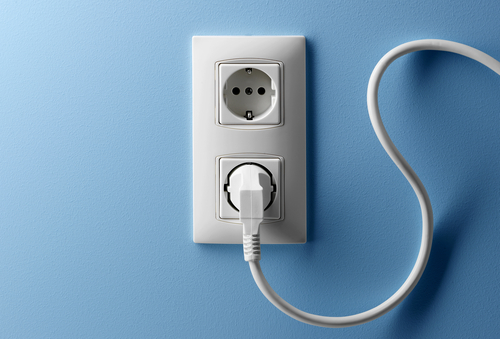
Just like the previous version of the standard, only AC plugs or portable socket outlets for household or similar purposes (indoors or outdoors) with a rated voltage not exceeding 250 V and a rated current no exceeding 16 A are covered. Such plugs and sockets can be singular units, incorporated in cord sets, cord extensions sets or as a component in a different device. The household limitation excludes industrial plugs, appliance couplers, extra low voltage components or when combined with fuses, automatic switches etc.
The updated 2019 version made some changes to technical requirements, but a more urgent change is that with this update, the marking of covered products with the ISI logo is now mandatory and was started to be checked in Indian customs starting 1 December 2020. Other changes include:
- 10A are now no longer a preferred rating.
- Plugs and socket outlets of a 16.5mm pitch for 2.5 A sockets are no longer accepted.
- The 5-pin design has been deleted.
- There are additional gauges requirements.
- Oval shaped socket outlet designs are no longer accepted.
- Additional requirements to floating terminals have been added.
- New construction requirements for socket contacts, pins of socket contacts and screwless terminals were added.
- New test requirements to ensure zero strain on non-rewireable plugs and non-rewireable portable sockets were added.
- A few more options for membranes and grommets were given and some other options.
The updated standard is based on IEC 60884-1 (2013) ‘Plugs and socket outlet for household and similar purposes — Part 1: General requirements’ with modifications in scope: a) Accessories ratings covered are only up to and including 16 A and 250 V; b) Combined socket-outlet has been covered; c) Ambient test condition; d) Schedule of routine, acceptance and type tests have been included; e) Rated voltage covered up to and including 250 V.
Since 2012, the BIS has been gradually expanding the certification catalog and continuously adding additional goods. BIS certification mandatory for many electronic products for industrial and consumer uses. Factory inspections are also required for some products.
If you are interested in understanding what requirements are needed for your product to be imported into India, please do not hesitate to contact us by email or phone at +49-69-271 37 69 261. There is no cost or obligation for us to check for you. If a certification need is discovered we can provide a quotation to make sure that all your certification needs are covered.
If you have any questions you can also use our chat-window in the bottom right. (Please check your browser settings if you can’t see the window)
For more information about BIS certification, please refer to our free brochure “BIS Certification Made Easy“.
India introduces quality control for steel products
The Indian Ministry of Steel has established a technical commission consisting of representatives of the Bureau of Indian Standards (BIS) and experts from the industry. The committee is to examine whether applications for the import of steel products are subject to the current quality controls and standards. Following the Committee’s investigation and recommendation, the Department will send appropriate requests to applicants for clarification of their imported goods. Since July 27, 2020, the Ministry has received 472 applications for the import of steel products.
The Indian steel industry is also affected by the global economic crisis due to the Covid 19 pandemic. Domestic consumption of steel fell to a six-year record low of 35.86 million tons, while production of steel products decreased by 25 percent to 38.6 million tons. As a result, the Indian government has recently restricted imports of steel products, especially from China, to support the domestic economy. Penalty tariffs were also introduced to prevent the import of cheap steel. Imports from the USA, China, South Korea, the EU, South Africa, Taiwan and Thailand are affected.
In October, the Indian government also imposed temporary countervailing duties on imports of stainless steel from Indonesia. This excludes blade steel and coin blanks. The regulation is to apply for four months initially. The government’s decision was made due to a complaint by Indian steel producers accusing Indonesia to subsidize steel exports to India. According to the conditions of the World Trade Organization (WTO), member states may impose such duties in this case. Both India and Indonesia are members of the WTO. Indonesia is India’s second largest trading partner within the ASEAN countries. However, the trade balance on the side of Indonesia is positive. A member of the aforementioned technical commission for the quality control of steel products is the Bureau of Indian Standards (BIS). The BIS is the national Indian certification body under the umbrella of the Indian Ministry of Consumer Protection, Food & Public Distribution. In India, steel products must be certified voluntarily or mandatory according to BIS guidelines.
Since 2012, the BIS has been gradually expanding the certification catalog and continuously adding additional goods. BIS certification mandatory for many electronic products for industrial and consumer uses. Factory inspections are also required for some products.
If you are interested in understanding what requirements are needed for your product to be imported into India, please do not hesitate to contact us by email or phone at +49-69-271 37 69 261. There is no cost or obligation for us to check for you. If a certification need is discovered we can provide a quotation to make sure that all your certification needs are covered.
If you have any questions you can also use our chat-window in the bottom right. (Please check your browser settings if you can’t see the window)
For more information about BIS certification, please refer to our free brochure “BIS Certification Made Easy“.
India plans to introduce international emission and safety standards for vehicles
In India, numerous new, internationally recognized standards for vehicle emissions and safety are to be introduced in the future. The government agreed on a gradual introduction of the new regulations as part of a long-term conversion process coordinated with the industry. A clearly defined development plan is to strengthen and support the domestic automotive industry and increase its contribution to GDP. In the long term, the Indian automotive industry should be on par with other industrialized countries in terms of compliance with international automotive standards.
In order to keep pace with global developments, Indian car manufacturers have already introduced and implemented numerous changes in the areas of passenger safety, exhaust values and connected vehicle technology in recent years. One of the most notable advances has been the leapfrog from Indian emission standards BS 4 to BS 6, which are now at the same level as the European Euro emission standards. With the new emission standards, engines and vehicles are on a par with those from Europe, Japan and the USA. The government’s proposal for a further and urgently needed change to the approval for new vehicle models (Motor Vehicle Act, MVA) was welcomed by the industry.
The responsible Ministry of Road Safety and Highways has already submitted a number of drafts for stricter exhaust values and safety systems for Indian motor vehicles. These include the introduction of ABS, airbags, speed limiters, reverse-assist systems and improved vehicle safety in the event of accidents. The drafts for electronic stability control systems (ESC) and brake assistants for certain vehicles are to be incorporated into mandatory standards over the next two years. A draft for ESC in buses was already submitted last year and is to be legally binding from April 2023.
Further plans by the ministry to align vehicle safety with international standards include the use of tire pressure monitoring systems for certain vehicles from October 2020. Regulations on vehicle dimensions and the safety of construction vehicles have already been published. Standards for side stands, footrests and the external footprint of two-wheelers have also been published and will enter into force shortly. The vast majority of standards for the Indian automotive industry can be found in the AIS. AIS stands for Automotive Industry Standards, the technical automotive standards for India, while TAC stands for Type Approval Certificate. Depending on the product category, there are different certification steps. We will be happy to advise you on certification in India and are always available to answer your questions.
Please do not hesitate to contact us for further details and consultation. You can contact us via e-mail, or call us (UK: +44 2071931135, Rest of Europe: +49 69 2713769261, US: +1 773 654-2673).
If you have any questions you can also use our chat-window in the bottom right. (Please check your browser settings if you can’t see the window)
You can also check out our free AIS-Brochure, which can be downloaded right here as a PDF file.
For other certifications like BIS, you can check out our article on BIS certification.
TEC has released new Security Requirements for Telecom Products
On October 13, 2020 the Department of Telecommunications in India has finally issued the long awaited regulations that were needed for the TEC certification of telecommunications equipment, which has been mandatory since 2019: The “Communication Security Certification Scheme” describes the requirements for telecommunications equipment, while the “Procedure For Security Certification Of Telecommunication Equipment” regulates the certification process.
One of the key take aways from these new regulations is that from now on, some products listed within the TEC certification must be tested in India by the Telecom Security Testing Laboratory (TSTL). This currently includes IP routers, Mobility Management Entity (MME), cryptographic controls, and Wi-Fi CPEs. In the future, mobile devices, connectable (U)ICC, E-Node B and P-Gateways could be added.
Testing and certification are mainly aimed at the software. This means that changes to it require registration. Small changes can be registered on a temporary certificate, which must be converted into a full certificate after one year at the latest by means of renewed testing. However, if the software change affects security aspects, it must be retested and certified immediately.
TEC certification has been around many years before 2019 as a voluntary certification, but since April 2019 the certification has been mandatory and every year the Telecommunication Engineering Center (TEC) expands the certification catalog and adds more telecom products. Until now, only a few products have actually been certified, but with this new standard, the TEC can now officially begin its certification work.
If you are interested in understanding what requirements are needed for your product to be imported into India, please do not hesitate to contact us by email or phone at +49-69-271 37 69 261. There is no cost or obligation for us to check for you. If a certification need is discovered we can provide a quotation to make sure that all your certification needs are covered.
For more information about TEC certification, please refer to our free brochure “TEC Certification Made Easy“.
 We are part of the CERTANIA-Group.