


Schließen

Temporary Exemption granted for Telecom Equipment under MTCTE
The Telecommunication Engineering Centre (TEC) under India’s Department of Telecommunications has issued a notification granting a temporary exemption from the submission of test reports for specific technical parameters listed under multiple Essential Requirements (ERs) within the Mandatory Testing and Certification of Telecom Equipment (MTCTE) framework. These exemptions, effective until June 30, 2025, or until further notice, apply to various telecom equipment categories such as Mobile Radio Trunking Systems (MRTS), GSM, WCDMA, LTE repeaters, VHF/UHF radio systems, ADSL/VDSL/SHDSL interfaces, optical fiber cables, and satellite communication terminals. Affected parameters include frequency bands, power outputs, interface specifications, and other conformance criteria, typically mandated under national and international standards like ETSI, 3GPP, ITU-T, and IEC. Telecom Equipment usually require TEC certification in order to be approved for import and sale in India.

The TEC certification has been mandatory since April 2019. Every year the Telecommunication Engineering Center (TEC) expands the certification catalog and adds more telecom products. See the list of TEC standards here.
If you are interested in understanding what requirements are needed for your product to be imported into India, please do not hesitate to contact us by email or phone (Europe: +49-69-271 37 69 261, US: +1 773 654-2673).
For more information about TEC certification, please refer to our free brochure “TEC Certification Made Easy“.
India revises Compliance Deadline for Toluene Quality Standards
The Ministry of Chemicals and Fertilizers, through the Department of Chemicals and Petrochemicals, has issued the Toluene (Quality Control) First Amendment Order, 2024. This amendment, notified on December 23, 2024, under the authority of the Bureau of Indian Standards Act, 2016, revises the effective date of the original 2021 order. Specifically, sub-paragraph (2) of paragraph 1 in the original order is now substituted to state that the revised regulations will come into force on December 22, 2025. Many chemicals usually require BIS certification in order to be approved for import and sale in India.

The principal Toluene Quality Control Order was initially published on December 24, 2021, and has undergone multiple amendments in June 2022, December 2022, June 2023, and December 2023. These updates reflect ongoing regulatory adjustments to maintain quality standards and ensure public safety related to chemical substances.
If you are interested in understanding what requirements are needed for your product to be imported into India, please do not hesitate to contact us by email or phone (Europe: +49-69-271 37 69 261, US: +1 773 654-2673). If a certification need is discovered we can provide a quotation to make sure that all your certification needs are covered.
If you have any questions you can also use our chat-window in the bottom right. (Please check your browser settings if you can’t see the window)
For more information about BIS certification, please refer to our free brochure “BIS Certification Made Easy“.
Amended Rules Ease Import Restrictions for Refrigeration Appliance Components in India
The Indian Ministry of Commerce and Industry has issued an amendment to the existing Refrigerating Appliances (Quality Control) Order, 2020. The updated regulation, titled the Refrigerating Appliances (Quality Control) Amendment Order, 2025, took effect upon its publication in the Official Gazette. Under the revised provisions, exemptions have been introduced for specific categories of refrigerating appliance imports. Manufacturers certified by the Bureau of Indian Standards (BIS) or those who have applied for BIS certification are now permitted to import components of refrigerating appliances for export production. These exemptions are granted on the condition that manufacturers provide a self-declaration—on official letterhead and signed by an authorized representative—detailing the consignment and affirming that the imported parts will not be diverted to the domestic market. Records of such imports must be maintained for potential audits or verification by government authorities.

Additionally, the Order now allows certified manufacturers—or those in the process of obtaining certification—to import up to 200 units per year for research and development purposes. These goods must not be commercially sold and must be disposed of as scrap after use. Manufacturers are required to keep annual records of these imports and provide the data to the Central Government upon request. Refrigeration appliances usually require BIS certification in order to be approved for import and sale in India.
If you are interested in understanding what requirements are needed for your product to be imported into India, please do not hesitate to contact us by email or phone (Europe: +49-69-271 37 69 261, US: +1 773 654-2673). If a certification need is discovered we can provide a quotation to make sure that all your certification needs are covered.
If you have any questions you can also use our chat-window in the bottom right. (Please check your browser settings if you can’t see the window)
For more information about BIS certification, please refer to our free brochure “BIS Certification Made Easy“.
BIS Standards – Implementations next Month – April 2025
We regularly publish advance information from the Bureau of Indian Standards (BIS) on new Quality Control Orders that will come into effect shortly. Affected products must have BIS certification in order to be approved for import and distribution in India. Within the next month, several standards will come into effect, including for ethyl acrylates, various textiles, steel ropes, various aluminum products and several types of fatty acids.

The Bureau of Indian Standards (BIS) Quality Control Orders (QCOs) are mandatory regulations that ensure that certain products meet national quality standards. While BIS standards are usually voluntary, QCOs make compliance mandatory for affected products. This serves to protect people, animals and the environment as well as to ensure product quality in India. QCOs apply to a wide range of products such as chemicals, metals, toys and electrical appliances. Violations of QCOs can result in severe penalties, including fines or imprisonment.
Here is an overview of the new Quality Control Orders that will come into force next month:
| Product/ Produkt | Indian Standard/ Indischer Standard | Enforcement date / Implementierungsdatum |
| Ethyl Acrylate | IS 14708:1999 | 31 March 2025 |
| Vinyl Acetate Monomer | IS 12345:1988 | 31 March 2025 |
| Methyl Acrylate | IS 14707:1999 | 31 March 2025 |
| Textiles – Flat woven webbing slings made of man-made fibres for general services | IS 15041:2001 | 01 April 2025 |
| Geosynthetics — Synthetic Polymer RopeGabions for Coastal and Waterways Protection — Specification | IS 17880 :2022 | 01 April 2025 |
| Textiles — Manila Ropes — Specification | IS 1084:2005 | 01 April 2025 |
| Fibre Ropes — Polyester — 3-, 4-, 8- and 12- Strand Ropes | IS 11066:2022 | 01 April 2025 |
| Textiles — Composite Synthetic Fibre Ropes — Specification | IS 14928:2001 | 01 April 2025 |
| Mixed Polyolefin Fibre Ropes | IS 14929: 2022 | 01 April 2025 |
| Steel wire ropes – Fibre main cores – Specification | IS 1804:2004 | 01 April 2025 |
| Fibre Ropes — Polyamide — 3-, 4-, 8- and 12- Strand Ropes | IS 4572:2022 | 01 April 2025 |
| Fibre Ropes — Polypropylene Split Film, Monofilament And Multifilament ( PP2 ) and Polypropylene High-Tenacity Multifilament ( PP3 ) —3-, 4-, 8- and 12- Strand Ropes | IS 5175:2022 | 01 April 2025 |
| Fibre Ropes — Polyethylene —3- And 4-Strand Ropes | IS 8674 : 2013 | 01 April 2025 |
| Fibre Ropes Of Polyester / Polyolefin dual Fibres | IS 17609 : 2021 | 01 April 2025 |
| Stainless Steel Utensils | IS 14756:2022 | 01 April 2025 |
| Wrought Aluminium Utensils | IS 1660:2009 | 01 April 2025 |
| Stainless Steel Sinks for Domestic Purposes | IS 13983:1994 | 01 April 2025 |
| Round Open Top Sanitary Cans for Foods and DrinksTinplate | IS 9396 (Part 1): 1987 | 01 April 2025 |
| Aluminium cans for beverages | IS 14407:1996 | 01 April 2025 |
| Safety or household and similar electrical appliancesparticular requirements – commercial dispensing appliances and vending machine | IS 302 (Part 2/Sec 75): 2018 | 01 April 2025 |
| Aluminium alloy tubes for irrigation purposes -welded tubes | IS 7092 (Part 1):1992 | 01 April 2025 |
| Aluminium alloy tube for irrigation purposes – extruded tube | IS 7092 (Part 2):1987 | 01 April 2025 |
| EC Grade Aluminium Rod produced by Continuous Casting and Rolling | IS 5484:1997 | 01 April 2025 |
| Wrought aluminium and aluminium alloy bars, rods and sections (For General Engineering Purposes) | IS 733:1983 | 01 April 2025 |
| Wrought aluminium and aluminium alloys, forging stock and forgings for general engineering purposes | IS 734:1975 | 01 April 2025 |
| Wrought aluminium and aluminium alloy plate for general engineering purposes | IS 736:1986 | 01 April 2025 |
| Wrought aluminium and aluminium alloy sheet and strip for general engineering purposes | IS 737:2008 | 01 April 2025 |
| Wrought aluminium and aluminium alloy wire for general engineering purposes | IS 739:1992 | 01 April 2025 |
| Wrought aluminium and aluminium alloy rivet stock for general engineering purposes | IS 740:1977 | 01 April 2025 |
| Wrought aluminium and aluminium alloy bars, rods, tubes, sections, plates and sheets for electrical applications | IS 5082:1998 | 01 April 2025 |
| Aluminium and aluminium alloy foil for pharmaceutical packaging | IS 16011:2012 | 01 April 2025 |
| Aluminium composite panel | IS 17682:2021 | 01 April 2025 |
| Wrought aluminium and aluminium alloys- Extruded round tube and hollow section for general engineering purposes | IS 1285:2002 | 01 April 2025 |
| Wrought Aluminium Wire for Electrical Purposes | IS 2067:1975 | 01 April 2025 |
| Wrought aluminium and aluminium alloys for manufacture of utensils | IS 21:1992 | 01 April 2025 |
| Corrugated Aluminium Sheet | IS 1254:2007 | 01 April 2025 |
| Aluminium alloy forging stock and forgings (Alloy 24345) for aerospace applications | IS 7902:2001 | 01 April 2025 |
| Safety of household and similar electrical appliances – particular requirements – domestic electric clothes washing machines | IS 302 (Part 2/Sec 7): 2010 | 01 April 2025 |
| Evaporative Air Coolers (Desert Coolers) | IS 3315:2019 | 01 April 2025 |
| Air Filters for general ventilation – Technical specifications requirements and Classification system based upon particulate matter efficiency (ePM) | IS 17570 (Part 1): 2021 ISO 16890-2: 2016 | 01 April 2025 |
| Solar Flat Plate Collector for Solar Water Heating Systems | IS 12933 (Part 1): 2003 IS 12933 (Part 2): 2003 | 14 April 2025 |
| All Glass Evacuated Tubes Solar Water Heating System | IS 16544: 2016 | 14 April 2025 |
| Storage Water Tank for All Glass Evacuated Tubes Solar Water Heating Systems | IS 16542: 2016 | 14 April 2025 |
| Lauric Acid | IS 10931: 1984 | 24 April 2025 |
| Acid Oil | IS 12029:1986 | 24 April 2025 |
| Palm Fatty Acids | IS 12067: 1987 | 24 April 2025 |
| Rice Bran Fatty Acids | IS 12068: 1987 | 24 April 2025 |
| Coconut Fatty Acids | IS 12069: 1987 | 24 April 2025 |
| Hydrogenated Rice Bran Fatty Acids | IS 12361: 1988 | 24 April 2025 |
If you are interested in understanding what requirements are needed for your product to be imported into India, please do not hesitate to contact us by email or phone (Europe: +49-69-271 37 69 261, US: +1 773 654-2673). If a certification need is discovered we can provide a quotation to make sure that all your certification needs are covered.
If you have any questions you can also use our chat-window in the bottom right. (Please check your browser settings if you can’t see the window)
For more information about BIS certification, please refer to our free brochure “BIS Certification Made Easy“.
India introduces Quality Control Order for Flashlights
The Ministry of Commerce and Industry has issued the Flashlight (Quality Control) Order, 2025, under the Bureau of Indian Standards (BIS) Act, 2016. Effective from its publication in the Official Gazette, this order mandates that flashlights must conform to Indian Standard 2083:2024 and bear the Standard Mark under a license from BIS, following Scheme-1 of Schedule II of the BIS (Conformity Assessment) Regulations, 2018. Compliance deadlines are six months for general manufacturers, nine months for small enterprises, and twelve months for micro enterprises. However, the order does not apply to domestically manufactured goods intended for export or to up to fifty imported flashlights per year for research and development purposes, provided they are not sold commercially and are disposed of as scrap.
Other than that, flashlights will generally require BIS certification to be approved for import and sale in India.
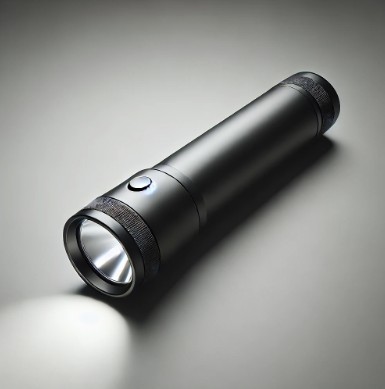
BIS is designated as the certifying and enforcement authority for flashlights under this order. Any violation of its provisions will result in penalties as per the BIS Act, 2016. The latest version of the Indian Standard, including any amendments notified by BIS, will apply.
If you are interested in understanding what requirements are needed for your product to be imported into India, please do not hesitate to contact us by email or phone (Europe: +49-69-271 37 69 261, US: +1 773 654-2673). If a certification need is discovered we can provide a quotation to make sure that all your certification needs are covered.
If you have any questions you can also use our chat-window in the bottom right. (Please check your browser settings if you can’t see the window)
For more information about BIS certification, please refer to our free brochure “BIS Certification Made Easy“.
India introduces mandatory BIS Certification for Domestic Water Heaters
The Indian government has issued the Electrical Appliances for Domestic Water Heating (Quality Control) Order, 2025, under the Bureau of Indian Standards (BIS) Act, 2016. This new regulation, which replaces the 2023 Quality Control Order, mandates that all specified domestic water heating appliances must conform to the relevant Indian Standards and bear the BIS Standard Mark. The certification will be granted under Scheme-1 of Schedule-II of the BIS (Conformity Assessment) Regulations, 2018. However, exemptions apply to products manufactured for export and a limited number of imports for research and development. The Bureau of Indian Standards (BIS) will serve as the certifying and enforcement authority, and non-compliance may result in penalties under the BIS Act, 2016.
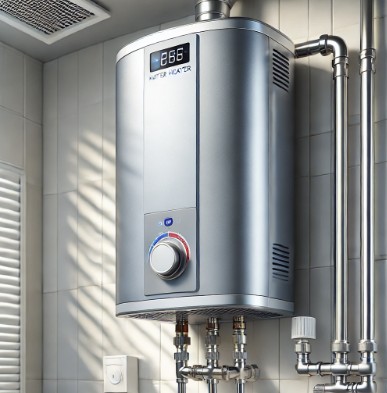
The order includes various types of electric water heaters, such as stationary storage type, electric instantaneous, and immersion water heaters, each aligning with specific Indian Standards. The implementation timeline varies: for general enterprises, the mandate takes effect on March 1, 2025; for small enterprises, compliance is required by June 1, 2025; and for micro enterprises, the deadline is September 1, 2025. The latest amendments to the relevant Indian Standards, as notified by the BIS, will apply.
If you are interested in understanding what requirements are needed for your product to be imported into India, please do not hesitate to contact us by email or phone (Europe: +49-69-271 37 69 261, US: +1 773 654-2673). If a certification need is discovered we can provide a quotation to make sure that all your certification needs are covered.
If you have any questions you can also use our chat-window in the bottom right. (Please check your browser settings if you can’t see the window)
For more information about BIS certification, please refer to our free brochure “BIS Certification Made Easy“.
New BIS Quality Control Orders Implementations next Month – March 2025
We regularly publish advance information from the Bureau of Indian Standards (BIS) on new Quality Control Orders that will soon come into force. Affected products require BIS certification in order to be approved for import and distribution in India. Within March 2025, several standards will come into effect, including for Polycarbonate and Polyurethanes, various kind of fasteners and screws, and different kinds of wrenches.
The BIS Quality Control Orders (QCOs) are mandatory regulations that ensure that certain products meet national quality standards. While BIS standards are normally voluntary, QCOs make compliance mandatory for affected products. Violations of QCOs can result in severe penalties.
Here you will find an overview of the new Quality Control Orders that will come into force next month:
| Product/ Produkt | Indian Standard/ Indischer Standard | Enforcement date / Implementierungsdatum |
| Safety of household and similar electrical appliances – particular requirements – appliances for skin or hair care | IS 302 (Part 2/Sec 23): 2009 | 05 March 2025 |
| Polycarbonate | IS 14434 : 1998 | 12 March 2025 |
| Beta Picoline | IS 16112:2013 | 13 March 2025 |
| Sodium Tripolyphosphate, Anhydrous, Technical | IS 6100:1984 | 13 March 2025 |
| Pyridine | IS 8058:2018 | 13 March 2025 |
| p-Xylene | IS 17370: 2020 | 19 March 2025 |
| Polyurethanes | IS 17397 (Part 1): 2020/ISO 16365-1:2014 | 19 March 2025 |
| Fasteners – Cross Recessed Drilling Screws with Tapping Screw Thread Part 1 Pan Head | IS 18471 (Part 1) : 2023/ ISO 15481:1999 | 20 March 2025 |
| Fasteners – Cross Recessed Drilling Screws with Tapping Screw Thread Part 2 Countersunk Head | IS 18471 (Part 2) :2023/ ISO 15482:1999 | 20 March 2025 |
| Fasteners – Cross Recessed Drilling Screws with Tapping Screw Thread Part 3 Raised Countersunk Head | IS 18471 (Part 3) :2023/ ISO 15483:1999 | 20 March 2025 |
| Fasteners – Hexagon Washer Head Drilling Screws with Tapping Screw Thread | IS 18476 : 2023/ ISO 15480:2019 | 20 March 2025 |
| Cross Recessed Tapping Screws: Part 1 Pan Head | IS 18480 (Part 1) :2023/ ISO 7049 : 2011 | 20 March 2025 |
| Cross Recessed Tapping Screws Part 2 Countersunk Flat Head | IS 18480 (Part 2) :2023/ ISO 7050 : 2011 | 20 March 2025 |
| Cross Recessed Tapping Screw Part 3 Raised Countersunk Oval Head | IS 18480 (Part 3) :2023/ ISO 7051 : 2011 | 20 March 2025 |
| Pan Head Screws With Type H or Type Z Cross Recess – Product Grade A | IS 7483 : 2018/ ISO 7045 : 2011 | 20 March 2025 |
| Countersunk Flat Head Screws (Common head Style) With Type H or Type Z Cross Recess – Product Grade A Part 1 Steel Screws of Property Class 4.8 | IS 7485 (Part 1) : 2018/ ISO 7046 -1 : 2011 | 20 March 2025 |
| Countersunk flat head screws (common head style) with type H or Type Z Cross Recess – Product Grade A part 2 Steel Screws of Property Class 8.8, Stainless Steel Screws and Non – Ferrous Metal Screws | 7485 (Part 2) : 2018/ISO 7046-2 : 2011 | 20 March 2025 |
| Raised countersunk head screws (Common Head Style) with type H or type Z cross recess – Product grade A | IS 7486 : 2018/ ISO 7047 : 2011 | 20 March 2025 |
| Drywall Screws – Specification | IS 18507 : 2024 | 20 March 2025 |
| Chipboard Screws – Specification | IS 18508 : 2024 | 20 March 2025 |
| Cross-recessed Countersunk Head Wood Screws – Specification | IS 18509 : 2023 | 20 March 2025 |
| Chain Pipe Wrenches | IS 4123:1982 | 24 March 2025 |
| Open Ended Slugging Wrenches (Spanners) | IS 4508:1992 | 24 March 2025 |
| Ring Slugging Wrenches (Spanners) | IS 4509:1992 | 24 March 2025 |
| Single-ended Open-jaw Adjustable Wrenches | IS 6149:1984 | 24 March 2025 |
| Open-Jaw Wrenches (Spanners) | IS 2028:2004 | 24 March 2025 |
| Ring Wrenches (Spanners) | IS 2029:1998 | 24 March 2025 |
| Pipe Wrenches –General Purpose | IS 4003 (Part 1): 1978 | 24 March 2025 |
| Pipe Wrenches – Heavy Duty | IS 4003 (Part 2): 1986 | 24 March 2025 |
| Combination Side Cutting Pliers | IS 3650:1981 | 24 March 2025 |
| Ethyl Acrylate | IS 14708:1999 | 31 March 2025 |
| Vinyl Acetate Monomer | IS 12345:1988 | 31 March 2025 |
If you are interested in understanding what requirements are needed for your product to be imported into India, please do not hesitate to contact us by email or phone (Europe: +49-69-271 37 69 261, US: +1 773 654-2673). If a certification need is discovered we can provide a quotation to make sure that all your certification needs are covered.
If you have any questions you can also use our chat-window in the bottom right. (Please check your browser settings if you can’t see the window)
For more information about BIS certification, please refer to our free brochure “BIS Certification Made Easy“.
Revised Enforcement Date for BIS Quality Control on PVC Homopolymers
The Bureau of Indian Standards (BIS) has introduced a new amendment to the Polypropylene (PP) Materials for Moulding and Extrusion (Quality Control) Order, 2024. The amendment, issued by the Ministry of Chemicals and Fertilizers, modifies paragraph 1, sub-paragraph (2) of the original order, changing the enforcement date to June 24, 2025. The original order was first published on February 26, 2024, and later revised on August 23, 2024.
Poly Vinyl Chloride (PVC) Homopolymers typically require BIS certification to be approved for import and sale in India.

If you are interested in understanding what requirements are needed for your product to be imported into India, please do not hesitate to contact us by email or phone (Europe: +49-69-271 37 69 261, US: +1 773 654-2673). If a certification need is discovered we can provide a quotation to make sure that all your certification needs are covered.
If you have any questions you can also use our chat-window in the bottom right. (Please check your browser settings if you can’t see the window)
For more information about BIS certification, please refer to our free brochure “BIS Certification Made Easy“.
Updated Certification Rules for Telecom Equipment in India – TEC 93009:2024
The Telecommunication Engineering Centre (TEC) in India has announced amendments to the Mandatory Testing and Certification of Telecom Equipment (MTCTE) Procedure v3.0 (TEC 93009:2024). These changes, which take immediate effect, refine the definitions and certification criteria for telecom equipment. Products in the telecommunications sector usually require TEC certification to be approved for import and sale in India.

One key amendment updates Clause 2.1(iii) to define an “Associated Model” as a telecom equipment variant with identical software but different hardware configurations, such as chassis, motherboards, or access ports derived from an already tested and certified main model. Additionally, Clause 2.1(xiv) now states that a “Model” is identified by unique hardware or software versions. Any difference in these aspects results in a distinct model designation.
Further changes clarify that combinations of independent telecom equipment forming a system are not certified under MTCTE. Instead, each piece of equipment must be tested and certified separately.
The TEC certification has been mandatory since April 2019. Every year the Telecommunication Engineering Center (TEC) expands the certification catalog and adds more telecom products. See the list of TEC standards here.
If you are interested in understanding what requirements are needed for your product to be imported into India, please do not hesitate to contact us by email or phone (Europe: +49-69-271 37 69 261, US: +1 773 654-2673).
For more information about TEC certification, please refer to our free brochure “TEC Certification Made Easy“.
India delays BIS Implementation for HDPE/PP Woven Sacks until June 2025
The Ministry of Chemicals and Fertilizers has issued amendments to the Quality Control Orders (QCOs) for High-Density Polyethylene (HDPE) and Polypropylene (PP) woven sacks used for various packaging applications. The enforcement date for all three QCOs has been extended from December 6, 2024, to June 6, 2025. High-Density Polyethylene (HDPE) and Polypropylene (PP) products generally require BIS certification to be approved for import and sale in India.

The amendments affect the following products:
- HDPE/PP Woven Sacks for 50 kg Cement Packaging – Revised enforcement date: June 6, 2025.
- PP Woven, Laminated, Block Bottom Valve Sacks for 50 kg Cement Packaging – Revised enforcement date: June 6, 2025.
- PP/HDPE Laminated Woven Sacks for Mail Sorting, Storage, Transport, and Distribution – Revised enforcement date: June 6, 2025.
These changes aim to provide manufacturers and stakeholders additional time for compliance with the Bureau of Indian Standards (BIS) requirements.
If you are interested in understanding what requirements are needed for your product to be imported into India, please do not hesitate to contact us by email or phone (Europe: +49-69-271 37 69 261, US: +1 773 654-2673). If a certification need is discovered we can provide a quotation to make sure that all your certification needs are covered.
If you have any questions you can also use our chat-window in the bottom right. (Please check your browser settings if you can’t see the window)
For more information about BIS certification, please refer to our free brochure “BIS Certification Made Easy“.
 We are part of the CERTANIA-Group.