


Schließen

New BIS Requirements for Television Sets with Digital Satellite Tuners in India
On April 26, 2023, the Ministry of Electronics and Information Technology (MeitY) in India introduced new regulations for television sets equipped with digital satellite tuners under the IS 18112:2022 standard. These regulations fall under the “Electronics and IT Goods (Requirements for Compulsory Registration) Order, 2021.” The newly defined product category must comply with the standard for approval. Television sets with digital satellite tuners require BIS certification in order to be approved for import and sale in India.
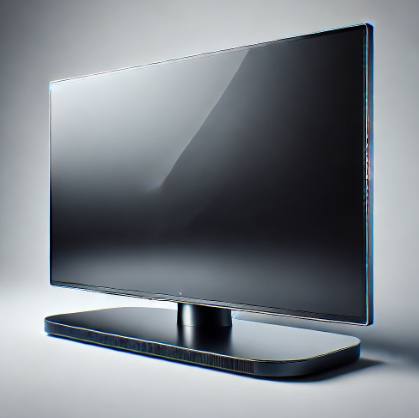
Additionally, the ministry has provided guidelines for model series formation within this category. The existing rules for grouping various types of TV sets, such as Plasma, LCD, and LED TVs, apply here as well. Under these guidelines, up to 10 models can be included in a single test report if they share characteristics like the same mains or SMPS board layout, identical enclosure (except for decorative parts), and the same power transformer design and insulation system. Although digital satellite tuners are not recognized as a standalone product category, TVs equipped with these tuners are still subject to BIS certification.If you are interested in understanding what requirements are needed for your product to be imported into India, please do not hesitate to contact us by email or phone (Europe: +49-69-271 37 69 261, US: +1 773 654-2673). If a certification need is discovered we can provide a quotation to make sure that all your certification needs are covered.
If you have any questions you can also use our chat-window in the bottom right. (Please check your browser settings if you can’t see the window)
For more information about BIS certification, please refer to our free brochure “BIS Certification Made Easy“.
India Sets 2025 Deadline for 5G Network Security Certification
India’s National Center for Communication Security (NCCS) has announced the introduction of Mandatory Security Certification (MSC) for the Session Management Function (SMF) within the 5G Core network. This requirement will take effect starting January 1, 2025. The SMF is a crucial component in 5G networks, managing user equipment (UE) connections, including IP address assignment, traffic control, data flow direction, charging support, and interaction with other network elements. Telecommunication products typically require TEC Certification to be approved for import and sale in India.

Although the MSC will be compulsory from 2025, the NCCS has launched a voluntary certification program for SMF components, allowing manufacturers and network operators to secure security certificates ahead of the mandatory deadline. This voluntary process will be available until December 31, 2024.
The TEC certification has been mandatory since April 2019. Every year the Telecommunication Engineering Center (TEC) expands the certification catalog and adds more telecom products. See the list of TEC standards here.
If you are interested in understanding what requirements are needed for your product to be imported into India, please do not hesitate to contact us by email or phone (Europe: +49-69-271 37 69 261, US: +1 773 654-2673).
For more information about TEC certification, please refer to our free brochure “TEC Certification Made Easy“.
India Issues Updated Hinges Quality Control Order 2024
The Ministry of Commerce and Industry of India has released the Hinges Quality Control Order 2024, which sets out standards for various types of hinges under Indian Standards. The standards include IS 12817:2020 for stainless steel butt hinges, IS 1341:2018 for steel butt hinges, and IS 18297:2023 for cabinet hinges, among others. This new order replaces the previous 2023 Hinges Quality Control Order, which was issued on December 8, 2023, and took effect on June 8, 2024. Hinges typically require BIS certification in order to be approved for import and sale in India.

The updated order, published on July 26, 2024, outlines new implementation deadlines for different categories of enterprises: January 1, 2025, for general enterprises, April 1, 2025, for small enterprises, and July 1, 2025, for micro enterprises. Failure to comply with this order will lead to penalties under the Bureau of Indian Standards Act, 2016.If you are interested in understanding what requirements are needed for your product to be imported into India, please do not hesitate to contact us by email or phone (Europe: +49-69-271 37 69 261, US: +1 773 654-2673). There is no cost or obligation for us to check for you. If a certification need is discovered we can provide a quotation to make sure that all your certification needs are covered.
If you have any questions you can also use our chat-window in the bottom right. (Please check your browser settings if you can’t see the window)
For more information about BIS certification, please refer to our free brochure “BIS Certification Made Easy“.
New BIS Standard mandates Certification for Cold Formed Welded Carbon Steel Sections
The Bureau of Indian Standards (BIS) has introduced a new standard, IS 18573:2024, which mandates certification for cold formed welded carbon steel square and rectangular hollow sections. This certification, essential for mechanical, general engineering, and decorative purposes, ensures products meet rigorous quality and safety standards. Steel products require BIS certification to be approved for import and sale in India.
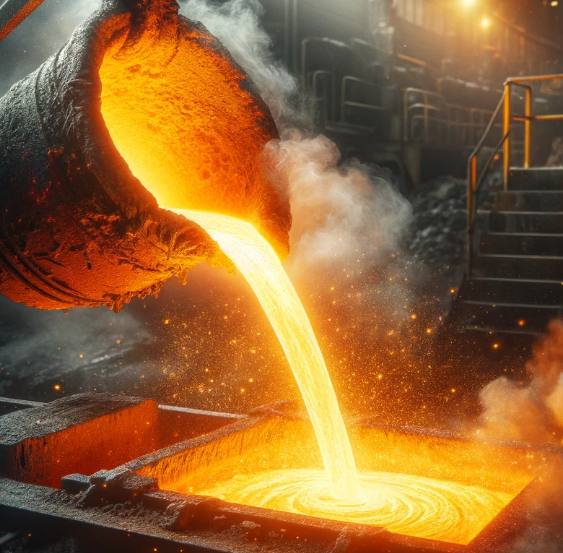
IS 18573:2024 outlines comprehensive requirements for cold-formed square and rectangular welded hollow sections, including specifications related to materials, mechanical properties, dimensions, tolerances, and surface protection. It classifies sections into grades such as YSt 160, YSt 210, YSt 240, YSt 310, and YSt 355. The timeline to obtain BIS certification is approximately 30 days for Indian manufacturers and 180 days for foreign manufacturers.
If you are interested in understanding what requirements are needed for your product to be imported into India, please do not hesitate to contact us by email or phone (Europe: +49-69-271 37 69 261, US: +1 773 654-2673). There is no cost or obligation for us to check for you. If a certification need is discovered we can provide a quotation to make sure that all your certification needs are covered.
If you have any questions you can also use our chat-window in the bottom right. (Please check your browser settings if you can’t see the window)
For more information about BIS certification, please refer to our free brochure “BIS Certification Made Easy“.
MTCTE Certification Issued for Virtualized 5G Core Nodes in India
The Ministry of Telecommunications and Telecommunication Engineering Centre have announced the MTCTE Certification of 5G Core Nodes. The authority has approved the issuance of provisional MTCTE certificates, which will be valid for two years. This applies specifically to fully virtualized or software-based 5G core nodes. Typically, telecommunication technology requires TEC certification to be approved for import and sale in India.

Applicants must upload a Self-Declaration for Conformity against the applicable parameters of the essential requirement (ER) according to the authority. These parameters will be treated as exempted. Additionally, applicants must note in the remarks column of the bill of materials (BoM) that these are completely virtualized or software-based applications/products.
The TEC certification has been mandatory since April 2019. Every year the Telecommunication Engineering Center (TEC) expands the certification catalog and adds more telecom products. See the list of TEC standards here.
If you are interested in understanding what requirements are needed for your product to be imported into India, please do not hesitate to contact us by email or phone (Europe: +49-69-271 37 69 261, US: +1 773 654-2673).
For more information about TEC certification, please refer to our free brochure “TEC Certification Made Easy“.
TEC extends Certification Deadlines for Telecom and Networking Equipment
The mandatory certification date for five telecom and networking equipment products under Phase-III, IV, and V of the MTCTE regime has been extended. This modification applies to previous notifications regarding the testing and certification of these products. Specifically, the certification deadline for the Smart Electricity Meter (Phase III) is now October 1, 2024, while other products such as Satellite Communication Equipment (Phase IV), Base Station for Cellular Network for 5G, Hypervisor, and IP Terminal (all Phase V) also have adjusted timelines. Telecom and networking equipment usually require TEC certification in order to be approved for import and sale in India.

Additionally, the deadline for accepting test reports from labs accredited by ILAC signatories, excluding those from border-sharing countries, has been extended by two months for five products under Phase-III, IV, and V. These products include the Base Station for Cellular Network (up to 4G) with a new acceptance date of September 30, 2024, and other items such as SIM, VHF UHF Radio Equipment System (Phase IV), Base Station for Cellular Network for 5G, and E-band Fixed Radio Relay Systems (Phase V). The relevant technical parameters for these products will adhere to the extended timeline.
The TEC certification has been mandatory since April 2019. Every year the Telecommunication Engineering Center (TEC) expands the certification catalog and adds more telecom products. See the list of TEC standards here.
If you are interested in understanding what requirements are needed for your product to be imported into India, please do not hesitate to contact us by email or phone (Europe: +49-69-271 37 69 261, US: +1 773 654-2673).
For more information about TEC certification, please refer to our free brochure “TEC Certification Made Easy“.
BIS – Cast Iron Products included by new Extension Order
The Ministry of Commerce and Industry has issued an extension order for cast iron products, formally known as the Cast Iron Products (Quality Control) Order, 2024, as detailed in the Gazette Notification dated June 13, 2024. This order mandates that cast iron products conform to the established Indian Standards, including IS 1726:1991 for manhole covers, IS 1729:2002 for drainage pipes and fittings, IS 1879:2010 for malleable pipe fittings, IS 13349:1992 for sluice gates, IS 210:2009 for grey iron castings, and IS 1537:1976 for vertically cast pressure pipes. These product categories generally require BIS certification in order to be approved for import and sale in India.

The implementation dates for adherence to these standards are segmented based on the size of the enterprises. For small enterprises, the compliance deadline is December 1, 2024. Micro enterprises have until March 1, 2025, while general enterprises (other than micro and small) must comply by September 1, 2024. This regulation stipulates that the specified cast iron products must meet the standards under Scheme-1 of Schedule-II of the BIS (Conformity Assessment) Regulations, 2018. Adhering to these standards is vital to maintain the products’ quality and integrity within the industry.
Non-compliance with the provisions outlined in this order will result in penalties as specified under the Bureau of Indian Standards Act, 2016. This measure emphasizes the Ministry’s dedication to strict compliance and product standardization, promoting safety, and ensuring industry-wide quality assurance. The extension underscores the Ministry’s commitment to effective regulation of cast iron products, fostering a safer and higher-quality industry standard.
If you are interested in understanding what requirements are needed for your product to be imported into India, please do not hesitate to contact us by email or phone (Europe: +49-69-271 37 69 261, US: +1 773 654-2673). There is no cost or obligation for us to check for you. If a certification need is discovered we can provide a quotation to make sure that all your certification needs are covered.
If you have any questions you can also use our chat-window in the bottom right. (Please check your browser settings if you can’t see the window)
For more information about BIS certification, please refer to our free brochure “BIS Certification Made Easy“.
Extension Order for Steel Wires or Strands, Nylon or Wire Ropes, and Wire Mesh
The Department for Promotion of Industry and Internal Trade (DPIIT) has released a new notification pertaining to products classified under Steel Wires or Strands, Nylon or Wire Ropes, and Wire Mesh. As per the Indian IS norms, BIS certification is mandatory for these products to be exported and distributed in India. The notification, titled the Steel Wires or Strands, Nylon or Wire Ropes, and Wire Mesh (Quality Control) Order, 2024, stipulates that the following Indian Standards must be adhered to for these products.

| Products | Standard |
| Steel Wire Ropes for General Engineering Purposes | IS 2266: 2019 |
| Steel Wire Suspension Ropes for Lifts, Elevators, and Hoists | IS 2365: 2018 |
| Stranded Steel Wire Ropes for Winding and Man-riding Haulages in Mines | IS 1855: 2022 |
| Steel Wire Rope for Haulage | IS 1856: 2005 |
| Hot Dip Galvanized Stay Strand | IS 2141: 2000 |
| Wire Ropes Used in Oil Wells and Oil Well Drilling | IS 4521: 2001 |
| Braided Nylon Ropes for Mountaineering Purposes | IS 6590: 1972 |
| Galvanized Steel Barbed Wire for Fencing | IS 278: 2009 |
| Galvanized Steel Wire or Galvanized Steel Wire with Polymer Coating | IS 16014: 2018 |
Previously, the Ministry of Commerce and Industry had issued the Steel Wires or Strands, Nylon or Wire Ropes, and Wire Mesh (Quality Control) Order, 2023, on November 21, 2023. This order was set to take effect six months after its publication, on May 21, 2024. However, a new Quality Control Order (QCO) was published on July 3, 2024, extending the enforcement dates for different categories of enterprises:
- Micro Enterprises: Until June 1, 2025
- Small Enterprises: Until March 1, 2025
- General (Other than Micro and Small Enterprises): Until December 1, 2024
If you are interested in understanding what requirements are needed for your product to be imported into India, please do not hesitate to contact us by email or phone (Europe: +49-69-271 37 69 261, US: +1 773 654-2673). There is no cost or obligation for us to check for you. If a certification need is discovered we can provide a quotation to make sure that all your certification needs are covered.
If you have any questions you can also use our chat-window in the bottom right. (Please check your browser settings if you can’t see the window)
For more information about BIS certification, please refer to our free brochure “BIS Certification Made Easy“.
Key Updates in the 2024 MTCTE Procedures for Telecommunication Equipment Certification
The Telecommunication Engineering Centre (TEC) of India has issued a new version of the procedures for mandatory testing and certification of telecommunication equipment. This updated document, known as “Procedure for Mandatory Testing and Certification of Telecommunication Equipment (MTCTE)” version 3.0, was released in April 2024 and replaces the previous TEC 93009:2021 guidelines. Telecommunications products generally require TEC certification in order to be approved for import and sale in India.

A summary of some of the most notable changes in the document “Procedure for Mandatory Testing and Certification of Telecommunication Equipment (MTCTE)” version 3.0:
- Acceptance of BIS Certifications: Valid certificates or test reports issued by BIS or BIS-recognized labs against safety requirements are now accepted under MTCTE.
- Certificate Validity Extension: The validity of the regular MTCTE certificate has been extended from 5 years to 10 years.
- Revised labelling requirements
- Updated Definitions
- Source Approval Certificates: Acceptance of Source Approval Certificates (SAC) under MTCTE is now formalized.
- End of Life/End of Sale Clarifications: Clarifications regarding end-of-life and end-of-sale for whole unit warranty replacement products are provided.
- Test Reports from CABs: Acceptance of test reports from Conformity Assessment Bodies (CABs) designated for Generic Requirements (GR) and Interface Requirements (IR) for the parameters of Essential Requirements (ER) under MTCTE.
- Witness Testing Requirements: The mandate for NABL accreditation for witness testing by RTEC has been removed.
- Provisional Certificates: Issuance of provisional certificates has been removed from the procedures.
These changes aim to streamline the certification process, extend the validity period of certificates, reduce costs for government institutions, and update various procedural and technical requirements.
The TEC certification has been mandatory since April 2019. Every year the Telecommunication Engineering Center (TEC) expands the certification catalog and adds more telecom products. See the list of TEC standards here.
If you are interested in understanding what requirements are needed for your product to be imported into India, please do not hesitate to contact us by email or phone (Europe: +49-69-271 37 69 261, US: +1 773 654-2673).
For more information about TEC certification, please refer to our free brochure “TEC Certification Made Easy“.
DPIIT Mandates ISI Mark on Precision Roller and Bush Chains
Late 2023, the Department of Promotion of Industry and Internal Trade (DPIIT) issued an important order requiring the ISI Mark on Precision Roller and Bush Chains, along with attachments and associated chain sprockets. This mandate will take full effect on March 25, 2024.

For Small and Micro Enterprises (SMEs), the implementation dates are staggered:
Small Enterprises: June 25, 2024
Micro Enterprises: September 25, 2024
This move highlights DPIIT’s dedication to enhancing industry standards and ensuring a more secure and reliable market.
The BIS Certification in India aims to ensure the quality, safety, and reliability of products available to consumers. It provides a third-party guarantee of product conformity to established standards, thereby fostering consumer trust and market competitiveness.
If you are interested in understanding what requirements are needed for your product to be imported into India, please do not hesitate to contact us by email or phone (Europe: +49-69-271 37 69 261, US: +1 773 654-2673). There is no cost or obligation for us to check for you. If a certification need is discovered we can provide a quotation to make sure that all your certification needs are covered.
If you have any questions you can also use our chat-window in the bottom right. (Please check your browser settings if you can’t see the window)
For more information about BIS certification, please refer to our free brochure “BIS Certification Made Easy“.
 We are part of the CERTANIA-Group.