


Schließen


Despite inflation, demand for smartwatches and earphones on the rise
In India, the market for smartwatches grew by a record 173 percent year-on-year in the first quarter of 2022, while wireless earphones grew 66 percent, reports market research firm Counterpoint Research. In contrast, demand for cell phones and electronic devices fell due to rising inflation. Analysts attribute the gains in smartwatches and earbuds to the low average prices of these products, as well as pent-up consumer demand in the wake of the ended Covid 19 pandemic. For example, the average market price of a smartwatch dropped from the converted $100 in 2020 to $65 within a year. Anshika Jain, senior analyst at Counterpoint Research, even expects prices to fall further this year as market leaders focus on affordable devices between $25 and $35. In addition, analysts noted a shift in consumer buying behavior from smartbands to smartwatches as they become more affordable and offer more features. Smart wearables typically need BIS certification and/ or WPC certification to be approved for sale and use in India.
The decrease in average prices is due to competition among vendors and increase in domestic production, in addition to stronger demand. New brands such as Fire-bolt, Dizo and Boult Audio have been able to increase their market share due to low prices. Furthermore, companies are planning to expand local production of smartwatches and earphones as, according to information from market observers, the Indian government will impose import duties on these product groups from 2023. Thanks to increasing local manufacturing rates of 14 percent, the average price of wireless earphones fell 19 percent year-on-year in the first quarter of 2022. Market leader Boat expects to produce nearly half of its products in India during the year. Competitors Noise and Realme will enter the market with their first locally manufactured products by the end of the year, according to Counterpoint Research. Smartwatch market leader Noise already produces 10 to 20 percent of its products in India, according to company co-founder Amit Khatri. That figure is expected to expand to as much as 55 percent by the end of the third quarter of 2022, Khatri said.
A large number of different products require BIS certification in order to be imported into India or placed on the market. Depending on the product, a distinction is made between BIS-ISI or BIS-CRS certification. Since the product list is constantly being expanded, we will be pleased to help you with an initial assessment. MPR International GmbH – India Certification supports you with a pending BIS certification and is also available at any time to answer your questions.
Since 2012, the BIS has been gradually expanding the certification catalog and continuously adding additional goods. BIS certification mandatory for many electronic products for industrial and consumer uses. Factory inspections are also required for some products. WPC certification is necessary for wireless products in order to be used and sold in India.
If you are interested in understanding what requirements are needed for your product to be imported into India, please do not hesitate to contact us by email or phone (Europe: +49-69-271 37 69 261, US: +1 773 654-2673). There is no cost or obligation for us to check for you. If a certification need is discovered we can provide a quotation to make sure that all your certification needs are covered.
If you have any questions you can also use our chat-window in the bottom right. (Please check your browser settings if you can’t see the window)
For more information about BIS certification, please refer to our free brochure “BIS Certification Made Easy“.
For more information about WPC certification, please refer to our free brochure “WPC Certification Made Easy“.
Agreements between India and Germany for “Clean Energy” worth 10.5 billion US dollars
India and Germany signed several agreements focused on sustainable development of the subcontinent, industry journal Upstream reports. India could receive about $10.5 billion in economic aid through 2030 as a result. The funds are to be used to promote so-called “clean energies” in particular. The agreements between the two countries were signed back in May during a visit by Indian Prime Minister Narendra Modi to Germany. Among other things, they include technical assistance, the increased use of renewable energies and hydrogen, and a reduction in greenhouse gases. Shortly after the signing, leading state-owned energy companies Indian Oil Corporation (IOC) and Bharat Petroleum Corporation (BPCL) unveiled ambitious plans to invest in renewable energy and hydrogen. Industry insiders expect benefits for the two companies from the agreement with Germany. Products from this sector, e.g. gas and pressure vessels, valves and fittings or safety equipment, in many cases require PESO certification to be approved for the Indian market.
The Indian government will now work out the further details, including participation of companies from the power generation and renewable energy sectors. In addition, the agreement envisages cooperation between the two countries at government level for sustainable development and climate change mitigation, India’s Ministry of External Affairs said. State-owned IOC and BPCL, as well as the private sector with Reliance Industries and the Adani Group, announced billions of dollars in investments for hydrogen and renewable energy.
BPCL earlier this year announced an ambitious plan to invest a total of $3.35 billion in a diversified portfolio of sustainable energy generation including solar, wind, small hydro and biomass. IOC last year pledged to build India’s first green hydrogen plant in the northern state of Uttar Pradesh. This will involve routing electricity generated by wind energy from Rajasthan to the refinery in Mathura, where hydrogen gas will be produced using electrolysis. Furthermore, major Indian engineering company Larsen & Toubro (L&T), IOC and major power company ReNew Power announced they have formed a joint venture to advance green hydrogen generation projects in the country. IOC and L&T also signed a separate agreement to jointly manufacture and distribute green hydrogen electrolysis equipment.
With the planned expansion of renewable energy, the demand for imported power generation products is also expected to increase. Therefore, the Indian energy sector offers good opportunities for your company to provide services and products there or to produce locally. However, most equipment, plants and facilities have to pass a mandatory PESO certification. Relevant product groups or components are for example gas and pressure vessels, valves and fittings or safety equipment. A complete list can be found under this link. The experts at MPR International GmbH are available to answer your questions about PESO certification or other India certifications without obligation for an initial assessment.
The Indian oil and gas industry is growing and offers good opportunities for your company to provide services and products there or to produce locally. However, most equipment, plants and facilities must undergo mandatory PESO certification. This is issued by the Petroleum and Explosives Safety Organisation of India. A complete list of relevant products can be found on the page about PESO certification mandatory products. The experts at MPR International GmbH are available to answer your questions about PESO certification or other India certifications without obligation for an initial assessment.
If you are interested in understanding what requirements are needed for your product to be imported into India, please do not hesitate to contact us by email or phone (Europe: +49-69-271 37 69 261, US: +1 773 654-2673). There is no cost or obligation for us to check for you. If a certification need is discovered we can provide a quotation to make sure that all your certification needs are covered.
If you have any questions you can also use our chat-window in the bottom right. (Please check your browser settings if you can’t see the window)
For more information about PESO certification, please refer to our free brochure “PESO Certification Made Easy“.
New Draft Amendment for Automotive Industry Standard (AIS) -145
The Ministry of Road Transport and Highways in India has issued a draft amendment to the technical requirements of the Automotive Industry Standard (AIS) AIS-145 in which the scope of the standard is expanded. The extension requires seat belt use for all passengers seated in a forward-facing rear seat. This standard is based on the international regulation UNR-16.
According to the AIS-145 standard a visual and audible warning is activated when the ignition is turned on (with the engine running or not) and the seat belt of the forward-facing occupants is not fastened. The second warning level is activated when the driver starts the vehicle without the seat belt of the driver and/or front seat occupants being fastened.
For more information on how Indian certification could impact your business, or more specific information about AIS certification and BIS certification, please visit our website and news section.
We will be happy to support you with AIS certification and are always available to answer any questions you may have. Send us an e-mail or call us at +49-69-2713769150 (EU) or +1-773-654-2673 (US).
You can also view our free brochure on certification in India, which you can download here as a PDF file.
MPR at the Expert Forum Future Battery 2022 on November 3rd and 4th in Berlin
For the third year in a row, experts in battery solutions from industry and academia came together at Future Battery to talk about the latest issues that are upcoming in battery applications and to participate in various workshops. This year the topic was “Next level: Establishing the battery society”, highlighting five strategic future topics on the role of battery technology for industry and society. Aspects of material and component supply, production scaling, regulatory requirements and sustainability issues such as recyclability or raw material optimization were the focus.
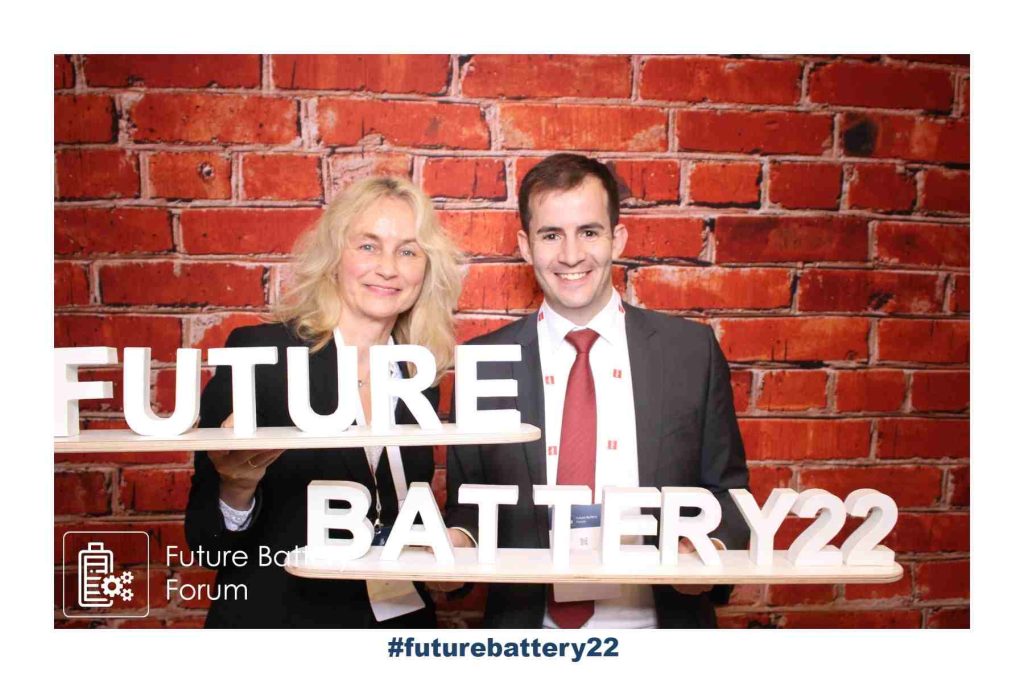
This year, the Future Battery conference was held as a hybrid event at the EstrelConferenceCenter (ECC) Berlin and online with a supporting app. With 80 exhibition booths, visitors could explore the new ideas and technologies of the participating companies on site and obtain valuable information about products and developments. A very agile event format that brought together about 500 participants directly and another 2,500 participants online. This brought together automotive OEMs, manufacturers of battery systems and cells, and their suppliers, so that the complete value-added spectrum of battery technology could be included.
It was a lively and exciting exchange with a view far into the future to technological leaps that are already emerging today. For MPR International there were many insights to current and future opportunities. The massive increase in demand for batteries themselves in the field of e-mobility, as well as the demand for battery testing and approval oand/or registration in countries around the world has increased enormously. For MPR International this means that we have significantly increased our testing capacities therough our partner network. We have been receiving requests for testing from manufacturers who can no longer keep up with their test capacities. We are now able to offer extensive testing in Germany, other EU countries, the UK and the USA for battery testing at short notice and to carry out any necessary certifications. Of particular note here for India is BIS certification and AIS certification, which are mandatory for many components and equipment involved in battery manufacturing.
If you are interested in understanding what requirements are needed for your product to be imported into India, please do not hesitate to contact us by email or phone (Europe: +49-69-271 37 69 261, US: +1 773 654-2673). There is no cost or obligation for us to check for you. If a certification need is discovered we can provide a quotation to make sure that all your certification needs are covered.
Nokia hopes India will help shape global 6G standards
Finnish telecom equipment supplier Nokia is counting on India to help shape 5G Advanced and 6G network technologies. As a result, the company has increased its efforts and presence in India through Bell Labs, its subsidiary responsible for research. According to Nokia’s CTO and CSO Nishant Batra, India’s expertise and resources are currently underestimated. In doing so, he admitted that standards could not come from India as a country, but stressed that skilled experts and manpower would play their part. That’s why Nokia is expanding Bell Labs’ operations in India right now. Batra expects a rapid increase in the number of users of this network, as well as the upcoming generation 6G, due to the falling prices of 5G-enabled devices. He mentioned that when 5G was launched 18 months ago, device prices were so high that only a small percentage of the population could benefit. Now, however, the technology has reached most users and is well received, he said. Therefore, Batra said, it is important to have a robust plan for the rollout of 5G and the introduction of 6G in India. WPC certification is necessary for wireless products in order to be used and sold in India.
The WPC (Wireless Planning & Coordination) is the national broadcasting authority in India and is part of the Ministry of Communications and Information Technology. It was established in 1952 and is headquartered in New Delhi, with additional regional offices in Mumbai, Chennai, Kolkata and Guwahati. The WPC’s main tasks are to issue amateur radio licenses and to allocate and monitor the frequency spectrum. In addition, the WPC is responsible for WPC ETA certification (WPC Equipment Type Approval ETA) and other radio approvals. For foreign manufacturers, only the WPC ETA Approval is relevant in most cases. The WPC certification is used synonymously for the ETA (Equipment Type Approval) abroad.
The national broadcasting authority WPC (Wireless Planning & Coordination) is responsible for this certification, in order to regulate the issuing of issuing of amateur radio licenses and the allocation and monitoring of the frequency spectrum.
If you are interested in understanding what requirements are needed for your product to be imported into India, please do not hesitate to contact us by email or phone (Europe: +49-69-271 37 69 261, US: +1 773 654-2673). There is no cost or obligation for us to check for you. If a certification need is discovered we can provide a quotation to make sure that all your certification needs are covered.
For more information about WPC certification, please refer to our free brochure “WPC Certification Made Easy“.
Passenger car sales in India could reach new record levels in 2022
Passenger car sales in India could be around 250,000 units higher than previous calculations, according to estimates. Industry experts told the Economic Times of India that the current figures are already record highs. The automotive industry cited the improved supply situation for components and thus an increase in production as reasons. In addition, dealers continued to receive many pre-orders for new vehicles in the run-up to the festive season, despite high inflation and rising interest rates on loans. Overall, experts estimate that around 3.65 million passenger cars will be sold in calendar year 2022. This represents an increase of 17 to 20 percent compared to the previous year. Vinkesh Gulati, president of the Automobile Dealers Association, said this year could be the best year yet in terms of sales figures. Previously, 2018 was considered a record-breaking year, with about 3.4 million vehicles sold. Cars and their components must be certified in India according to AIS guidelines.
Although sales dropped to 2.4 million units during the corona pandemic in 2020, the situation has improved significantly since then. Demand, for example, rose far beyond automakers’ production capacities, leading to long waiting times for new vehicles. The global shortage of computer chips, which are also increasingly being installed in vehicles, further exacerbated the supply situation. Nevertheless, sales figures rose to around 3 million units in 2021. What makes automakers optimistic for the current year is the introduction of numerous new models and the good response to them from customers. New models include Suzuki’s Brezza and Grand Vitara, Hyundai Tucson, Tata Punch, and Mahindra & Mahindra’s XUV700 and Scorpio, among others. Currently, pre-orders for new models entering the market total approximately 725,000 vehicles.
Depending on the product category, there are different certification steps if you want to import automotive products and components in India. Please feel free to contact us for more details and advice on AIS certification and other certifications. Send us an email or call us at +49692713769261.
If you have any questions you can also use our chat-window in the bottom right. (Please check your browser settings if you can’t see the window)
You can also check out our free AIS-Brochure, which can be downloaded right here as a PDF file.
New Requirements for Tyres Under IS 15636
On June 28, 2022 the Ministry of Road Transport and Highways in India has issued a notification affecting tyres falling under the Indian Standard IS 15636:2012. Besides the name change in sub rule (1) to IS 15636:2019, the notification mandates requirements of rolling resistance, wet grip and rolling sound emissions for tyres as defined in the AIS (Automotive Industry Standard )142:2019.
Tyre classes that are affected include classes C1 (passenger cars), C2 (light truck) and C3 (truck and bus), as defined in the AIS 142:2019. Numerous tire types require BIS certification in India.
The changes will be implemented on October 1, 2022 for new designs of tyres and on April 1, 2023 for existing designs.
| SI. No. | Tyre Description | Date of Implementation | |
| Rolling Resistance, Wet Grip | Rolling Sound | ||
| (1) | (2) | (3) | (4) |
| 1. | New designs of tyres to be fitted on motor vehicles and falling under Class C1, C2 and C3 as applicable as per of AIS 142 | October 1, 2022 | October 1, 2022 |
| 2. | Existing designs of tyres to be fitted on motor vehicles and falling under Class C1, C2 and C3 as applicable as per AIS 142 | April 1, 2023 | June 1, 2023 |
For more information on how the India Certification could impact your business, or more specific information about the BIS certification, please visit our website and news section.
We will be happy to support you with the BIS certification and are available at any time to answer your questions. Write us an email or call us at +49-69-2713769150 (EU) or +1 773-654-2673 (US).
You can also view our free India Certification Brochure, which you can download as a PDF file here.
Validity of new TEC certificates extended
The TEC (Telecommunication Engineering Centre) recently announced that newly issued MTCTE certificates will from now on be valid for ten years instead of only five.
MTCTE stands for “Mandatory Testing and Certification”. According to the Indian Telegraph (Amendment) Rules of 2017, telecom products are subject to mandatory certification and testing in India. The TEC certification must be completed before importation into India. Therefore, products must comply with the “Essential Requirements” regulations and imported products must undergo testing in accredited test laboratories in India.
Previously, TEC certificates were valid for five years and then had to be renewed. In a sudden official announcement on July 1st, 2022, TEC made public that new TEC certificates will be valid for ten years with immediate effect.
Manufacturers should note, however, that older certificates are still only valid for five years. The change is part of the Indian government’s Ease of Doing Business (EODB) in India Initiative. The aim of the initiative is to reduce bureaucratic hurdles and simplify regulations in order to promote international investment in the Indian economy. Against this background, the TEC has already made changes to the existing certification requirements in the past. As the Indian government continues to strive to attract foreign investors, further changes can be expected in the future.
TEC certification has been around many years before 2019 as a voluntary certification, but since April 2019 the certification has been mandatory and every year the Telecommunication Engineering Center (TEC) expands the certification catalog and adds more telecom products. See the list of TEC standards here.
If you are interested in understanding what requirements are needed for your product to be imported into India, please do not hesitate to contact us by email or phone (Europe: +49-69-271 37 69 261, US: +1 773 654-2673). There is no cost or obligation for us to check for you. If a certification need is discovered we can provide a quotation to make sure that all your certification needs are covered.
For more information about TEC certification, please refer to our free brochure “TEC Certification Made Easy“.
Indian city of Delhi bans soaps and detergents that pollute the Yamuna River
The government of the Indian city of Delhi is banning the sale, storage and advertising of soaps and detergents that do not meet current BIS standards in an effort to curb pollution of the Yamuna River. The ordinance, issued by the Delhi Pollution Control Committee (DPCC), authorizes city and state agencies to comply with and monitor the regulation. The relevant departments are also asked to submit monthly reports on their activities. Failure to comply will result in penalties under the Water Prevention and Control of Pollution Act, according to the DPCC’s regulation.
The ordinance grew out of the recommendations of the National Green Tribunal (NGT) Environment Commission, which had submitted the proposal to the Delhi government that has now become law. The NGT also recommended an awareness campaign on the harmful effects of low-quality soaps and detergents. According to the DPCC, unregulated use of soaps and detergents that do not meet BIS standards has been identified as one of the causes of deteriorating water quality in the Yamuna River. There is a possibility that chemical substances that are not permitted are used in these products or during their manufacture. This harms aquatic life, water quality, and people and animals that depend on the river’s water, according to the DPCC’s decree.
A large number of various products require BIS certification in order to import them into India or place them on the market. Depending on the product, a distinction is made between BIS-ISI or BIS-CRS certification. Since the product list is constantly being expanded, we will be pleased to help you with an initial assessment.
Since 2012, the BIS has been gradually expanding the certification catalog and continuously adding additional goods. BIS certification mandatory for many electronic products for industrial and consumer uses. Factory inspections are also required for some products.
If you are interested in understanding what requirements are needed for your product to be imported into India, please do not hesitate to contact us by email or phone (Europe: +49-69-271 37 69 261, US: +1 773 654-2673). There is no cost or obligation for us to check for you. If a certification need is discovered we can provide a quotation to make sure that all your certification needs are covered.
If you have any questions you can also use our chat-window in the bottom right. (Please check your browser settings if you can’t see the window)
For more information about BIS certification, please refer to our free brochure “BIS Certification Made Easy“.
Sales of passenger cars in India to reach record levels in the first half of 2022
According to experts, India will reach a new record high in new car sales figures in the first six months of the current year 2022. Midsize and premium vehicles, in particular, contributed to this positive development, according to auto industry executives and consultants. Despite ongoing supply bottlenecks for certain components and a pending higher inflation rate, around 1.8 million passenger cars, SUVs and minivans were sold in the first half of the year. The figure surpasses the previous record set in 2018, when 1.7 million units were sold in the comparable period. With further pre-orders of between 750,000 and 800,000 units, automakers are positive about the remaining months of 2022. Cars and their components must be certified under AIS guidelines in India.
Kia India, represented by acting CEO Tae-Jin Park, told the Economic Times of India that his company expects demand for new cars to remain high in the coming months. He reasoned that many customers avoided major purchases during the pandemic but are now in a buying mood, Park said. Pre-orders at competitor Maruti Suzuki also total more than 300,000 vehicles. Sales of mid-range vehicles are on the upswing, while lower-priced cars are being bought more cautiously, according to a senior executive at a leading automaker who wished to remain anonymous. This statement is also consistent with figures from consulting firm JATO Dynamics, which found longer wait times for midsize vehicles and SUVs. In simplified terms, these range from 12 to 40 weeks for models such as the Tata Nexon, Mahindra Thar, Maruti Suzuki Ertiga and the Hyundai Creta. According to Ravi Bhatia, president of JATO Dynamics, the current vehicle inventory at dealers is about 146,000 units, not the usual 280,000 to 290,000 units. The Automobile Dealers Association is also noting higher demand. According to its president, Vinkesh Gulati, the waiting time for passenger cars currently averages three months. According to Gulati, numerous pre-orders and low cancellation figures point to perhaps the best year ever in terms of passenger car sales.
MPR International GmbH – India Certification will be pleased to assist you with AIS certification and is also available to answer any questions you may have.
Please do not hesitate to contact us for further details and consultation. You can contact us via e-mail, or call us (UK: +44 2071931135, Rest of Europe: +49 69 2713769261, US: +1 773 654-2673).
If you have any questions you can also use our chat-window in the bottom right. (Please check your browser settings if you can’t see the window)
You can also check out our free AIS-Brochure, which can be downloaded right here as a PDF file.
 We are part of the CERTANIA-Group.