


Schließen


BIS Standards – Implementations next Month – April 2026
We regularly publish advance information from the Bureau of Indian Standards (BIS) regarding new Quality Control Orders that will come into effect in the near future. Affected products must be BIS-certified in order to be approved for import and sale in India. Several QCOs will enter into force in April 2026, with a particular focus on BIS certification for metal-based products such as cookware, utensils, aluminium products, and related accessories.
The Quality Control Orders (QCOs) issued by the Bureau of Indian Standards (BIS) are mandatory regulations that ensure certain products comply with national quality standards. While BIS standards are usually voluntary, QCOs make compliance compulsory for the specified products. This is intended to protect human health, animals, and the environment, as well as to ensure product quality in India. QCOs apply to a wide range of products such as chemicals, metals, toys, and electrical goods. Violations of QCOs can result in severe penalties, including fines or imprisonment.
Below is an overview of the new Quality Control Orders that will come into force next month:
| Ministry/ Department// Ministerium/ Abteilung | Product/ Produkt | Indian Standard | Enforcement date/ Datum des Inkrafttretens |
| Ministry of Steel | Cookware | IS 14756 | 14 April 2026 |
| Ministry of Steel | Utensils | IS 13983 | 14 April 2026 |
| Ministry of Steel | Food & Beverage Cans | IS 18427 | 14 April 2026 |
| Ministry of Commerce & Industry | Aluminium utensils | IS 1660 | 14 April 2026 |
| Ministry of Commerce & Industry | Aluminium beverage cans | IS 14407 | 14 April 2026 |
| Department for Promotion of Industry and Internal Trade (DPIIT) | Work chairs | IS 17631 | 14 April 2026 |
| Department for Promotion of Industry and Internal Trade (DPIIT) | Chairs & stools | IS 17632 | 14 April 2026 |
| Department for Promotion of Industry and Internal Trade (DPIIT) | Tables & desks | IS 17633 | 14 April 2026 |
| Department for Promotion of Industry and Internal Trade (DPIIT) | Storage units | IS 17634 | 14 April 2026 |
| Department for Promotion of Industry and Internal Trade (DPIIT) | Beds | IS 17635 | 14 April 2026 |
| Department for Promotion of Industry and Internal Trade (DPIIT) | Bunk beds | IS 17636 | 14 April 2026 |
| Department for Promotion of Industry and Internal Trade (DPIIT) | Electrical accessories | Various IS standards (amendment, no new central standard block) | 14 April 2026 |
| Department for Promotion of Industry and Internal Trade (DPIIT) | Aluminium & aluminium alloy products | Various IS standards (e.g. IS 733, IS 736, IS 737, IS 739, IS 1285, etc.) | 14 April 2026 (phased enforcement start) |
If you are interested in understanding what requirements are needed for your product to be imported into India, please do not hesitate to contact us by email or phone (Europe: +49-69-271 37 69 261, US: +1 773 654-2673). If a certification need is discovered we can provide a quotation to make sure that all your certification needs are covered.
If you have any questions you can also use our chat-window in the bottom right. (Please check your browser settings if you can’t see the window)
For more information about BIS certification, please refer to our free brochure “BIS Certification Made Easy“.
BIS Issues Extended Reality Products Certification Guidelines in India
The BIS certification for Extended Reality products has entered a new phase following the release of updated implementation guidelines by the Bureau of Indian Standards (BIS). The guidance applies to Extended Reality (XR) products, including Augmented Reality (AR), Virtual Reality (VR), and Mixed Reality (MR) devices, and aligns with the Ministry of Electronics and Information Technology (MeitY) notification issued on 29 October 2025.
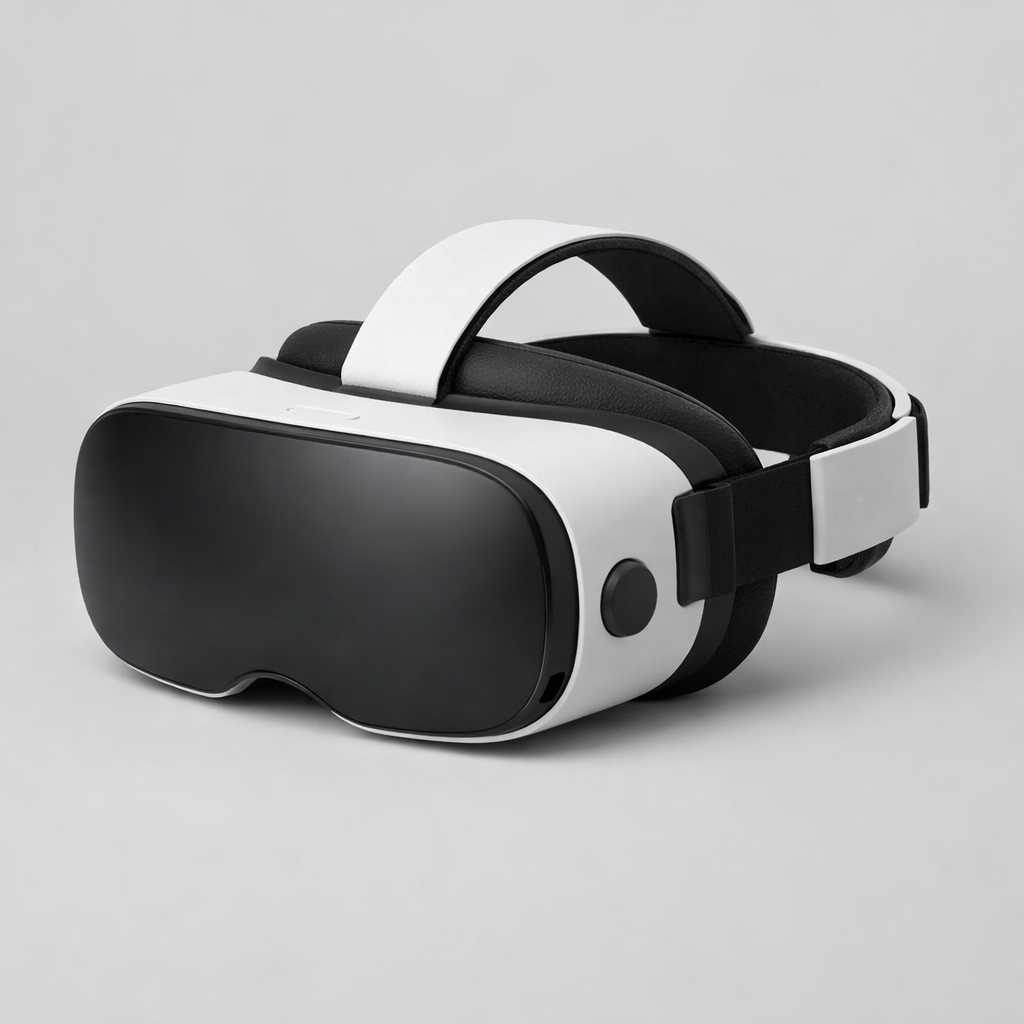
The updated framework mandates compliance under the BIS Compulsory Registration Scheme (CRS), introducing the safety standard IS/IEC 62368-1:2023 for XR devices. A transition period allows manufacturers to continue using legacy standards such as IS 13252-1 or IS 616 alongside the new requirements until 1 May 2026. After this deadline, only licenses based on IS/IEC 62368-1 will remain valid. Extended Reality (XR) products usually require BIS certification in order to be approved for import and sale in India.
Transition Requirements for Existing License Holders
Manufacturers currently holding BIS licenses for XR devices must undertake a structured transition to the new standard before the May 2026 deadline. This includes re-testing lead models in BIS-recognized laboratories according to IS/IEC 62368-1:2023 and submitting updated test reports through the BIS online portal. Additionally, manufacturers must provide a formal declaration confirming that all associated product series comply with the revised standard.
Failure to meet these requirements within the specified timeframe may result in regulatory consequences, including license cancellation or removal of specific models from the approved scope. Upon successful verification, BIS will issue confirmation documentation listing compliant models, ensuring continued market access.
Application and Scope Change Provisions
The guidelines also define clear pathways for new applicants and modifications to existing licenses. Applications submitted under previous standards may still be processed, and new applications can be filed under either the old or new standards until 1 May 2026. However, applicants choosing the legacy standards must commit to transitioning to IS/IEC 62368-1 before the deadline.
After the transition period, BIS will no longer accept applications based on outdated standards. Similarly, any request to expand or modify a license scope—such as adding new XR models—must follow the same transitional rules. Requests under older standards will only be considered within the defined timeframe or until the manufacturer initiates the switchover process.
Overall, the updated BIS framework reflects India’s effort to enhance safety and regulatory oversight for emerging XR technologies. Manufacturers and exporters targeting the Indian market are advised to prioritize early compliance with IS/IEC 62368-1:2023 to avoid disruptions. Further regulatory updates and certification guidance may be referenced through official BIS resources and related compliance channels.
If you are interested in understanding what requirements are needed for your product to be imported into India, please do not hesitate to contact us by email or phone (Europe: +49-69-271 37 69 261, US: +1 773 654-2673). If a certification need is discovered we can provide a quotation to make sure that all your certification needs are covered.
If you have any questions you can also use our chat-window in the bottom right. (Please check your browser settings if you can’t see the window)
For more information about BIS certification, please refer to our free brochure “BIS Certification Made Easy“.
India BIS Certification Update: IS/IEC 62368-1:2023 Transition Guidelines
India’s BIS certification framework for audio/video and ICT equipment is undergoing a significant update with the introduction of IS/IEC 62368-1:2023. Following the MeitY notification issued on 29 October 2025, the Bureau of Indian Standards (BIS) has published detailed implementation guidelines for transitioning from legacy safety standards to this new harmonized standard. The update reflects India’s effort to align its regulatory regime with internationally recognized safety requirements for electronic products.

The transition replaces existing standards, including IS 616:2017 and IS 13252 (Part 1):2010, with IS/IEC 62368-1:2023, which introduces a hazard-based safety approach for audio/video and ICT equipment. A concurrent validity period has been established until 1 November 2028, allowing manufacturers to continue using either the old or new standards during this phase. Audio/video and ICT equipment usually require BIS Certification in order to be approved for import and sale in India.
Scope, Timeline, and Compliance Obligations
The updated standard applies to a broad range of products regulated under the Compulsory Registration Scheme (CRS), including laptops, televisions, printers, scanners, power banks, CCTV cameras, smart speakers, wireless headphones, webcams, and amplifiers. After 1 November 2028, the legacy standards will be formally withdrawn, making IS/IEC 62368-1:2023 the sole applicable safety standard for these product categories.
Existing license holders are required to complete the transition before the deadline to maintain market access. This includes submitting valid test reports for representative models from BIS-recognized laboratories and filing applications through the BIS online portal under the standard revision or amendment process. Additionally, manufacturers must provide a formal declaration confirming that all product variants within a series comply with the updated standard. Non-compliance after the deadline may result in license cancellation or removal of approved models from the registry.
Certain product categories must also meet supplementary regulatory requirements. For example, televisions must comply with IS 18112:2025, mobile phones with IS 16333 (Part 3):2022, and IP-based CCTV cameras with applicable security essential requirements. Where relevant, manufacturers must submit corresponding test reports or provide declarations if such standards do not apply.
Implications for New Applicants and Market Access
For new applicants, BIS allows temporary flexibility during the transition period. Applications may still be submitted under existing standards if product testing has already been completed or samples have been submitted. However, applicants must commit to transitioning to IS/IEC 62368-1:2023 within the defined timeline. After the 2028 deadline, new registrations under the older standards will no longer be accepted.
This regulatory shift represents a modernization of India’s product safety framework, emphasizing globally aligned standards and improved risk-based safety evaluation. Manufacturers and exporters targeting the Indian market are advised to initiate compliance activities early to avoid disruptions. Further regulatory updates and detailed guidance may be available through official BIS resources and certification service providers.
If you are interested in understanding what requirements are needed for your product to be imported into India, please do not hesitate to contact us by email or phone (Europe: +49-69-271 37 69 261, US: +1 773 654-2673). If a certification need is discovered we can provide a quotation to make sure that all your certification needs are covered.
If you have any questions you can also use our chat-window in the bottom right. (Please check your browser settings if you can’t see the window)
For more information about BIS certification, please refer to our free brochure “BIS Certification Made Easy“.
India Enables 6 GHz Band for WPC ETA-SD Certification
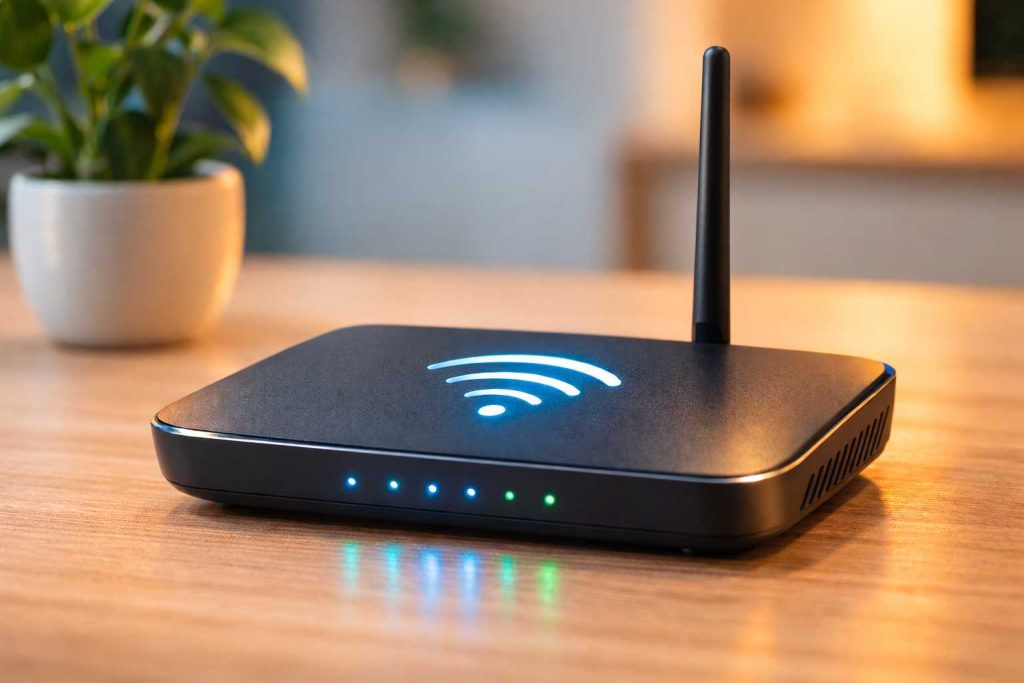
India’s telecommunications regulator has expanded the scope of the WPC ETA-SD certification by enabling the use of the 6 GHz de-licensed frequency band (5945–6425 MHz) in the Saral Sanchar portal. The update follows GSR 47(E) issued on 20 January 2026 and introduces new compliance considerations for wireless device manufacturers seeking market access. The change allows applicants to include the 6 GHz band when applying for equipment authorization through the online portal. Wireless communication devices usually require WPC certification in order to be approved for import and sale in India.
Update to WPC Portal and 6 GHz Band Eligibility
The Wireless Planning and Coordination (WPC) Wing has updated the Saral Sanchar portal to align with the regulatory notification under GSR 47(E). As part of this update, applicants submitting applications for Equipment Type Approval under the ETA-SD (Self-Declaration) scheme can now declare operation within the 5945–6425 MHz de-licensed spectrum band.
The introduction of the 6 GHz band expands the regulatory framework for short-range wireless technologies, including products that may rely on higher-bandwidth connectivity such as Wi-Fi and other low-power communication systems. By allowing this band under ETA-SD filings, the WPC portal now supports certification pathways for devices designed to operate in this newly available spectrum range.
Manufacturers and importers submitting new applications through the Saral Sanchar system can therefore include the 6 GHz band directly within their certification request, provided the device specifications comply with the relevant WPC technical requirements for de-licensed spectrum usage.
Implications for Previously Certified Devices
The portal update also introduces specific requirements for devices that already hold a WPC ETA-SD certificate but are later modified to support the 6 GHz band. If a previously certified device or model is updated—such as through a software upgrade—to enable operation in the 5945–6425 MHz range, the existing certification cannot simply be amended.
In these situations, applicants must first withdraw the previously issued ETA-SD certificate and then submit a new application reflecting the updated radio capabilities. This ensures that the WPC authorization accurately reflects the technical configuration of the product placed on the Indian market.
For certain special cases, the WPC authority may allow applicants to consult directly regarding possible certificate modifications or other regulatory guidance. Manufacturers planning to update existing devices should therefore assess certification implications early in the product update cycle to avoid disruptions to compliance or market access.
Further regulatory details and procedural guidance related to WPC certifications and portal updates may be available through official certification and regulatory information resources.
WPC certification is necessary for wireless products in order to be used and sold in India.
The national broadcasting authority WPC (Wireless Planning & Coordination) is responsible for this certification, in order to regulate the issuing of issuing of amateur radio licenses and the allocation and monitoring of the frequency spectrum.
If you are interested in understanding what requirements are needed for your product to be imported into India, please do not hesitate to contact us by email or phone (Europe: +49-69-271 37 69 261, US: +1 773 654-2673). There is no cost or obligation for us to check for you. If a certification need is discovered we can provide a quotation to make sure that all your certification needs are covered.
For more information about WPC certification, please refer to our free brochure “WPC Certification Made Easy“.
India Updates BIS Requirements for LED Lamps Standard 2026
India has introduced a regulatory update for the BIS certification for LED lamps, following the publication of the revised safety standard IS 16102 (Part 1): 2026. The Bureau of Indian Standards (BIS) has issued official implementation guidelines requiring manufacturers of self-ballasted LED lamps to transition from the previous 2012 version of the standard to the newly revised requirements.
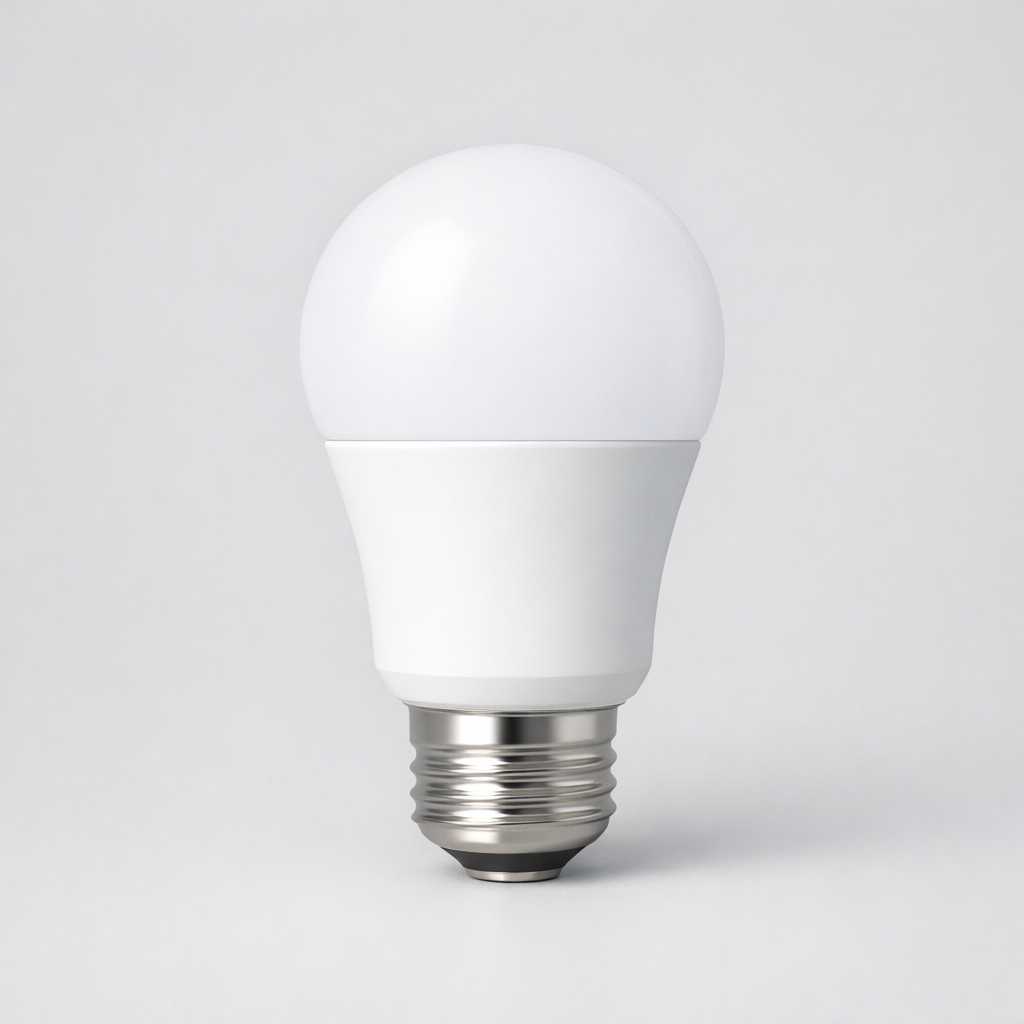
According to the announcement released on 24 February 2026, the earlier IS 16102 (Part 1): 2012 standard will remain valid only for a limited transition period. The previous version will be formally withdrawn after 2 August 2026, after which compliance with IS 16102 (Part 1): 2026 will become mandatory for all applicable products. The implementation guideline took effect immediately, giving manufacturers a defined timeline to update testing, documentation, and certification activities. Self-ballasted LED lamps usually require BIS certification in order to be approved for import and sale in India.
Key Technical Updates in the Revised Standard
The updated IS 16102 (Part 1): 2026 introduces several new technical requirements and expands the scope of products covered by the standard. One of the notable changes is the extension of the rated input power range for LED lamps from 35 W to 60 W, broadening the applicability of the regulation.
Additional safety provisions have also been introduced. The revised standard now requires photo-biological safety testing and corresponding product markings. New testing provisions address abnormal operating conditions and revise fault condition testing requirements to enhance product safety evaluation.
The standard also introduces ingress protection (IP) testing requirements and adds specific labeling obligations for lamps that are not suitable for water contact. Furthermore, LED lamps equipped with non-removable rechargeable batteries are now explicitly included in the scope of the regulation.
Mechanical safety testing has also been strengthened. For example, the revised standard introduces testing requirements for the axial strength of Edison caps to verify mechanical integrity under specified conditions.
Compliance Timeline and Impact on Manufacturers
Manufacturers holding existing BIS licenses must transition their products to the revised standard before the deadline of 2 August 2026. As part of the transition process, license holders are required to submit complete test reports for lead models based on the new standard and provide an undertaking confirming that all series models comply with IS 16102 (Part 1): 2026.
Failure to complete the transition within the specified timeframe may result in regulatory consequences. BIS may cancel the existing license or remove non-compliant models from the scope of the certification.
For new certification applications, products already undergoing testing may continue under the 2012 version of the standard during the transition phase. However, applicants must submit a declaration confirming their intention to adopt the revised requirements before the deadline. After 2 August 2026, BIS will no longer grant new licenses based on the previous standard.
Manufacturers planning changes to the scope of an existing license should also consider the transition timeline, as applications under the earlier standard will only be accepted until the license is updated to the revised requirements or until the implementation deadline is reached. Early preparation, including updated testing and documentation, can help ensure continued market access and uninterrupted certification status in India.
If you are interested in understanding what requirements are needed for your product to be imported into India, please do not hesitate to contact us by email or phone (Europe: +49-69-271 37 69 261, US: +1 773 654-2673). If a certification need is discovered we can provide a quotation to make sure that all your certification needs are covered.
If you have any questions you can also use our chat-window in the bottom right. (Please check your browser settings if you can’t see the window)
For more information about BIS certification, please refer to our free brochure “BIS Certification Made Easy“.
 We are part of the CERTANIA-Group.