


Schließen


PC shipments in India reach 5-year high
Around 4.1 million devices were sold in India in Q2 2021, setting a new record high, while year-on-year growth was 42.7 per cent. This was reported by market researchers Canalys. The total 4.1 million devices comprise 2.4 million laptops, 515,000 desktop PCs, more than one million tablets and 54,000 high-end workstations. According to Canalys, HP defended its top position as market leader with 26 per cent market share, followed by Lenovo (20.5 per cent), Dell (12.8 per cent) and Samsung (9.8 per cent). According to Canalys, almost all product segments grew in the double-digit range compared to the previous year. According to the market researchers, this is due to the restraint in the second quarter of 2020, when India was in lockdown as a result of the Covid 19 pandemic. Desktop PCs as well as accessories, like many other products, can fall into the broad category of electronic devices requiring BIS certification.
Laptops, in particular, saw good growth of 43 per cent, adds the Canalys report. Shipments of tablets posted their highest quarterly result since 2016, up 52 per cent, while desktop PC demand was 23 per cent stronger. Samsung posted the biggest gains among manufacturers with a strong 134 per cent. Canalys attributes this to Samsung’s good market position as well as purchases from numerous government agencies and private educational institutions. The analysts expect Samsung to continue to benefit from the expansion of distance learning and the devices it requires. Overall, the level of shipments is back to pre-pandemic levels, Canalys said. Towards the end of this year, some government and private tenders for the procurement of IT equipment that were suspended due to the Covid 19 pandemic will be made up.
Electronic components or finished electronic devices need BIS certification to import them into India or bring them to the market. Depending on the product, a distinction is made between BIS-ISI or BIS-CRS certification. As the product list is constantly being expanded, we will be happy to help you with an initial assessment. MPR International GmbH – India Certification supports you with a pending BIS certification and is also available at any time to answer any questions you may have.
Since 2012, the BIS has been gradually expanding the certification catalog and continuously adding additional goods. BIS certification mandatory for many electronic products for industrial and consumer uses. Factory inspections are also required for some products.
If you are interested in understanding what requirements are needed for your product to be imported into India, please do not hesitate to contact us by email or phone at +49-69-271 37 69 261. There is no cost or obligation for us to check for you. If a certification need is discovered we can provide a quotation to make sure that all your certification needs are covered.
If you have any questions you can also use our chat-window in the bottom right. (Please check your browser settings if you can’t see the window)
For more information about BIS certification, please refer to our free brochure “BIS Certification Made Easy“.
Successful participation in the virtual Symposium on International Automotive Technology (SIAT) in India
From September 29 to October 01, 2021, the Symposium on International Automotive Technology (SIAT) took place in India with a variety of informative expert presentations around the topic “Redefining Mobility for the Future”.
After the official opening, plenary sessions discussed a variety of topics for the future. Topics ranged from alternative energies, e-mobility, emission control, to the general challenges in the international certification market.
Julian Busch, Managing Director of MPR International from Frankfurt, gave an overview of the current challenges in the international certification market. He explained the various types of certifications, how they are applied worldwide in a comparable form and how they differ greatly nationally. In this context, the increasingly complex test requirements represent a major challenge for the manufacturers of vehicles and components.
Currently, the most important certifications for the Indian automotive market are AIS (Automotive Industry Standards) certification or a certification from the BIS (Bureau of Indian Standards). The product scope for BIS certification alone was expanded by 242 product groups last year. The Indian authorities plan to continue this trend.
Automotive manufacturers and Indian test centres alike benefited from the information provided at the seminars. The information is valuable since the India market is booming with projected growth into the foreseeable future making product certifications more relevant. Due to the ever-increasing complexity of regulations, it is also important for the local test infrastructure to stay up to date.
To obtain certification in India, domestic and foreign automotive manufacturers must meet the same requirements. For example, in most cases, a factory audit and product testing are required as part of the certification process for both domestic and foreign manufacturers. Some products even require more than one certification. Good preparation and knowledge of the current regulations are crucial for smooth and trouble-free trading.
We will be happy to advise you on certification in India like AIS, BIS, WPC, TEC or PESO and are always available to answer your questions.
Please do not hesitate to contact us for further details and consultation. You can contact us via e-mail, or call us (UK: +44 2071931135, Rest of Europe: +49 69 2713769261, US: +1 773 654-2673).
If you have any questions you can also use our chat-window in the bottom right. (Please check your browser settings if you can’t see the window)
You can also check out our free AIS-Brochure and BIS-Brochure which can be downloaded for free in PDF format.
Indian automakers must build ethanol vehicles
The Indian central government has long advocated the use of ethanol in road transport as an environmentally friendly alternative to fossil fuels. Previously, Nitin Gadkari, the minister responsible for transport and highways, had urged car manufacturers to introduce so-called “flex fuel” engines. The government will soon present corresponding guidelines and laws, the minister said. There is a determination to follow the example of Brazil, where the “flex fuel” concept allows drivers to decide whether to fill up with gasoline or ethanol, Gadkari said at an event. The technology, he said, is fully developed and available, and the switch to bio-ethanol vehicles an easy one. Within six months, the ministry will publish the relevant legislation. Growth in demand for relevant vehicles, as hoped for by the automotive industry, could lead to rising production figures. Accordingly, imports of parts and components that are partly subject to AIS approval would also increase.
The availability of ethanol will be ensured by opening new gas stations and expanding existing pumps. The price of a liter of bio-ethanol will be around 65 Indian rupees (€0.75), according to the ministry. As part of the rollout, 450 additional bio-ethanol production facilities are expected to be established. Current annual capacity is 4.65 million liters, with another 10 million liters to follow, to be blended with gasoline. The domestic oil and fuel industry is ready to sign 10-year contracts to process ethanol, he said. India also plans to introduce E20 fuel at all service stations nationwide by 2023. The ultimate goal of running on pure ethanol (E100) can only be realized after flex-fuel vehicles are introduced. In addition to reduced dependence on the global oil market and a better environmental footprint, ethanol will also be cheaper for drivers. Currently, 1 liter of gasoline in India costs an average of 100 Indian Rupees (€1.16) compared to the government capped price of 1 liter of ethanol at only 65 Indian Rupees (€0.75).
Vehicles with flexfuel engines are already available and widely used in countries such as the U.S., Canada and Brazil. Many of the car brands also have production facilities in India and are already exporting such vehicles to Brazil and Argentina. One of the most successful models is considered to be the Ford EcoSport, which is manufactured in India and exported to South America with a modified engine. The Renault Kwid, Jeep Compass and Volkswagen T-Cross (known as Taigun in India) are also available as FlexFuel vehicles in the South American car market. To be adapted as a FlexFuel engine, previous combustion engines generally only need to be fitted with special seals and an adapted engine control unit (ECU). Although the actual introduction of FlexFuel vehicles should not be a problem for Indian automakers from the government side, a bottleneck is expected in the registration or release of the vehicles. Currently, automakers are already experiencing delays in the homologation of their vehicles due to the introduction of the new CAFE2 (fleet fuel economy) and RDE (real driving emissions) emission standards.
Cars and their components must be certified in India according to AIS guidelines. AIS stands for Automotive Industry Standards, the technical automotive standards for India. MPR International GmbH – India Certification will gladly support you with AIS certification and is also available to answer any questions you may have.
AIS stands for Automotive Industry Standards, the technical automotive standards for India, while TAC stands for Type Approval Certificate. This kind of automotive product certifiation is conducted by authorities like the International Center for Automotive Technology (iCAT).
Depending on the product category, there are different certification steps. We will be happy to advise you on certification in India like AIS, BIS, WPC, TEC or PESO and are always available to answer your questions.
Please do not hesitate to contact us for further details and consultation. You can contact us via e-mail, or call us (UK: +44 2071931135, Rest of Europe: +49 69 2713769261, US: +1 773 654-2673).
If you have any questions you can also use our chat-window in the bottom right. (Please check your browser settings if you can’t see the window)
You can also check out our free AIS-Brochure, which can be downloaded right here as a PDF file.
Visit Us Online at the SIAT 2021 Automotive Trade Fair
The SIAT international trade fair, organised by the Indian Automobile Regulatory Authority (ARAI), will take place virtually online for the first time. Since 1985, SIAT (Symposium on International Automotive Technology) has been an important forum for the automotive market in India. From September 29 to October 1, 2021 renowned representatives of the automotive industry worldwide will come together with this year’s focus theme “Redefining Mobility” to advance the development of the industry through brainstorming and discussions.
In addition to the numerous digital exhibition stalls, a multifaceted programme invites visitors to exchange ideas. Exciting discussion panels on mobility and a wide variety of interesting online lectures form the supporting programme for numerous exhibitions by international manufacturers. The focus of the fair will be on automotive products such as lights, tyres, rims and safety glass. Other topics will include electric power trains and alternative fuels.
The keynote speech by our Managing Director Julian Busch is a special highlight. He will give a comprehensive overview of the relevant certifications for automotive products, Indian quality standard requirements and challenges that manufacturers face during the current global situation. Mr. Busch will then make himself available for further questions on these topics.
State-of-the-art trade fair technology makes it possible for discussion forums and one-on-one meetings to be held in parallel. MPR International and its team will also be present with its own virtual exhibition booth and will be happy to address your individual questions.
Regardless of whether you already have your sights set on the Indian market or simply want to find out about the possibilities – at the trade fair we will advise you personally via video chat. You can benefit from our comprehensive consulting services from the comfort of your desk. If you would like detailed advice, please feel free to schedule an appointment with us.
We look forward to your visit – Stall number EO202
Cell phone exports from India increased threefold in 2nd quarter of 2021
The rapid growth of India’s cell phone manufacturers and related industry continues. The value of exported goods tripled, reaching the equivalent of $589 million in the second quarter of 2021. According to the Indian Cellular and Electronics Association (ICEA), these are signs of recovery and further upturn in the industry. Last year at the height of the Covid 19 pandemic, export value was only around $164 million. ICEA Chairman Pankaj Mohindroo said the industry’s growth is in line with India’s Prime Minister Narendra Modi’s vision to make the country a manufacturing leader. The increased numbers also indicate a positive prognosis for future growth, which in turn indicates increased demand for imported resource materials and technical components for production, much of which in turn needs mandatory BIS certification.
Mohindroo added that despite a second Covid-19 wave, the industry has made substantial progress in manufacturing and exports. This was supported by government measures such as subsidies dependent on production volumes. In addition to cell phones, electronic goods in general saw export volumes double from the first quarter of last year, Mohindroo said. However, according to the ICEA, imports of laptops and tablets also increased by more than 50 percent in the second quarter of 2021 compared to the entire previous year. In numbers, the import value increased from $822 million to $1.37 billion.
The ICEA is keen to replicate India’s success in manufacturing and exporting cell phones to IT hardware such as PCs, laptops and tablets. Chairman Mohindroo said his association is in negotiations with the government to create conditions to support and attract hardware manufacturers to India. Ideally, the industry should meet at least 25 percent of global demand.
Electronic components or finished electronic devices require BIS certification in order to import them into India or place them on the market. Depending on the product, a distinction is made between BIS-ISI or BIS-CRS certification. Since the product list is constantly being expanded, we will gladly help you with an initial assessment. MPR International GmbH – India Certification supports you with a pending BIS certification and is also available at any time to answer your questions.
Since 2012, the BIS has been gradually expanding the certification catalog and continuously adding additional goods. BIS certification mandatory for many electronic products for industrial and consumer uses. Factory inspections are also required for some products.
If you are interested in understanding what requirements are needed for your product to be imported into India, please do not hesitate to contact us by email or phone at +49-69-271 37 69 261. There is no cost or obligation for us to check for you. If a certification need is discovered we can provide a quotation to make sure that all your certification needs are covered.
If you have any questions you can also use our chat-window in the bottom right. (Please check your browser settings if you can’t see the window)
For more information about BIS certification, please refer to our free brochure “BIS Certification Made Easy“.
India remains second-largest smartphone market, new Samsung Galaxy series receive BIS certification
Korean consumer electronics giant Samsung is about to launch its Galaxy Z Fold 3 and Galaxy Z Flip 3 models in India. At an event on August 11, the two smartphones were unveiled along with new smartwatches and earphones. Samsung has not yet given an exact date for a sales launch in India. However, it is now known that the soon-to-be-released Galaxy Z Flip 3 already successfully passed the BIS certification last month and received the corresponding approval for the Indian market.
The demand for smartphones in India, on the other hand, is unbroken. The Hindu newspaper reports that a new record for the number of smartphones shipped was set in the first half of 2021, despite a second wave of coronavirus. According to market analysts Counterpoint, 33 million devices were sold through online retailers and retail outlets. After low numbers in April and May, sales picked up in June after the lockdown was lifted and stores reopened. Chinese smartphone brands dominate retail with a combined 79 percent market share. Xiaomi leads with 28 percent, followed by Samsung, Vivo, Realme and Oppo. The share of 5G-enabled smartphones is steadily increasing and exceeded 14 percent at the end of Q3 2021. India has already become the world’s second-largest smartphone market by 2020.
Electronic components or finished electronic devices require BIS certification in order to import or market them in India. Here, a distinction is made between BIS-ISI or BIS-CRS certification, depending on the product. Since the product list is constantly being expanded, we will gladly help you with an initial assessment. MPR International GmbH – India Certification supports you with a pending BIS certification and is also available at any time to answer your questions.
Since 2012, the BIS has been gradually expanding the certification catalog and continuously adding additional goods. BIS certification mandatory for many electronic products for industrial and consumer uses. Factory inspections are also required for some products.
If you are interested in understanding what requirements are needed for your product to be imported into India, please do not hesitate to contact us by email or phone at +49-69-271 37 69 261. There is no cost or obligation for us to check for you. If a certification need is discovered we can provide a quotation to make sure that all your certification needs are covered.
If you have any questions you can also use our chat-window in the bottom right. (Please check your browser settings if you can’t see the window)
For more information about BIS certification, please refer to our free brochure “BIS Certification Made Easy“.
Indian minister unveils DGFT app for simplified trade
Commerce and Industry Minister Piyush Goyal unveiled the “DGFT Trade Facilitation App” at an online video conference. Developed by the Directorate General of Foreign Trade (DGFT), the application aims to provide traders in the import and export business with easy access to their data at any time. At the launch, Piyush said that the simplest trade transactions are often fraught with hurdles and with the introduction of a mobile application, these processes have been simplified. International trade in particular should benefit from the introduction of this app, Piyush said. He said he would like to see a move toward paperless and automated processes, simple purchase transactions and online data exchange between trading partners. This could be a boost to trade with India, where import and distribution of many product groups must take into account numerous product certifications, including AIS certifications for automotive products, PESO certifications for oil and gas industry products, and BIS certification for many other product categories.
According to Piyush, the DGFT Trade Facilitation App is ushering in the era of Industry 4.0 in India. The application enables real-time updates, notifications and tracking of trade transactions. Through the “Mobile India” approach, India aims to create new international trade relationships for small and medium-sized enterprises and the established foreign firms. India is pinning its hopes on export volume growth in the coming years. By 2025, exports are expected to increase to a value of 13.4 billion U.S. dollars, and the gross domestic product is expected to grow to 67 billion U.S. dollars.
In addition to actual trade goods, mobile devices such as smartphones and tablets are becoming increasingly important and almost indispensable for modern trade following the introduction of the DGFT app. The Indian smartphone market is dominated by renowned foreign brands such as Xiaomi, Samsung, Vivo, Oppo and Realme. All of these companies also have production facilities in India. Therefore, in addition to the production of end devices, the import of raw materials, starting materials and machinery is becoming increasingly important.
Electronic components or finished electronic devices require BIS certification in order to import them into India or bring them to market. Depending on the product, a distinction is made between BIS-ISI or BIS-CRS certification. For telecommunication products, it is also possible that TEC certification may be required as well as WPC ETA certification. Since the product list is constantly being expanded, we will gladly help you with an initial assessment. MPR International GmbH – India Certification supports you with a pending BIS certification and is also available at any time to answer your questions.
If you are interested in understanding what requirements are needed for your product to be imported into India, please do not hesitate to contact us by email or phone at +49-69-271 37 69 261. There is no cost or obligation for us to check for you. If a certification need is discovered we can provide a quotation to make sure that all your certification needs are covered.
If you have any questions you can also use our chat-window in the bottom right. (Please check your browser settings if you can’t see the window)
For more information about BIS certification, please refer to our free brochure “BIS Certification Made Easy“.
Indian authorities RDSO and BIS develop joint standards for the railroad sector
A department of the Indian Railways, the Research Design and Standards Organization (RDSO) and the Bureau of Indian Standards (BIS), which is responsible for standards, plan to work together on railroad standards in the future to ensure safe rolling stock and reliable operations. The collaboration came about under an overarching BIS project called “One Nation – One Standard.” Under this project, BIS is to collect and unify the various standards and regulations. The RDSO is the first agency selected within the project as an organization to develop new standards.
During the implementation of the project, the RDSO revised its specifications for drafting standards in the railroad sector and adapted them in accordance with the World Trade Organization (WTO) guidelines, a spokesperson for the Ministry of Consumer Affairs informed. The standards, revised in cooperation and consultation with the BIS, apply to products, operations and services in India’s rail sector. For a period of three years, the RDSO was granted the authority to amend and create standards. After that, renewal of the authority is required. A BIS publication indicated that under the objective of the “One Nation – One Standard” project, numerous other standardization authorities could cooperate under one umbrella. Therefore, further such collaborations as that between the RDSO and BIS are planned for the future.
Parts and components for the railroad sector require BIS certification in order to import them into India or to place them on the market. Depending on the product, a distinction is made between BIS-ISI or BIS-CRS certification.
Since 2012, the BIS has been gradually expanding the certification catalog and continuously adding additional goods. BIS certification mandatory for many electronic products for industrial and consumer uses. Factory inspections are also required for some products.
If you are interested in understanding what requirements are needed for your product to be imported into India, please do not hesitate to contact us by email or phone at +49-69-271 37 69 261. There is no cost or obligation for us to check for you. If a certification need is discovered we can provide a quotation to make sure that all your certification needs are covered.
If you have any questions you can also use our chat-window in the bottom right. (Please check your browser settings if you can’t see the window)
For more information about BIS certification, please refer to our free brochure “BIS Certification Made Easy“.
Undeterred by pandemic, Skoda Auto India expects record business next year
Czech automaker Skoda is confident of surpassing its previous 2012 record for new cars sold in India as early as the middle of next year. The reason for the optimistic outlook is rising demand as well as numerous new launches, a senior company official said. Skoda Auto India, whose peak of 34,265 new cars sold dates back to 2012, expects to sell at least 60,000 cars next year. Among them will be some new models that come from the Volkswagen Group’s India 2.0 project. For the production, imported vehicle components in India first require a TAC (Type Approval Certificate).
Skoda Auto India brand chief Zac Hollis told Press Trust India in an interview that his company may be able to surpass its previous sales record as early as the middle of next year. Plans call for 60,000 vehicles to be sold next year. They are on an excellent growth trajectory and the long-term goal for India is 100,000 vehicles sold annually, Hollis added. For the current year, 2021, Hollis expects to triple last year’s sales of 11,000 vehicles.
Last year, Skoda Auto India clearly felt the impact of the pandemic and their sales figures dropped to just 11,000 units. This year, a number of indicators point to an upturn in sales, this in Skoda’s case is supported with numerous premieres of new models for the Indian market. These include the recently unveiled fourth-generation Skoda Octavia, as well as the soon-to-be-released Kushaq SUV and an as-yet-unnamed midsize sedan at the end of the year. Brand chief Hollis pointed out that new models drive sales the most.
Currently, only about half of all dealerships are open, and garages also can’t operate at full capacity due to government regulations, Hollis said. However, he expects the measures to be eased and more openings to take place in July. Regarding the schedule of the Volkswagen India 2.0 project, Hollis said there have been no delays or disruptions due to the pandemic. As a result of the project, the first vehicle, the Kuhaq SUV, will be unveiled and go on sale in July. A midsize sedan is planned for the end of the year. Both vehicles are based on the VW Group’s MQB-A0-IN platform, with the “-IN” at the end indicating the regional market of India.
Vehicles must be certified in India according to AIS guidelines. AIS stands for Automotive Industry Standards, the technical automotive standards for India. MPR International GmbH – India Certification will be pleased to assist you with AIS certification and is also available to answer any questions you may have.
AIS stands for Automotive Industry Standards, the technical automotive standards for India, which are connected to the Type Approval Certificate. This kind of automotive product certifiation is conducted by authorities like the International Center for Automotive Technology (iCAT).
Depending on the product category, there are different certification steps. We will be happy to advise you on certification in India like AIS, BIS, WPC, TEC or PESO and are always available to answer your questions.
Please do not hesitate to contact us for further details and consultation. You can contact us via e-mail, or call us (UK: +44 2071931135, Rest of Europe: +49 69 2713769261, US: +1 773 654-2673).
If you have any questions you can also use our chat-window in the bottom right. (Please check your browser settings if you can’t see the window)
You can also check out our free AIS-Brochure, which can be downloaded right here as a PDF file.
Mercedes-Benz India sales up 34 percent in first quarter
In early April, the Swabian automaker’s Indian subsidiary reported a 34 percent increase in first quarter sales to a total of 3,193 new vehicles sold. Mercedes-Benz India was able to build on strong growth in the first two months of the current year. The Indian market, which regulates the circulation of automotive products with Central Motor Vehicle Rules Certifications, has already distinguished itself by growth potential in the past. The German premium carmaker sold 2,386 vehicles in India in the January-March period last year and is building on solid growth this year. Mercedes-Benz India said in a statement that the increase in the first quarter indicates a recovery in the auto market as well as is supported by numerous new models coming soon to the Indian market.
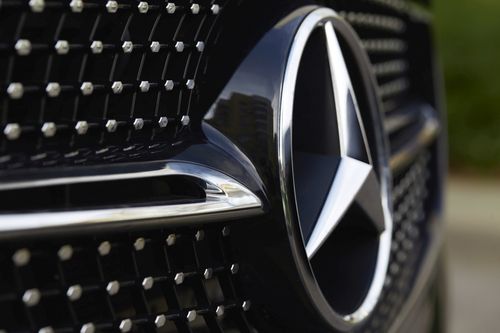
Martin Schwenk, managing director and chief executive officer of Mercedes-Benz India, said the strong sales figures in the first quarter of 2021, along with the imminent availability of new Mercedes models in India, point to a positive trend for the rest of the year. During the first three months of 2021, the long-wheelbase version of the E-Class continued to be Mercedes-Benz’s best-selling model. Overall, sedans accounted for more than half of all sales, with SUVs making up the remainder. According to Mercedes-Benz, the recently launched A-Class in India has generated an overwhelming response, and orders for April and May are already sold out. In addition, the facelifted E-Class, which was launched back in March, has been in demand among customers.
The company further reported that 19 percent of all orders in India were placed through digital channels such as websites or apps. Among Mercedes-Benz SUVs, the GLE leads the sales figures, followed by the GLC and GLS, the company said. Mercedes-Benz India CEO Schwenk has high hopes for the E-Class, which has been a best-seller so far, as well as the new launch of the A-Class.
Cars and their components must be certified under AIS guidelines in India. AIS stands for Automotive Industry Standards, the technical automotive standards for India. MPR International GmbH – India Certification will be pleased to assist you with AIS certification and is also available to answer any questions you may have.
Depending on the product category, There are various certification processes for different kinds of product categories. These range from CMVR Certification, BIS, and WPC, to TEC or PESO.
If you have questions regarding the classification and certification for your products, please do not hesitate to contact us for further details and consultation. You can contact us via e-mail, or call us (UK: +44 2071931135, Rest of Europe: +49 69 2713769261, US: +1 773 654-2673).
If you have any questions you can also use our chat-window in the bottom right. (Please check your browser settings if you can’t see the window)
You can also check out our free AIS-Brochure, which can be downloaded right here as a PDF file.
 We are part of the CERTANIA-Group.