


Schließen


Indian auto industry invests in the future
The Indian automotive industry, which contributes about 2.3 percent to the gross domestic product, is suffering from the aftermath of the Covid-19 situation, such as difficulties in the supply chain and impaired productivity. As a result, the Association of Indian Automotive Suppliers (ACMA) is proposing a “breather” in terms of the introduction of new regulations and a long-term and sustainable strategy by the government for the industry to secure investment. ACMA President Deepak Jain said in an interview that the current difficult environment is pushing the industry to the limit in terms of implementing new regulations on time and shouldering the necessary investments. Jain cited as an example the conversion of the BS-IV emission standard to BS-VI, for which the industry has invested the equivalent of nearly $10.9 billion, of which automotive suppliers accounted for 40 to 50 percent.
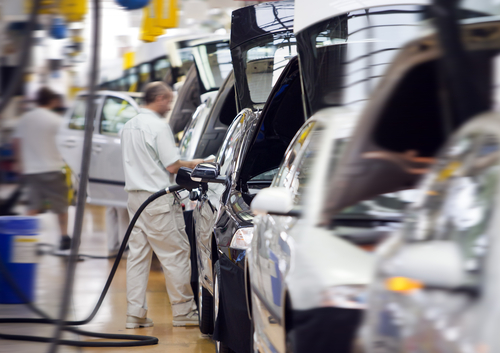
The industry currently employs an estimated 5 million workers and is now demanding a reliable timeline from the government for the next 10 to 15 years, clearly defining the relevant regulations and plans so that companies can prepare accordingly. ACMA President Jain said that the supplier industry’s ability to invest has been significantly reduced. He cited a slightly more distant decline in overall demand for auto parts and, currently, the global coronavirus outbreak as reasons. “In general, the industry needs more stability; in the past, there have been too many obstacles. We need to stabilize the industry and strengthen it through sustainable planning. We want to achieve this through better networking and collaboration among all the stakeholders involved,” Jain added.
Currently, there are still disruptions in the automotive supply chain in India, even though demand is at a low level. As a result, the ACMA association is calling for the government to address the problem as a whole and provide assistance and support to both producers and buyers, domestic and abroad. The association estimates that the automotive sector is playing an important role in the recovery of the Indian economy after the Corona crisis. In the last fiscal year, the auto supply industry posted sales of $49.2 billion, down 11.7 percent from the previous year. Recently, the Indian government also introduced mandatory certification for additional automotive components such as wheels and rims, auto glass and electronic components. The vast majority of standards for the Indian automotive industry are found in the AIS. AIS stands for Automotive Industry Standards, the technical automotive standards for India. MPR International GmbH – India Certification will be pleased to assist you with your AIS certification and is also available to answer any questions you may have.
AIS stands for Automotive Industry Standards, the technical automotive standards for India, while TAC stands for Type Approval Certificate. Depending on the product category, there are different certification steps. We will be happy to advise you on certification in India and are always available to answer your questions.
Please do not hesitate to contact us for further details and consultation. You can contact us via e-mail, or call us (UK: +44 2071931135, Rest of Europe: +49 69 2713769261, US: +1 773 654-2673).
If you have any questions you can also use our chat-window in the bottom right. (Please check your browser settings if you can’t see the window)
You can also check out our free AIS-Brochure, which can be downloaded right here as a PDF file.
New scheme allows Indian Customs to conduct random sampling for LED products
For LED products and DC or AC supplied control gear for LED modules, a new regulation has been in effect since last fall according to the announcement of the Bureau of Indian Standards (BIS), according to which the Indian customs can carry out random checks for deliveries of this product category. The categorization of these products is based on the ” “Electronics and Information Technology Goods (Requirement of Compulsory Registration) Order, 2012″.

Under this new instruction, samples can be randomly selected from consignments of goods, which are then sent to BIS-accredited test laboratories for testing. There, they are tested for limited, non-destructive safety parameters specified by the IS standard applicable to the products and identified by the Indian Ministry of Electronics and Information Technology (MeitY).
Furthermore, only those shipments that have met the parameters of these tests will be cleared further by Customs. If the products in this shipment cannot meet the applicable test parameters, they must subsequently be returned to the sender or destroyed at the importer’s expense.
Since 2012, the BIS has been gradually expanding the certification catalog and continuously adding additional goods. BIS certification mandatory for many electronic products for industrial and consumer uses. Factory inspections are also required for some products.
If you are interested in understanding what requirements are needed for your product to be imported into India, please do not hesitate to contact us by email or phone at +49-69-271 37 69 261. There is no cost or obligation for us to check for you. If a certification need is discovered we can provide a quotation to make sure that all your certification needs are covered.
If you have any questions you can also use our chat-window in the bottom right. (Please check your browser settings if you can’t see the window)
For more information about BIS certification, please refer to our free brochure “BIS Certification Made Easy“.
New statement makes BIS Mark mandatory for protective leather footwear and others
Applicable from October 27, 2020, a list of footwear covering such categories like leather safety boots and shoes, canvas shoes with rubber sole, antiriot shoes, sports footwear and others has been made mandatory to bear the BIS mark. The mark must be featured on the product in order to be produced, imported or traded.
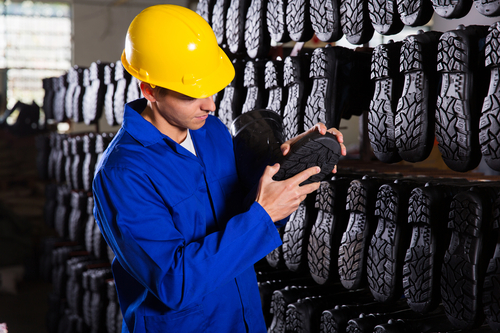
This new measure has been put into action in order to guarantee a high minimum level of quality for cheap leather footwear which is entering India. The notification has been issued by the Department for Promotion of Industry and Internal Trade (DPIIT), so that these products need to be conform to the specified standards of the Bureau of Indian Standards.
The affected categories of footwear are:
- Leather safety boots and shoes
- Canvas Shoes Rubber Sole
- Canvas Boots Rubber Sole
- Safety Rubber Canvas Boots for Miners
- Leather safety footwear having direct moulded rubber sole
- Leather safety footwear with direct moulded polyvinyl chloride (PVC) sole
- Sports footwear
- High ankle tactical boots with PU – Rubber sole
- Antiriot shoes
- Derby shoes
- Personal Protective Equipment – Footwear
- Industrial and protective rubber knee and ankle boots
- All rubber gum boots and ankle boots
- Moulded solid rubber soles and heels
- Rubber microcellular sheets for soles and heels
- Solid PVC soles and heels
- PVC sandal
- Rubber HawaiChappal
- Slipper, rubber
- Polyvinyl chloride (PVC) industrial boots
- Polyurethane sole, semirigid
- Unlined moulded rubber boots
- Moulded plastics footwear- Lined or Unlined polyurethane boots for general industrial use
- Footwear for men and women for municipal scavenging work
Since 2012, the BIS has been gradually expanding the certification catalog and continuously adding additional goods. BIS certification mandatory for many electronic products for industrial and consumer uses. Factory inspections are also required for some products.
If you are interested in understanding what requirements are needed for your product to be imported into India, please do not hesitate to contact us by email or phone at +49-69-271 37 69 261. There is no cost or obligation for us to check for you. If a certification need is discovered we can provide a quotation to make sure that all your certification needs are covered.
If you have any questions you can also use our chat-window in the bottom right. (Please check your browser settings if you can’t see the window)
For more information about BIS certification, please refer to our free brochure “BIS Certification Made Easy“.
New version of IS standard for plugs and sockets
The Bureau of Indian Standards (BIS) has updated the Indian Standard (IS) 1293: “Plugs and Socket Outlets for Household and Similar Purposes of Rated Voltage up to and Including 250 V and Rated Current up to and Including 16 A — Specification” from 2005 this year and the update is now called IS 1293:2019. The update was originally set to come into effect 25 July 2020, but due to the CoVid-19 pandemic, they have postponed the coming into effect of the new standard to 23 October 2020.
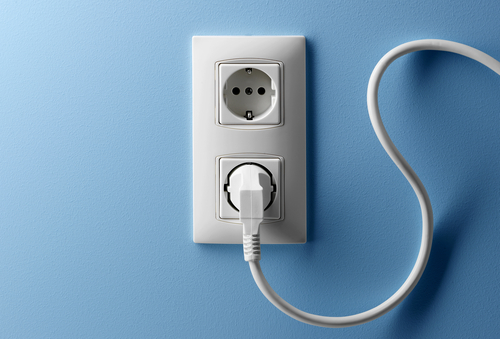
Just like the previous version of the standard, only AC plugs or portable socket outlets for household or similar purposes (indoors or outdoors) with a rated voltage not exceeding 250 V and a rated current no exceeding 16 A are covered. Such plugs and sockets can be singular units, incorporated in cord sets, cord extensions sets or as a component in a different device. The household limitation excludes industrial plugs, appliance couplers, extra low voltage components or when combined with fuses, automatic switches etc.
The updated 2019 version made some changes to technical requirements, but a more urgent change is that with this update, the marking of covered products with the ISI logo is now mandatory and was started to be checked in Indian customs starting 1 December 2020. Other changes include:
- 10A are now no longer a preferred rating.
- Plugs and socket outlets of a 16.5mm pitch for 2.5 A sockets are no longer accepted.
- The 5-pin design has been deleted.
- There are additional gauges requirements.
- Oval shaped socket outlet designs are no longer accepted.
- Additional requirements to floating terminals have been added.
- New construction requirements for socket contacts, pins of socket contacts and screwless terminals were added.
- New test requirements to ensure zero strain on non-rewireable plugs and non-rewireable portable sockets were added.
- A few more options for membranes and grommets were given and some other options.
The updated standard is based on IEC 60884-1 (2013) ‘Plugs and socket outlet for household and similar purposes — Part 1: General requirements’ with modifications in scope: a) Accessories ratings covered are only up to and including 16 A and 250 V; b) Combined socket-outlet has been covered; c) Ambient test condition; d) Schedule of routine, acceptance and type tests have been included; e) Rated voltage covered up to and including 250 V.
Since 2012, the BIS has been gradually expanding the certification catalog and continuously adding additional goods. BIS certification mandatory for many electronic products for industrial and consumer uses. Factory inspections are also required for some products.
If you are interested in understanding what requirements are needed for your product to be imported into India, please do not hesitate to contact us by email or phone at +49-69-271 37 69 261. There is no cost or obligation for us to check for you. If a certification need is discovered we can provide a quotation to make sure that all your certification needs are covered.
If you have any questions you can also use our chat-window in the bottom right. (Please check your browser settings if you can’t see the window)
For more information about BIS certification, please refer to our free brochure “BIS Certification Made Easy“.
Indian government wants to reduce road construction costs without compromising construction quality
India’s Minister of Road Transport and Highways, Gadkari, said at a virtual conference for the road construction industry that the government will introduce certain guidelines for reducing the cost of road construction while maintaining the quality of construction work. At the same time, the Minister called on the industry to increase the use of plastic and rubber processing waste to reduce the environmental impact of the disposal of waste. Residual materials from the metal industry such as slag and sprue residues should also be considered for use in road construction, the minister continued. He also suggested using local raw materials such as jute and coir in road construction to extend the life of the structures and improve the driving experience. For such projects, the government would develop and provide a system of formwork and prefabricated elements.
As part of the use of modern technology in road construction, the Minister called on the industry to use internationally recognized and proven construction methods. The industry must also develop a new scheme for a 10-year warranty period for the construction of asphalt roads. The current warranty period is five years. His ministry will support the construction industry with all possible means, said Gadkari. If the quality of execution of construction work improves, the ministry will approve projects to increase the share of asphalt roads in the country. In view of the COVID 19 pandemic, the minister was nevertheless able to report rapid and scheduled progress of road construction projects. Some construction sites are even ahead of schedule, Gadkari added. In India, building materials are subject to certification similar to the DIN/ISO/EN standards, for example cement and reinforcing steel or structural steel. The specifications are defined by the BIS standards. BIS stands for the Bureau of Indian Standards and is the national Indian certification body under the umbrella of the Indian Ministry of Consumer Protection, Food & Public Distribution. It is the central issuing body for BIS certification.
Since 2012, the BIS has been gradually expanding the certification catalog and continuously adding additional goods. BIS certification mandatory for many electronic products for industrial and consumer uses. Factory inspections are also required for some products.
If you are interested in understanding what requirements are needed for your product to be imported into India, please do not hesitate to contact us by email or phone at +49-69-271 37 69 261. There is no cost or obligation for us to check for you. If a certification need is discovered we can provide a quotation to make sure that all your certification needs are covered.
If you have any questions you can also use our chat-window in the bottom right. (Please check your browser settings if you can’t see the window)
For more information about BIS certification, please refer to our free brochure “BIS Certification Made Easy“.
India introduces quality control for steel products
The Indian Ministry of Steel has established a technical commission consisting of representatives of the Bureau of Indian Standards (BIS) and experts from the industry. The committee is to examine whether applications for the import of steel products are subject to the current quality controls and standards. Following the Committee’s investigation and recommendation, the Department will send appropriate requests to applicants for clarification of their imported goods. Since July 27, 2020, the Ministry has received 472 applications for the import of steel products.
The Indian steel industry is also affected by the global economic crisis due to the Covid 19 pandemic. Domestic consumption of steel fell to a six-year record low of 35.86 million tons, while production of steel products decreased by 25 percent to 38.6 million tons. As a result, the Indian government has recently restricted imports of steel products, especially from China, to support the domestic economy. Penalty tariffs were also introduced to prevent the import of cheap steel. Imports from the USA, China, South Korea, the EU, South Africa, Taiwan and Thailand are affected.
In October, the Indian government also imposed temporary countervailing duties on imports of stainless steel from Indonesia. This excludes blade steel and coin blanks. The regulation is to apply for four months initially. The government’s decision was made due to a complaint by Indian steel producers accusing Indonesia to subsidize steel exports to India. According to the conditions of the World Trade Organization (WTO), member states may impose such duties in this case. Both India and Indonesia are members of the WTO. Indonesia is India’s second largest trading partner within the ASEAN countries. However, the trade balance on the side of Indonesia is positive. A member of the aforementioned technical commission for the quality control of steel products is the Bureau of Indian Standards (BIS). The BIS is the national Indian certification body under the umbrella of the Indian Ministry of Consumer Protection, Food & Public Distribution. In India, steel products must be certified voluntarily or mandatory according to BIS guidelines.
Since 2012, the BIS has been gradually expanding the certification catalog and continuously adding additional goods. BIS certification mandatory for many electronic products for industrial and consumer uses. Factory inspections are also required for some products.
If you are interested in understanding what requirements are needed for your product to be imported into India, please do not hesitate to contact us by email or phone at +49-69-271 37 69 261. There is no cost or obligation for us to check for you. If a certification need is discovered we can provide a quotation to make sure that all your certification needs are covered.
If you have any questions you can also use our chat-window in the bottom right. (Please check your browser settings if you can’t see the window)
For more information about BIS certification, please refer to our free brochure “BIS Certification Made Easy“.
India plans to introduce international emission and safety standards for vehicles
In India, numerous new, internationally recognized standards for vehicle emissions and safety are to be introduced in the future. The government agreed on a gradual introduction of the new regulations as part of a long-term conversion process coordinated with the industry. A clearly defined development plan is to strengthen and support the domestic automotive industry and increase its contribution to GDP. In the long term, the Indian automotive industry should be on par with other industrialized countries in terms of compliance with international automotive standards.
In order to keep pace with global developments, Indian car manufacturers have already introduced and implemented numerous changes in the areas of passenger safety, exhaust values and connected vehicle technology in recent years. One of the most notable advances has been the leapfrog from Indian emission standards BS 4 to BS 6, which are now at the same level as the European Euro emission standards. With the new emission standards, engines and vehicles are on a par with those from Europe, Japan and the USA. The government’s proposal for a further and urgently needed change to the approval for new vehicle models (Motor Vehicle Act, MVA) was welcomed by the industry.
The responsible Ministry of Road Safety and Highways has already submitted a number of drafts for stricter exhaust values and safety systems for Indian motor vehicles. These include the introduction of ABS, airbags, speed limiters, reverse-assist systems and improved vehicle safety in the event of accidents. The drafts for electronic stability control systems (ESC) and brake assistants for certain vehicles are to be incorporated into mandatory standards over the next two years. A draft for ESC in buses was already submitted last year and is to be legally binding from April 2023.
Further plans by the ministry to align vehicle safety with international standards include the use of tire pressure monitoring systems for certain vehicles from October 2020. Regulations on vehicle dimensions and the safety of construction vehicles have already been published. Standards for side stands, footrests and the external footprint of two-wheelers have also been published and will enter into force shortly. The vast majority of standards for the Indian automotive industry can be found in the AIS. AIS stands for Automotive Industry Standards, the technical automotive standards for India, while TAC stands for Type Approval Certificate. Depending on the product category, there are different certification steps. We will be happy to advise you on certification in India and are always available to answer your questions.
Please do not hesitate to contact us for further details and consultation. You can contact us via e-mail, or call us (UK: +44 2071931135, Rest of Europe: +49 69 2713769261, US: +1 773 654-2673).
If you have any questions you can also use our chat-window in the bottom right. (Please check your browser settings if you can’t see the window)
You can also check out our free AIS-Brochure, which can be downloaded right here as a PDF file.
For other certifications like BIS, you can check out our article on BIS certification.
India is dependent on imports of certain agricultural products
The most frequently imported agricultural products into India are vegetable oils, pulses, fresh fruit, raw cashew nuts, raw sugar, raw cotton and spices. Together, the value of these goods accounts for almost 84 percent of all agricultural imports. Since, according to the relevant ministries, vegetable oils account for the largest share of imports, a program called the “National Mission for Oilseeds and Oil Palm” was introduced. Increasing the volume of production and the yield and productivity of crops are the top priorities to reduce India’s dependence on imports of agricultural products.

Numerous government support programs have already been set up for the individual categories of oilseeds, cereals, pulses, fruits and spices. These aim, among other things, at security of food supply (National Food Security Mission, NFSM), NFSM especially for oilseeds and oil palm, Green Revolution for the East of India (BGREI), research in commercial horticulture and improvement of soil quality and health. In addition to government initiatives, the Indian Council of Agricultural Research (ICAR) and public universities in the field of agriculture have started a number of projects to improve varieties and hybrid breeding to increase production and productivity. The NFSM oil crop and oil palm support program provides direct support to farmers. Concrete assistance includes distribution of certified seeds and seedlings, demonstrations, integrated pest management and control, pesticides, agricultural machinery, farmer training, irrigation equipment and local initiatives to promote the cultivation of oilseeds. FSSAI certification is required for all agricultural and food products offered on the Indian market. We would be happy to advise you on the procedure for an India certification and carry it out for you. Contact us for a free consultation without any obligation.
If you have questions about FSSAI certification or any other product certifications for the Indian market (BIS certification, PESO, TEC, WPC certification) please do not hesitate to contact us by email or phone at +49-69-271 37 69 261. There is no cost or obligation for us to check for you. If a certification need is discovered we can provide a quotation to make sure that all your certification needs are covered.
If you have any questions you can also use our chat-window in the bottom right. (Please check your browser settings if you can’t see the window)
For more information about BIS certification, please refer to our free brochure “BIS Certification Made Easy“.
India hosts research summit for solar technology
The World Solar Technology Summit (WSTS) was organized by the International Solar Alliance (ISA) and the Federation of Indian Chambers of Commerce and Industry (FICCI) and took place in September 2020 as a virtual conference focusing on India. During the conference, stakeholders from research, industry, business and politics discussed the current status of solar technology and how to expand its application in the future. In his opening speech, India’s Prime Minister Modi repeated that five years ago, the world community agreed to slow down global warming by reducing dependence on fossil fuels. India has largely implemented this declaration of intent and has the lowest CO2 emissions per capita in the world. Nevertheless, Modi continued, the expansion of renewable energies will be pushed forward.

Over the past five years, India has increased its renewable energy capacity by a factor of 2.5 and solar energy capacity by a factor of 13. On a global scale, India ranks fourth in the production of renewable energy. 35 percent or 134 gigawatts of India’s total energy needs are generated from renewable energy. The government plans to increase the amount to 220 gigawatts by 2022. Decentralized energy supply in particular is expected to play a role in the future. To this end, the Indian government has introduced a support program called “KUSUM”. Within the framework of the project, around 2.8 million water pumps in agriculture and in rural areas are to be converted from diesel engines to solar power.
The co-organizer of the virtual summit, the International Solar Alliance (ISA), is an international organization for intergovernmental cooperation in solar technology. The ISA was founded by India and France in the presence of the UN Secretary General during the Paris Climate Change Conference in 2015. The main goal of the organization is to generate 1000 gigawatts from sunlight and to facilitate investments of over 1000 billion US dollars in solar energy by 2030. As of June 26, 2020, the ISA’s declaration of intent was signed by 86 countries. The headquarters of ISA is located in Gurugram in the Indian state of Haryana. In India, solar photovoltaic systems, equipment and components are subject to BIS certification. BIS certification is comparable to CE certification but with some important differences.
Since 2012, the BIS (Bureau of Indian Standards) has been gradually expanding the certification catalog and continuously adding additional goods. BIS certification mandatory for many electronic products for industrial and consumer uses. Factory inspections are also required for some products.
If you are interested in understanding what requirements are needed for your product to be imported into India, please do not hesitate to contact us by email or phone at +49-69-271 37 69 261. There is no cost or obligation for us to check for you. If a certification need is discovered we can provide a quotation to make sure that all your certification needs are covered.
If you have any questions you can also use our chat-window in the bottom right. (Please check your browser settings if you can’t see the window)
For more information about BIS certification, please refer to our free brochure “BIS Certification Made Easy“.
India founds space agency INSPACe to promote investment from industry
Recently, the government established the Indian National Space, Promotion & Authorization Centre (INSPACe) to promote and coordinate private and industrial investment in space. The new coordination center operates under the umbrella of the Ministry of Space. Companies and institutions that are participants in an INSPACe project can use the existing infrastructure of the Indian Space Research Organization (ISRO). The proposal to establish a new space center was put to the government by scientific circles and the recent decision was welcomed accordingly.
ISRO’s former private subsidiary, New Space India Limited (NSIL), has been incorporated into the new center. Its tasks include the construction of launch vehicles and payload transport, the construction of satellites, space services and technology transfer. Currently, more than 500 private companies in the fields of materials research, electronic and mechanical components as well as system development and integration are working with ISRO. The responsible Minister of Space Affairs assured the companies involved in INSPACe that they would be able to use government research facilities specializing in aerospace, which are only available in India in a few cases, for an appropriate fee.
The Indian Space Research Organisation (ISRO) has an annual budget of 1.9 billion US dollars and employs around 17,000 people. It has successfully launched 319 satellites from 33 countries into space, launched 117 space missions and carried out 77 launch trials for testing purposes. ISRO operates two space centers for the launch of rockets, a third one is planned. Since 2005, MPR International GmbH has been supporting companies worldwide with certifications for the Asian market. We currently offer these for India, China, Taiwan and South Korea. Indian certifications such as AIS (ARAI), BIS, WPC, TEC or PESO are part of our service portfolio. We offer certification services for all product areas. We have developed particular expertise in the automotive, medical technology, electrical, mechanical engineering, telecommunications and IT sectors. Our experienced international team will be happy to answer your questions about Indian certifications and is available to you at any time.
If you are interested in understanding what requirements are needed for your product to be imported into India, please do not hesitate to contact us by email or phone at +49-69-271 37 69 261. There is no cost or obligation for us to check for you. If a certification need is discovered we can provide a quotation to make sure that all your certification needs are covered.
If you have any questions you can also use our chat-window in the bottom right. (Please check your browser settings if you can’t see the window)
For more information about certifications, please refer to our free brochure downloads.
 We are part of the CERTANIA-Group.