


Schließen


New Procedures for Telecom Equipment Testing and Certification in India
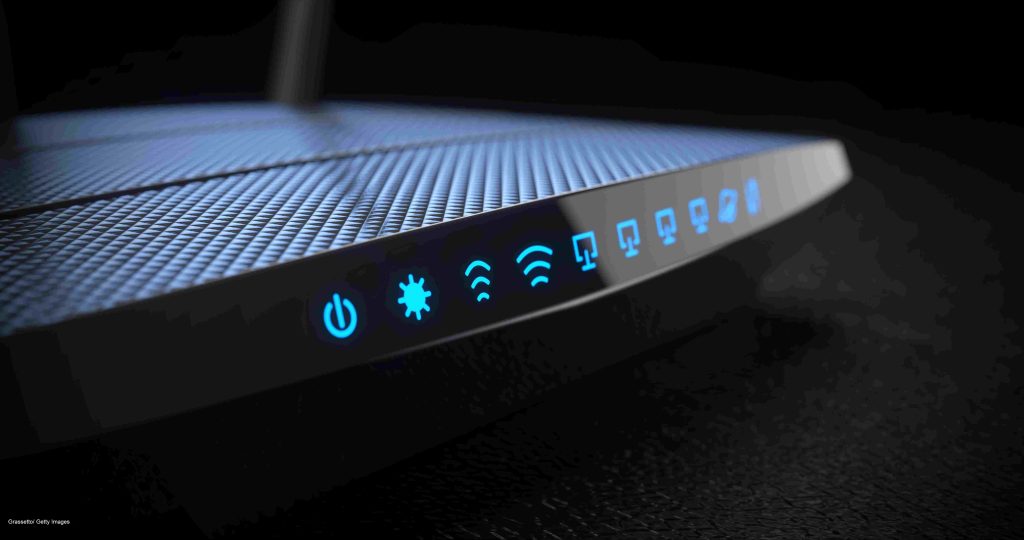
India’s Telecommunication Engineering Centre (TEC) has launched an updated set of guidelines for the mandatory testing and certification of telecommunication equipment (MTCTE). The new “Procedure for Mandatory Testing and Certification of Telecommunication Equipment (MTCTE)” version 3.0, issued in April 2024, replaces the previous TEC 93009:2021 document. Telecommunications products generally require TEC certification in order to be approved for import and sale in India.
Key changes include:
• Extended Validity: MTCTE certificates are now valid for 10 years, up from 5 years.
• Revised Equipment Lists: Annex A contains the updated equipment lists.
• Quicker Approvals: The test report upload process under SCS has been streamlined.
• Expanded Acceptance: BIS certificates, SACs, and specific test reports are now recognized.
• Less Stringent Requirements: NABL witness testing by RTEC is no longer mandatory.
• Additional Clarifications: Information on end-of-life, part codes, split units, and ITSAR certification has been updated.
The TEC certification has been mandatory since April 2019. Every year the Telecommunication Engineering Center (TEC) expands the certification catalog and adds more telecom products. See the list of TEC standards here.
If you are interested in understanding what requirements are needed for your product to be imported into India, please do not hesitate to contact us by email or phone (Europe: +49-69-271 37 69 261, US: +1 773 654-2673).
For more information about TEC certification, please refer to our free brochure “TEC Certification Made Easy“.
ISI Mark made compulsory for various Steel Products
End of 2023, the DPIIT issued a Quality Control Order (QCO) for miscellaneous steel products, which took effect on March 2024 and makes BIS ISI Mark mandatory for several products, including steel pipe flanges, steel cylinders for pipes with mortar lining and coating, stainless steel tubes for food and beverages, and high-strength stainless steel bars and wires for concrete reinforcement.
Implementation dates for Micro and Small Enterprises (MSEs) are set as follows: small enterprises by 25 June 2024 and micro enterprises by 25 September 2024.
If you are interested in understanding what requirements are needed for your product to be imported into India, please do not hesitate to contact us by email or phone (Europe: +49-69-271 37 69 261, US: +1 773 654-2673). There is no cost or obligation for us to check for you. If a certification need is discovered we can provide a quotation to make sure that all your certification needs are covered.
If you have any questions you can also use our chat-window in the bottom right. (Please check your browser settings if you can’t see the window)
For more information about BIS certification, please refer to our free brochure “BIS Certification Made Easy“.
Extension of Product Coverage in Phases 3 and 4
Since April 1, 2024, TEC certification has become mandatory for a list of telecommunications and wireless products that fall under Phase 3 and Phase 4. This is an extension of the original deadline of January 1, 2024, in order to provide further relieve to stakeholders. Telecom equipment generally requires TEC certification to be approved for import and distribution in India.

Overview of product falling under Phase-3 and Phase-4
| Phase-3 | Phase-4 |
| Base Station for Cellular Network | SIM |
| Repeater for Cellular Network | HF Radio |
| Smart Electricity Meter | Mobile Radio Trunking System |
| VHF UHF Radio System Equipment | |
| PTP PMP Microwave Fixed Radio System | |
| LAN Switch | |
| Router | |
| IP Security Equipment | |
| Satellite Communication Equipment |
Additionally, the period for accepting ILAC test reports from non-border sharing countries for certain technical parameters of 8 specific products (see table below) had been prolonged by three months, from December 31, 2023, to March 31, 2024.
Overview of Phase-3 and Phase-4 products, with deadline 31st March 2024:
| Phase-3 | Phase-4 |
| Base Station for Cellular Network | SIM |
| Repeater for Cellular Network | HF Radio |
| Compact Cellular Network | VHF UHF Radio System Equipment |
| Radio Broadcast Receiver RBR | |
| Satellite Communication Equipment |
It’s also noted that the validity of these ILAC test reports will last up to two years from their submission date.
The TEC certification has been mandatory since April 2019. Every year the Telecommunication Engineering Center (TEC) expands the certification catalog and adds more telecom products. See the list of TEC standards here.
If you are interested in understanding what requirements are needed for your product to be imported into India, please do not hesitate to contact us by email or phone (Europe: +49-69-271 37 69 261, US: +1 773 654-2673).
For more information about TEC certification, please refer to our free brochure “TEC Certification Made Easy“.
BIS Stakeholders Consultation Meeting on Implementation of Parallel Testing
In January 2024, the Bureau of Indian Standards (BIS) officially transitioned its parallel testing process from a pilot project to a permanent feature within the BIS-CRS certification scheme. This decision came after a stakeholder consultation involving industry representatives and the Ministry of Electronics and Information Technology (MEITY). Parallel testing, initially introduced in January 2023 for mobile phones, allows critical components and host products to be tested simultaneously at laboratories, although their registration still follows a sequential process.
Despite the scheme’s initial six-month duration witnessing limited industry participation, BIS extended the pilot for an additional six months and included new product categories such as wireless headphones/earphones and laptops/notebooks/tablets. By December 2023, the industry feedback suggested strong support for making parallel testing a permanent option, emphasizing the need for predictability in planning product launches. Laboratories also indicated their readiness to implement parallel testing across all product categories without any challenges.
Key points from the discussions included:
- The initial phases of the pilot saw low application rates from industry participants.
- Industry stakeholders are in favor of permanent implementation of parallel testing for better planning of product launches.
- Laboratories are well-prepared and supportive of extending parallel testing to all products.
The new policy stipulates that parallel testing is optional, allowing manufacturers to choose this method while applying for BIS certification. However, manufacturers are responsible for all risks and costs involved if the certification application is ultimately rejected or not processed. Upon successful registration, manufacturers can expect immediate updates to their Conformity Certificate Lists (CCL).
If you are interested in understanding what requirements are needed for your product to be imported into India, please do not hesitate to contact us by email or phone (Europe: +49-69-271 37 69 261, US: +1 773 654-2673). There is no cost or obligation for us to check for you. If a certification need is discovered we can provide a quotation to make sure that all your certification needs are covered.
If you have any questions you can also use our chat-window in the bottom right. (Please check your browser settings if you can’t see the window)
For more information about BIS certification, please refer to our free brochure “BIS Certification Made Easy“.
BIS Certification for Ferroalloys Products
The Ministry of Steel has issued a Quality Control Order (QCO) covering various types of ferroalloys to align with the quality standards specified in Indian standards IS 1110, IS 1170, IS 1171, and IS 1470 for ferrosilicon, ferrochrome, ferromanganese, and silicomanganese, respectively. This order requires manufacturers affected by the QCO to obtain a BIS License under the ISI scheme to ensure their products are eligible for import, sale, and usage in India.
The QCO aims to enhance product quality and foster trust among industries and consumers. It mandates tests for chemical composition, particle size, and extraneous contamination.
For exports to India, manufacturers must acquire BIS certification under the Foreign Manufacturers Certification Scheme (FMCS) or BIS registration for certain products under the Compulsory Registration Scheme (CRS). These certifications are essential for the products to be marketed in India, ensuring their quality, safety, and reliability as per Indian Standards (IS).
If you are interested in understanding what requirements are needed for your product to be imported into India, please do not hesitate to contact us by email or phone (Europe: +49-69-271 37 69 261, US: +1 773 654-2673). There is no cost or obligation for us to check for you. If a certification need is discovered we can provide a quotation to make sure that all your certification needs are covered.
If you have any questions you can also use our chat-window in the bottom right. (Please check your browser settings if you can’t see the window)
For more information about BIS certification, please refer to our free brochure “BIS Certification Made Easy“.
New Draft for Amendment of CMVR regarding Seat Belts
In their notification from March 12, 2024 the Indian Minsitry of Road Transport and Highways has announced a draft with new additions and adjustments to amend the Central Motor Vehicles Rules (CMVR) regarding seat belts. Seat Belts and related components usually require BIS certification or AIS certification in order to be approved for import and use in the Indian market.

One example change is that safety belt assemblies and safety belt anchorages, fitted on vehicles of categories M, N and L7 manufactured on and after April 1, 2025, shall conform to IS 15140:2018 Automotive vehicles – Safety belt and restraint systems – Specification and IS 15139:2002 Automotive Vehicles – Safety Belt Anchorages, as amended from time to time.
It is important for manufacturers to keep track with regulation changes in order to ensure compliance of their products with Indian standards. MPR International keeps clients up to date on all relevant regulation developments.
If you are interested in understanding what requirements are needed for your product to be imported into India, please do not hesitate to contact us by email or phone (Europe: +49-69-271 37 69 261, US: +1 773 654-2673). There is no cost or obligation for us to check for you. If a certification need is discovered we can provide a quotation to make sure that all your certification needs are covered.
If you have any questions you can also use our chat-window in the bottom right. (Please check your browser settings if you can’t see the window)
For more information about BIS certification, please refer to our free brochure “BIS Certification Made Easy“.
You can also check out our free AIS-Brochure, which can be downloaded right here as a PDF file.
Extension for IS 3224: 2021 – Valve Fittings for Compressed Gas Cylinders, excluding Liquefied Petroleum Gas (LPG)
The Bureau of Indian Standards (BIS) has revised the Indian standard IS 3224: 2002 Valve fittings for compressed gas cylinders, excluding LPG to a new version IS 3224: 2021. The guidelines for the implementation of the above-mentioned revision have already been published on January 21, 2022. In many cases, compressed gas cylinders and related products and components require BIS certification or PESO certification.

The original deadline for the implementation of the revised standard was December 22, 2022, which has been extended to December 22, 2023.
As a result of applications submitted by affected manufacturers, the deadline for the implementation of IS 3224: 2021 has now been postponed until December 22, 2024. It is recommended that all licensees and applicants be aware of this change and ensure that the implementation of the updated standard is done by this date.
The further instructions for the introduction explained in letter Nr. CMD-III/16: IS 3224 of 21 January 2022 remain unaffected by this and continue to apply.
If you are interested in understanding what requirements are needed for your product to be imported into India, please do not hesitate to contact us by email or phone (Europe: +49-69-271 37 69 261, US: +1 773 654-2673). There is no cost or obligation for us to check for you. If a certification need is discovered we can provide a quotation to make sure that all your certification needs are covered.
If you have any questions you can also use our chat-window in the bottom right. (Please check your browser settings if you can’t see the window)
For more information about BIS certification, please refer to our free brochure “BIS Certification Made Easy“.
For more information about PESO certification, please refer to our free brochure “PESO Certification Made Easy“.
New IS Standards for Aluminium Products under IS 16011, IS 21 and IS 617
Since August 2023, a series of new, updated Indian Standards (IS) have been published that affect various aluminum product groups, thereby further defining the obligation for BIS-ISI certification and explaining requirements.
The following product groups are affected by the new standards:
IS 16011
This standard applies to aluminium foils with a thickness between 0.020 mm (20 microns) and 0.040 mm (40 microns). More specifically, it specifies the specifications for bare, coated or laminated aluminum and aluminum alloy foils used for pharmaceutical packaging. The Indian standard covers the various technical requirements.
IS 21
This standard includes wrought aluminium and aluminium alloys used in the manufacture of commodities. The assignment under to this standard depends on the intended use, the type of device and the manufacturing method.
IS 617
This specification defines the criteria for aluminium castings and their alloys, manufactured as ingots and castings intended for general technical applications.
To export products to India, manufacturers must obtain either BIS Certification (ISI) under the Foreign Manufacturers Certification Scheme (FMCS) or BIS Registration (CRS), depending on the type of product. These steps are necessary in order to be allowed to introduce and distribute the products on the Indian market.
If you are interested in understanding what requirements are needed for your product to be imported into India, please do not hesitate to contact us by email or phone (Europe: +49-69-271 37 69 261, US: +1 773 654-2673). There is no cost or obligation for us to check for you. If a certification need is discovered we can provide a quotation to make sure that all your certification needs are covered.
If you have any questions you can also use our chat-window in the bottom right. (Please check your browser settings if you can’t see the window)
For more information about BIS certification, please refer to our free brochure “BIS Certification Made Easy“.
 We are part of the CERTANIA-Group.