


Schließen


The price of LPG in gas cylinders rose for the second time in 15 days
Indian oil companies again increased the price of LPG (Liquified Petroleum Gas) for home use. A gas cylinder without government subsidy has therefore become 25 Indian rupees (approx. 0.35 US dollars) expensive. Overall, a gas cylinder with a filling weight of 14.2 kg costs the equivalent of 11.90 US dollars in the capital Delhi or in Mumbai. The Economic Times of India reports that the continuous price increase for LPG has been going on for three consecutive months. The price of a gas cylinder varies in the states due to different taxation. The price of LPG for commercial use also increased. In Delhi, a 19 kg cylinder was the equivalent of US$22.79, an increase of 75 Indian rupees (about US$1). Meanwhile, the number of LPG users continued to rise. As of 1 July, there were around 291 million households in India using LPG for cooking and heating. In 2018-2019, there were only 265 million households. However, most equipment, plants and facilities must undergo mandatory PESO certification.
The Indian gas industry got its start in the 1960s with the exploration of gas deposits in the states of Assam and Maharashtra. Since then, the importance of natural and liquefied gas in India has grown steadily. While in March 2021, the production volume declined by 8.1 per cent, in August 2021, it increased by 20.23 per cent. However, India is heavily dependent on imports of natural gas and meets about 45 per cent of its demand through imports. In 2019, India was therefore the world’s fifth largest importer of natural gas. At the same time, the price in the country fluctuates considerably and is largely dependent on international markets as well as domestic demand.
The Indian oil and gas industry is growing and offers good opportunities for your company to provide services and products there or to produce locally, for which PESO certifications for products are essential in many cases.. Relevant product groups or components are for example gas and pressure vessels, valves and fittings or safety equipment. A complete list can be found under this link. The experts at MPR International GmbH are available to answer your questions about PESO certification or other India certifications without obligation for an initial assessment.
If you are interested in understanding what requirements are needed for your product to be imported into India, please do not hesitate to contact us by email or phone at +49-69-271 37 69 261. There is no cost or obligation for us to check for you. If a certification need is discovered we can provide a quotation to make sure that all your certification needs are covered.
If you have any questions you can also use our chat-window in the bottom right. (Please check your browser settings if you can’t see the window)
For more information about PESO certification, please refer to our free brochure “PESO Certification Made Easy“.
Bureau of Indian Standards (BIS) tightens measures to monitor quality seals
The Hubballi branch of the Bureau of Indian Standards (BIS) is tightening its measures against the misuse of the BIS quality mark in the North Karnataka region. Certain products such as cement, bottled drinking water and healthcare items are required to carry an ISI mark or seal as per the state-regulated BIS guidelines. BIS staff raided a company in August that was improperly stamping the BIS seal of approval on gold products without first going through proper certification. In addition, BIS found that many drinking water factories in North Karnataka were not licensed to bottle and sell their products.
Scientist and head of BIS’s Hubballi branch, DP Kumar, explained his agency’s approach and responsibilities to the Times of India. BIS is the national standards body of India, operating under the BIS Act of 2016. BIS formulates Indian standards for products, processes and services covering various sectors of the economy. In addition, it is also responsible for the development and implementation of conformity and assessment systems. Certification and monitoring of factories and markets, as well as a quality seal system for the implementation of standards, are among the agency’s other tasks. Finally, BIS branch manager Kumar mentioned a new app “BIS Care”, which consumers can use to check the authenticity of ISI seals on products.
Since 2012, the BIS has been gradually expanding the certification catalog and continuously adding additional goods. BIS certification mandatory for many electronic products for industrial and consumer uses. Factory inspections are also required for some products.
If you are interested in understanding what requirements are needed for your product to be imported into India, please do not hesitate to contact us by email or phone at +49-69-271 37 69 261. There is no cost or obligation for us to check for you. If a certification need is discovered we can provide a quotation to make sure that all your certification needs are covered.
If you have any questions you can also use our chat-window in the bottom right. (Please check your browser settings if you can’t see the window)
For more information about BIS certification, please refer to our free brochure “BIS Certification Made Easy“.
Projected 9.5% growth for Indian economy this year
India’s economy was hit by a 7.3 per cent contraction at the hands of the ongoing pandemic but is now set to grow by 9.5 per cent in 2021, according to the International Monetary Fund which has released its projections on Tuesday. The overall growth followed the improved performance of sectors such as engineering goods and petroleum products, many of which require BIS certification and PESO certification for import and distribution in India.
According to the latest World Economic Outlook update, which was published before the annual meeting of the IMF and the World Bank, the world economy is expected to grow at 5.9 per cent in 2021 and 4.9 per the following year.
“The Indian economy is recovering, and we welcome that. It’s going through to the other side of the Covid of the, the latest wave.” said David Malpass, president of the World Bank.
India’s overall exports (merchandise and services combined) grew 21.44 per cent on a year-on-year (YoY) basis in September 2021 to $54.06 billion. In comparison, the growth rate over September 2019 (pre-Covid-19 level) was 26.03 per cent, as shown by the the Ministry of Commerce & Industry data.
Imports grew also in September 2021 by 70 per cent YoY to $68.49 billion, and 44.11 per cent over September 2019. Merchandise exports alone rose 22.63 per cent YoY to $33.79 billion in September.
If you are interested in understanding what requirements are needed for your product to be imported into India, please do not hesitate to contact us by email or phone at +49-69-271 37 69 261. There is no cost or obligation for us to check for you. If a certification need is discovered we can provide a quotation to make sure that all your certification needs are covered.
If you have any questions you can also use our chat-window in the bottom right. (Please check your browser settings if you can’t see the window)
For more information about BIS certification, please refer to our free brochure “BIS Certification Made Easy“.
You can also find more information about PESO certification in our free brochure “PESO Certification Made Easy“.
Petronet plans LNG terminal on Indian east coast
Petronet LNG Ltd. is India’s largest gas importer and plans to build an LNG terminal on India’s east coast to expand its business activities. The floating structure is to be built at Gopalpur Port in Odisha. Once it is completed, the company is looking into another facility for ethane and propane gas at Dahej. Petronet had previously planned to build a liquefied natural gas terminal in Gangavaram (Andhra Pradesh) in 2015-16, but management was unable to determine the project’s viability due to low volumes of only 5 million tons annually at the time. In Odisha, the Adani Group already operates an import terminal at Damra Port with 5 million tons of annual capacity. Imports of products and equipment subject to PESO certification will likely also expand in the face of the planned construction.
Due to an increased demand for gas, Petronet now also sees an opportunity to expand its business activities there on the east coast. Petronet signed a long-term contract with Qatar to supply 5 million tons of liquefied natural gas (LNG) annually. The natural gas is either a gas mixture of largely natural origin or with high proportions of ethane and propane. Both are important feedstocks for the petrochemical industry. Currently, the gas mixture is processed by Oil and Natural Gas Corp (ONGC) and resold to Petronet. Now Petronet wants to enter this business itself. Therefore, the company plans to build a refinery and similar facilities at the Dahej terminal, which receives the imported propane gas from ships. So far, Petronet did not provide any information on the amount of investment and capacity of the plant.
The total petrochemicals market in India is 42.5 million tons and is estimated to grow to 49.62 million tons in 2025. The combined annual growth rate (CAGR) is 6.14 percent within fiscal years 2021 and 2025, so it is reasonable to assume that demand for imported LNG will continue to grow as a result. Vessels for the storage of pressurized gases and liquids in India must be mandatorily certified according to the PESO guidelines. The experts at MPR International GmbH are available to answer your questions about PESO certification or other India certifications without obligation for an initial assessment.
If you are interested in understanding what requirements are needed for your product to be imported into India, please do not hesitate to contact us by email or phone at +49-69-271 37 69 261. There is no cost or obligation for us to check for you. If a certification need is discovered we can provide a quotation to make sure that all your certification needs are covered.
If you have any questions you can also use our chat-window in the bottom right. (Please check your browser settings if you can’t see the window)
For more information about PESO certification, please refer to our free brochure “PESO Certification Made Easy“.
Hyundai’s Genesis likely to be introduced to the Indian market
Hyundai’s Genesis joins the competition for automotive luxury brands on India’s roads, along with Germany’s Mercedes-Benz, BMW and Audi as well as Jaguar-Land Rover and Lexus, also including the Korean company’s electric offerings. The introduction is planned via an extended import route, although the option of importing the assembled cars is being discussed, in order to evade the increased import duty. Both modes will require extensive certification of components and homologation, respectively with Indian AIS certifications and BIS certifications .
The luxury brand Genesis has been available in South-Korea since its launch in 2015, as well as in the US. So far Genesis has made additional debuts in China and most recently in Europe. It is most likely that the Indian market is targeted next.
It is still too early to talk about definitive dates, said Hyundai India MD and CEO S S Kim, but feasibility studies have already begun. The biggest competition will be German luxury car makers and Hyundai is closely observing the reasons for their success and how new brands are being introduced to the market.
Despite being a mainstream car brand, Hyundai’s Genesis has already made a strong impact on the US and South Korean markets. The brand philosophy and values are different between Hyunday and Genesis, he said. Just like Toyota with Lexus and Nissan with Infiniti, Genesis has been created as a separate luxury extension of the Korean carmakers main leg.
AIS stands for Automotive Industry Standards, the technical automotive standards for India, while TAC stands for Type Approval Certificate. This kind of automotive product certifiation is conducted by authorities like the International Center for Automotive Technology (iCAT).
BIS stands for Bureau of Indian Standards and since 2012, the BIS has been gradually expanding the certification catalog and continuously adding additional goods. BIS certification is mandatory for many electronic products for industrial and consumer uses. Factory inspections are also required for some products.
Depending on the product category, there are different certification steps. We will be happy to advise you on certification in India like AIS, BIS, WPC, TEC or PESO and are always available to answer your questions.
Please do not hesitate to contact us for further details and consultation. You can contact us via e-mail, or call us (UK: +44 2071931135, Rest of Europe: +49 69 2713769261, US: +1 773 654-2673).
If you have any questions you can also use our chat-window in the bottom right. (Please check your browser settings if you can’t see the window)
You can also check out our free AIS-Brochure, which can be downloaded right here as a PDF file.
Rising demand for fuels increases oil company profits
Following the imposition of a national lockdown, demand for petroleum-based products in India fell during April and May 2020. Now, financial agency Moody’s Investors Service predicts an upturn and growth for the Indian oil industry. In the details, the financial watcher sees state-owned firms IOC, BPCL and HPCL growing over the next 12 to 18 months. The companies would benefit from both rising demand and improved methods of their refineries compared to other competitors, increasing profit margins. The Indian oil and gas industry is growing and offers a strong sales market for relevant product groups and components such as gas and pressure vessels, valves and fittings or safety equipment. These products usually have to undergo PESO certification.
With the partial lifting of the lockdown and commissioning of industrial operations, Moody’s expects higher demand for fuels. As a result, the three rated companies, Indian Oil Corporation (IOC), Bharat Petroleum Corporation Ltd (BPCL) and Hindustan Petroleum Corporation Ltd (HPCL), will be able to increase their revenues and profits in the next 12 to 18 months, analysts said. The forecast can also be considered very reliable, they said, because in the distribution of fuels in India, the three companies, IOC, BPCL and HPCL, own about 90 percent of the market and have an oligopoly structure. The state-owned ownership also ensures secure financing and operation without major competition. Moody’s also learned that the government, through these three oil-processing companies, will continue to invest large sums of money to expand the facilities in order to boost the domestic economy.
If you are interested in understanding what requirements are needed for your product regarding PESO Certification or other certifications to be imported into India, please do not hesitate to contact us by email or phone at +49-69-271 37 69 261. There is no cost or obligation for us to check for you. If a certification need is discovered we can provide a quotation to make sure that all your certification needs are covered.
If you have any questions you can also use our chat-window in the bottom right. (Please check your browser settings if you can’t see the window)
For more information about PESO certification, please refer to our free brochure “PESO Certification Made Easy“.
Industry association calls for revision of timeline for new tire standards
The Indian Association of Automotive Tire Manufacturers (ATMA) said in late May that they are calling for a revision of the timeline for the introduction of new tire standards. The relevant guidelines relate to rolling resistance, wet grip and rolling noise. The industry association justifies the demand by saying that many companies have yet to test their stockpiles of tires in accordance with the latest standards. Vehicle tires in India must be certified according to AIS guidelines. AIS stands for Automotive Industry Standards, the technical automotive standards for India.
According to the draft submitted by the Ministry of Road Transport and Highways (MoRTH), the planned standards are to apply to all newly designed and produced tires from October 1, 2021, with the regulation becoming binding for stocks one year later. The tires affected are those for passenger cars as well as light and heavy commercial vehicles. Tire industry representatives said that effective implementation of the proposed draft also depends on the availability of appropriate infrastructure for testing tires. Among other things, the tires must be tested on special test tracks for their grip in wet conditions and rolling noise while other parameters can be determined in the laboratory or test rig.
The ATMA wrote in its own statement that the timetable for implementing the standards needs a revision that is realistic for the industry in terms of deadlines. The companies represented by the association would need time to adapt their supply inventories and tools and machines to the new situation. In addition, certain details of the standards should be adapted to circumstances in India. According to ATMA, the Indian tire industry produces one of the world’s largest ranges of tires.
ATMA’s technical wing, the Indian Tire Technical Advisory Committee (ITTAC) presented a detailed response to the ministry’s recent draft. In doing so, ATMA Director Rajiv Budhraja made it clear that the industry is willing to comply with the government and introduce the new standards, albeit with a modified timetable. As an example, he cited the good cooperation between ATMA and the government for the introduction of the AIS 142 tire standard. The introduction of new and internationally coordinated tire standards only benefits the Indian tire industry, Budhraja said. It would also allow the tires to be exported, and for the domestic market, new types of tires will increase road safety and save fuel, he said.
AIS certification, as needed by vehicle tyres, is conducted by authorities like the International Center for Automotive Technology (iCAT).
For each product category, there are different certification steps. We will be happy to advise you on certification in India like AIS, BIS, WPC, TEC or PESO and are always available to answer your questions.
Please do not hesitate to contact us for further details and consultation. You can contact us via e-mail, or call us (UK: +44 2071931135, Rest of Europe: +49 69 2713769261, US: +1 773 654-2673). If you have any questions you can also use our chat-window in the bottom right. (Please check your browser settings if you can’t see the window)
You can also check out our free AIS-Brochure, which can be downloaded right here as a PDF file.
Indian government auctions 32 small oil and gas fields
The government will auction unused oil and gas fields previously owned by state-owned Oil and Natural Gas Corporation (ONGC) and Oil India Ltd. (OIL), Pradhan, the minister in charge, announced last Thursday. These smaller production areas, located in marginal places, were discovered by ONGC and OIL but not developed because their size would not make them profitable for the companies. Announcing the third round of auctions for smaller fields, the minister said state-owned companies could not hold on to production rights indefinitely. The resources belong to the whole nation and at least money could be made from them through the auction, Pradhan added.
The Indian oil and gas industry is growing, providing a larger market for products from the extraction, mining and storage industries. However, most equipment, plants and facilities must undergo mandatory PESO certification. PESO certification, formerly known as CCOE certification, is basically an Indian version of the ATEX or IECEx certification. The certification is based on the Indian standards for PESO.
In the current Discovered Small Fields (DSF-III) auction round, 32 oil and gas producing areas with a total of 75 discoveries were offered. The ministry also stated that this is the last DSF round and only larger discoveries will be auctioned in the upcoming auction. This announcement was made at the same time India’s largest oil and gas producer ONGC announced it would sell a share of its Ratna-R offshore oil fields already in production to private companies and find foreign partners for gas fields in the KG Basin.
In the DSF-III auction, 11 fields onshore, 20 offshore and one deepwater field are being offered for sale. The area of all production fields is about 13,000 km² and includes 75 oil and gas reservoirs with an estimated total volume of 230 million tons of oil or the equivalent amount of gas. According to the Directorate General of Petroleum (DGH), 29 bids have been submitted to develop the fields with an investment of $1.76 billion.
This development potentially increases the market opportunities for relevant product groups like gas and pressure vessels, valves and fittings or safety equipment, which need to be PESO certifiied in order to be used in India. Here you can find an overview of PESO relevant products.
The experts at MPR International GmbH are available to answer your questions about PESO certification or other India certifications without obligation for an initial assessment.
The Indian oil and gas industry is growing and offers good opportunities for your company to provide services and products there or to produce locally. However, most equipment, plants and facilities must undergo mandatory PESO certification. This is issued by the Petroleum and Explosives Safety Organisation of India. Relevant product groups or components include gas and pressure vessels, valves and fittings, or safety equipment.
If you are interested in understanding what requirements are needed for your product to be imported into India, please do not hesitate to contact us by email or phone at +49-69-271 37 69 261. There is no cost or obligation for us to check for you. If a certification need is discovered we can provide a quotation to make sure that all your certification needs are covered.
If you have any questions you can also use our chat-window in the bottom right. (Please check your browser settings if you can’t see the window)
For more information about PESO certification, please refer to our free brochure “PESO Certification Made Easy“.
India introduces mandatory registration for computer chip imports
The Indian government announced in mid-May that imports of integrated circuits (ICs) and computer chips must be mandatorily registered with the Chip Import Monitoring System, or CHIMS, beginning Aug. 1. The Directorate General of Foreign Trade (DGFT) said that under the import monitoring system, importers must enter the relevant data on imported products into an online system in advance and receive an automatically generated registration number after paying a fee. Electronic components or finished electronic devices require BIS certification in order to import them into India or place them on the market.
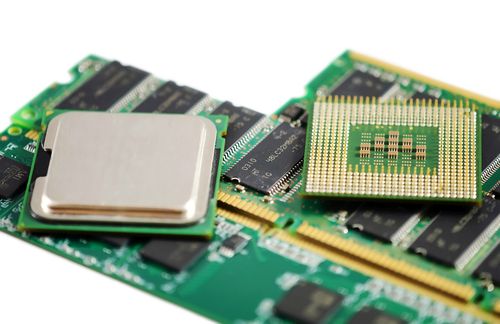
Affected product groups are processors and controllers, memory, and amplifiers. In a related announcement, the DGFT said the aforementioned products must be registered through CHIMS starting Aug. 1. The Ministry of Foreign Trade had previously introduced similar procedures for certain iron and steel products, coal, and aluminum and copper products to reduce unnecessary imports of these goods and strengthen domestic production.
Since 2012, the BIS has been gradually expanding the certification catalog and continuously adding additional goods. BIS certification mandatory for many electronic products for industrial and consumer uses. Factory inspections are also required for some products. Depending on the product, a distinction is made between BIS-ISI or BIS-CRS certification. Since the product list is constantly being expanded, we will be pleased to help you with an initial assessment. MPR International GmbH – India Certification supports you with a pending BIS certification and is also available at any time to answer your questions.
If you are interested in understanding what requirements are needed for your product to be imported into India, please do not hesitate to contact us by email or phone at +49-69-271 37 69 261. There is no cost or obligation for us to check for you. If a certification need is discovered we can provide a quotation to make sure that all your certification needs are covered.
If you have any questions you can also use our chat-window in the bottom right. (Please check your browser settings if you can’t see the window)
For more information about BIS certification, please refer to our free brochure “BIS Certification Made Easy“.
Indian Oil has signed an investment contract worth around 2.7 billion euros
The state-owned Indian Oil Corporation (IOC) signed a corresponding contract for the investment of around 2.7 million euros at the beginning of June. Earlier, IOC announced the expansion of its Koyali crude oil refinery in Vadodara in the state of Gujarat. The refinery’s annual capacity is to be expanded from the current 4.3 million tons to 18 tons. Additional petrochemical plants will also be built for an annual production of 500,000 tons of polypropylene, as well as 235,000 tons of lubricating oil base stock.
Gujarat State Minister Rupani and Minister of State for Petroleum, Gas and Steel Pradhan were present at the signing of a memorandum of understanding between the Gujarat government and Indian Oil. The investment project “LuPech” will serve the production of lubricating oil base materials and polypropylene. Another project “Acrylics / Oxo Alcohol” is intended to produce butyl acrylate. Butyl acrylate is an important component of paints, coatings, adhesives, textile fibers, plasticizers and other similar products. The inclusion of petrochemical feedstocks is part of IOC’s new business strategy to develop other markets outside the oil and refining sector. Following completion of the butyl acrylate plants, IOC is planning additional projects for the production of PVC, styrene, acrylonitrile, PMMA and ethylene oxide.
In addition, Indian Oil Corporation has announced further MoUs for the construction of facilities at Dumad as part of the Koyali-Ahmednagar-Solapur petroleum pipeline and a tanker filling station for Linear Alkylbenzenesulfonic Acids (LABs), a basic ingredient in the detergent industry. Another major infrastructure project includes new gas flares at the Gujarat refinery and a hydrogen fueling station to operate fuel cell vehicles. According to IOC, the filling station will be the first of its kind in India and will operate under the Clean Fuel Campaign. The hydrogen will be used to fuel buses on the Vadodara to Kevadia route.
The Indian oil and gas industry is growing and offers good opportunities for your company to provide services and products there or to produce locally. However, most equipment, plants and facilities must undergo mandatory PESO certification. This is issued by the Petroleum and Explosives Safety Organisation of India. Relevant product groups or components include gas and pressure vessels, valves and fittings, or safety equipment. A complete list can be found on the page about PESO certification mandatory products. The experts at MPR International GmbH are available to answer your questions about PESO certification or other India certifications without obligation for an initial assessment.
If you are interested in understanding what requirements are needed for your product to be imported into India, please do not hesitate to contact us by email or phone at +49-69-271 37 69 261. There is no cost or obligation for us to check for you. If a certification need is discovered we can provide a quotation to make sure that all your certification needs are covered.
If you have any questions you can also use our chat-window in the bottom right. (Please check your browser settings if you can’t see the window)
For more information about PESO certification, please refer to our free brochure “PESO Certification Made Easy“.
 We are part of the CERTANIA-Group.