


Schließen


BIS Certification for Low-Voltage Switchgear Due to Quality Control Orders (QCO)
The Government of India has announced the implementation of several Quality Control Orders (QCO) for Low Voltage Switch gears and Control gears for the dates below. BIS Certification becomes mandatory for these product categories.
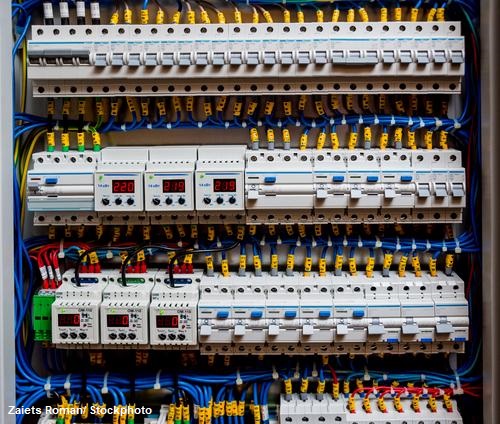
Here you can see an overview of different product groups of low-voltage switchgear and control gear for which new standards and implementation dates and thus a mandatory BIS-CRS certification are to be expected:
| Sr. No. | Product | Indian Standard | Date of Implementation |
| 20 | Low – Voltage switchgear and control gear: Part 2 circuit – Breakers | IS/IEC 60947 :Part 2 : 2016 | 10th May 2023 |
| 21 | Low – Voltage switchgear and control gear: Part 3 switches, disconnectors, switch disconnectors and fuse – Combination units | IS/IEC 60947 :Part 3 : 2012 | 10th May 2023 |
| 22 | Low – Voltage switchgear and control gear: Part 4 contactors and motor – Starters: Sec 1 electromechanical contactors and motor – Starters | IS/IEC 60947 :Part 4 : Sec 1 : 2012 | 10th May 2023 |
| 23 | Low – Voltage switchgear and control gear: Part 4 contactors and motor – Starters: Sec 2 a.c semiconductor motor controllers and starters | IS/IEC 60947 :Part 4 : Sec 2 : 2014 | 10th May 2023 |
| 24 | Low – Voltage switchgear and control gear: Part 4 contactors and motor – Starters: Sec 3 a.c. semiconductor motor controllers and contactors for non – Motor loads | IS/IEC 60947 :Part 4 : Sec 3 : 2014 | 10th May 2023 |
| 25 | Low – Voltage switchgear and control gear: Part 5 control circuit devices and switching elements: Sec 1 electromechanical control circuit devices | IS/IEC 60947 : Part 5 : Sec 1 : 2009 | 1 May 2023 |
| 26 | Low – Voltage switchgear and control gear: Part 5 control circuit devices and switching elements: Sec 2 proximity switches | IS/IEC 60947 : Part 5 : Sec 2 : 2007 | 1 May 2023 |
| 27 | Low – Voltage switchgear and control gear: Part 5 control circuit devices and switching elements: Sec 5 electrical emergency stop devices with mechanical latching function | IS/IEC 60947 : Part 5 : Sec 5 : 2016 | 10 May 2023 |
If you are interested in understanding what requirements are needed for your product to be imported into India, please do not hesitate to contact us by email or phone (Europe: +49-69-271 37 69 261, US: +1 773 654-2673). There is no cost or obligation for us to check for you. If a certification need is discovered we can provide a quotation to make sure that all your certification needs are covered.
If you have any questions you can also use our chat-window in the bottom right. (Please check your browser settings if you can’t see the window)
For more information about BIS certification, please refer to our free brochure “BIS Certification Made Easy“.
Indian government to issue 50 quality control orders by the end of the second quarter of 2024
The process is being carried out by the Department of Internal Trade and Industry Promotion (DPITT). A total of 50 quality control orders (QCO) for various products are to be introduced by the end of the second quarter. The product areas include aluminium products, lighters, sporting goods, water and insulated bottles, chipboard and plywood, and wooden furniture. By introducing the quality standards, the government hopes to curb the import of substandard goods and promote domestic production. Many of these aforementioned products from the various industrial sectors require BIS certification in order to be approved for import and distribution in India.
DPITT already presented draft standards after meeting with the Bureau of Indian Standards (BIS) for consultations. According to DPITT executives, they are in constant communication with BIS and relevant agencies to identify product areas for which new quality standards can be introduced. Products that fall under the quality standards cannot be sold, imported or stored without the BIS seal of approval. As an example, DPITT mentions the testing of lighters according to BIS guidelines in order to increase safety for consumers and to have high-quality products on the market. Furthermore, wood products such as chairs, tables, cabinets, beds, wood-based panels and plywood will soon be covered by the BIS certification requirement. Again, according to DPITT, the focus is on consumer protection and high quality products.
A large number of different products require BIS certification in order to import them into India or bring them onto the market. Depending on the product, a distinction is made between BIS-ISI or BIS-CRS certification. As the product list is constantly being expanded, we will be pleased to help you with an initial assessment. MPR International GmbH – India Certification supports you with a pending BIS certification and is also available at any time to answer any questions you may have.
If you are interested in understanding what requirements are needed for your product to be imported into India, please do not hesitate to contact us by email or phone (Europe: +49-69-271 37 69 261, US: +1 773 654-2673). There is no cost or obligation for us to check for you. If a certification need is discovered we can provide a quotation to make sure that all your certification needs are covered.
If you have any questions you can also use our chat-window in the bottom right. (Please check your browser settings if you can’t see the window)
For more information about BIS certification, please refer to our free brochure “BIS Certification Made Easy“.
India now sixth country globally to be able to conduct NCAP crash tests
Ahead of the introduction of India’s Bharat NCAP safety ratings for new vehicles this year, Mahendra Nath Pandey, the minister in charge of heavy industries, announced that India will soon also be able to conduct crash tests according to the globally recognised NCAP standards. The NCAP (New Car Assessment Programme) ratings will apply in India from 1 April 2023, Pandey said. India is thus one of six countries worldwide that can offer crash tests and ratings to the car industry according to international standards. Products and components in the automotive category generally require AIS certification or BIS certification to be approved for import, distribution and use in India.

The visionary project had been started by the previous Prime Minister Vajpayee and has now been implemented under Narendra Modri. “India is now the sixth country in the world, along with the UK, Japan, South Korea, China and Taiwan, with NCAP-compliant testing facilities,” Minister Pandey said during a visit to the International Centre for Automotive Technology (ICAT). ICAT plays an important role in the safety assessment of new cars, according to Pandey. India has not only become globally interesting for car manufacturers with the introduction of NCAP, but it will also have a major impact on the domestic auto industry, Pandey said.
Already last year, the Indian government decided to introduce Bharat-NCAP, a star-based safety rating of new vehicles based on crash test results. Besides ICAT, three other institutions in India conduct the crash tests: the National Automobile Test Track (NATRAX) in Indore, the Automobile Research Association of India (ARAI) in Pune and the Global Automotive Research Centre (GARC) in Chennai. The government has also removed another hurdle with regard to conducting crash tests in India. Thus, the import tax of 252 per cent on new cars for the purpose of crash testing has been abolished. “This step will make India more attractive for international car manufacturers,” Minister Pandey concluded.
Cars and their components have to be certified under the AIS guidelines in India. AIS stands for the Automotive Industry Standards, the technical automotive standards for India. MPR International GmbH – India Certification will be pleased to assist you with AIS certification and is also available to answer any questions you may have.
New Implementation Dates for BIS standards for Certain Chemicals Published
On February 13, 2023 the Department of Chemicals & Petro-Chemicals published a Quality Control Order with updated dates for the mandatory implementation period of IS standards for various chemicals. Chemicals in many cases require BIS certification to be approved for import, distribution and use in India.

The revised dates are shown in the table:
| Standard | Substance | New implementation date |
| IS 12084 | Morpholin | 1. August 2023 |
| IS 695 | Essigsäure | 3. August 2023 |
| IS 517 | Methanol | 3. August 2023 |
| IS 2833 | Anilin | 3. August 2023 |
| IS 8058 | Pyridin | 13. September 2023 |
| IS 16113 | Gamma Pikolin | 13. September 2023 |
| IS 16112 | Beta Pikolin | 13. September 2023 |
| IS 7129 | Pottaschenkarbonat | 13. September 2023 |
| IS 170 | Azeton | 13. September 2023 |
| IS 6100 | Natriumtryptophosphat | 13. September 2023 |
| IS 17077 | Acrylnitril-Butadien-Styrol | 12. Juni 2023 |
| IS 14434 | Polykarbonat | 12. März 2024 |
| IS 17442 | Vinylchlorid-Monomer | 12. März 2024 |
| IS 869 | Äthylen-Dichlorid | 12. März 2024 |
The chemicals concerned must be labelled with the standard mark from the respective implementation date in accordance with the license issued by BIS. You can find more information on our page about BIS Certification.
We will post more details about the changes in the new version on our website as they become available.
If you are interested in understanding what requirements are needed for your product to be imported into India, please do not hesitate to contact us by email or phone (Europe: +49-69-271 37 69 261, US: +1 773 654-2673). There is no cost or obligation for us to check for you. If a certification need is discovered we can provide a quotation to make sure that all your certification needs are covered.
If you have any questions you can also use our chat-window in the bottom right. (Please check your browser settings if you can’t see the window)
For more information about BIS certification, please refer to our free brochure “BIS Certification Made Easy“.
New list of tests for telecom devices with 5G interface
The TEC Mobile Technologies division, which is responsible for creating standards and specifications for testing Mobile Technologies, has completed the list of tests to be performed on telecom devices with a 5G cellular interface. At present, the tests are only included in the Essential Requirements document (ER) titled Mobile User Equipment, which is not currently regulated by MTCTE.
Telecommunications equipment typically requires TEC certification to be approved for import and distribution in India.
The following product variants are covered by the list:
- Mobile Data Card or Dongle with WiFi
- Mobile Data Card or Dongle without WiFi
- Mobile Handset
- Mobile Handset without Data
- Mobile Tablet
The values to be tested are divided into the following parameter categories for each product variant, among others:
- Parameters Linked with Product Variant
- 5G NR- FR1 and FR2 interworking with other Radios
- 5G NR (FR1)
- 5G NR (FR2)
- CDMA
- GSM or GPRS or EDGE
- LTE or LTE-A
- WCDMA or HSPA
- WiFi
Contact us for more detailed information on the necessary product tests and the relevant standards.
TEC certification for telecommunication products is provided as a mandatory test certification according to the MTCTE (Mandatory Testing Certification of Telecommunication Equipment) regulations.
TEC Certification has been around many years before 2019 as a voluntary certification, but since April 2019 the certification has been mandatory and every year the Telecommunication Engineering Center (TEC) expands the certification catalog and adds more telecom products. See the list of TEC standards here.
If you are interested in understanding what requirements are needed for your product to be imported into India, please do not hesitate to contact us by email or phone (Europe: +49-69-271 37 69 261, US: +1 773 654-2673). There is no cost or obligation for us to check for you. If a certification need is discovered we can provide a quotation to make sure that all your certification needs are covered.
For more information about TEC certification, please refer to our free brochure “TEC Certification Made Easy“.
Gas cylinders for household use to receive QR codes
The Indian government has decided to label all gas cylinders for household use with QR codes from the beginning of 2023. In the past, there have been increasing complaints from customers that the containers contained 1-2 kg less gas than stated. The QR code is to be affixed to gas cylinders already in circulation and permanently welded to new gas cylinders. The introduction and activation of the system is intended to prevent thefts and improve the tracking and inventory of gas cylinders, according to the minister responsible for energy. Products associated with the Indian oil and gas industry generally require PESO certification to be imported and used in India.
Without the QR code, it was difficult to track complaints from customers that the quantity of gas was too low. It was also not possible to determine the place of storage or filling or to identify the dealer or supplier to the doorstep. With the new QR code, customers should have a better opportunity to enforce their claims and identify untrustworthy retailers with underfills. In addition, customers will receive information on how often the gas cylinder has been used or refilled, as well as the corresponding delivery route and delivery duration. The QR code is also intended to prevent gas cylinders in household use with a lower tax rate from being used for commercial purposes. Foreign manufacturers of gas cylinders are advised to inform themselves about the new QR code regulation in India and also implement it in their products. This is the only way to ensure that they are on the same level as Indian competitors.
Due to the widespread use of LPG for cooking and heating, the demand for gas cylinders in India will also increase. Therefore, the Indian energy sector offers good opportunities for your company to offer services and products there or to produce locally. However, most appliances, equipment and facilities must undergo mandatory PESO certification. Relevant product groups or components are for example gas and pressure vessels, valves and fittings or safety equipment. A complete list can be found under this link. The experts at MPR International GmbH are available to answer your questions about PESO certification or other India certifications without obligation for an initial assessment.
Most equipment, plant and facilities that belong in the Indian oil and gas industry need to go through mandatory PESO certification. This is issued by the Petroleum and Explosives Safety Organisation of India. Relevant product groups or components include gas and pressure vessels, valves and fittings, or safety equipment. A complete list can be found on the page about PESO certification mandatory products.
If you are interested in understanding what requirements are needed for your product to be imported into India, please do not hesitate to contact us by email or phone (Europe: +49-69-271 37 69 261, US: +1 773 654-2673). There is no cost or obligation for us to check for you. If a certification need is discovered we can provide a quotation to make sure that all your certification needs are covered.
If you have any questions you can also use our chat-window in the bottom right. (Please check your browser settings if you can’t see the window)
For more information about PESO certification, please refer to our free brochure “PESO Certification Made Easy“.
Introduction of quality standards for Indian companies from the gig and shared economy
The Bureau of Indian Standards (BIS), the authority responsible for BIS certification, is planning to introduce quality standards for companies from the so-called gig and shared economy. This was confirmed by high-ranking government officials from the Ministry of Consumer Affairs. In addition, the BIS is considering the application of International Organisation for Standardization (ISO) standards in India. The standards are to be continuously extended to industries such as taxi providers, food delivery services and online health services.
The gig economy describes a labour market in which mainly temporary and part-time jobs are filled by independent contractors and freelancers. Shared economy extends to mobility service providers (Uber, Rapido), co-working (Awfis, WeWork), housing (Stanzaliving, OYO) and furniture rental (Furlenco). ISO/TC 324 certification is used in shared economy companies. Here, the quality of products and the time frame of delivery are assessed. Data protection, fraud, complaints and compensation are also part of this certification. In India, a sub-group of the Ministry of Consumer Affairs is currently involved in updating the ISO/TC 324 standard and is passing on corresponding proposals to ISO.
Furthermore, the Ministry of Consumer Affairs announced that an expert group for the introduction of “Right to Repair” legislation has been established. According to a survey by LocalCircles, 43 per cent of Indian households had three or more appliances at home that were less than five years old and needed repair. When asked, survey respondents said that often customer service representatives did not show up to repair them or the cost of repair was too high. The founder of LocalCircles, Sachin Taparia, hopes that standards will soon be introduced for India in this area and expects a signal effect for other countries.
A large number of different products require BIS certification in order to import them into India or bring them onto the market. Depending on the product, a distinction is made between BIS-ISI or BIS-CRS certification. As the product list is constantly being expanded, we will be pleased to help you with an initial assessment. MPR International GmbH – India Certification supports you with a pending BIS certification and is also available at any time to answer any questions you may have.
If you are interested in understanding what requirements are needed for your product to be imported into India, please do not hesitate to contact us by email or phone (Europe: +49-69-271 37 69 261, US: +1 773 654-2673). There is no cost or obligation for us to check for you. If a certification need is discovered we can provide a quotation to make sure that all your certification needs are covered.
If you have any questions you can also use our chat-window in the bottom right. (Please check your browser settings if you can’t see the window)
For more information about BIS certification, please refer to our free brochure “BIS Certification Made Easy“.
Indian internet industry could be worth US$5 trillion by 2030
Despite some setbacks this year, the Indian internet industry could be worth US$5 trillion by 2030. This is according to a report by Redseer, quoted by the Economic Times. With around 780 million internet users, India is considered the second largest user in the world. As digital applications will continue to play an important role, product sales in the private and public sectors will rise to 5 trillion US dollars, according to market observers from Redseer Strategy Consultants. To this end, the study cites that on average, residents of India spend around 7.3 hours a day on their smartphones – one of the highest usage times in the world. Electronic components or finished electronic devices require BIS certification or TEC certification to import or market them in India.
This time is spent on messaging services, social media, YouTube streaming and short videos. Interestingly, but not surprisingly, most online users are in major cities or Indian megacities, the report said. A new trend in consumption behaviour points to twice as much time spent watching user-generated content instead of platform-generated content. The dramatic rise in digital consumption and penetration of digital services in Indian cities is the primary growth driver of Indian digital advertising. Due to increased consumption of short videos, the report expects a massive increase in investment in digital advertising instead of driving sales.
Regarding product certificaiton, depending on the product, a distinction is made between BIS-ISI or BIS-CRS certification. TEC is the abbreviation for Telecommunication Engineering Center. TEC is the competent authority in India when it comes to TEC certification for telecommunication products. From 1991 to 2019, TEC certification was still possible as a voluntary product registration, but now it is mandatory for many product groups. As the product list is constantly being expanded, we are pleased to help you with an initial assessment. MPR International GmbH – India Certification supports you with a pending BIS certification and is also available at any time to answer your questions.
If you are interested in understanding what requirements are needed for your product to be imported into India, please do not hesitate to contact us by email or phone (Europe: +49-69-271 37 69 261, US: +1 773 654-2673). There is no cost or obligation for us to check for you. If a certification need is discovered we can provide a quotation to make sure that all your certification needs are covered.
If you have any questions you can also use our chat-window in the bottom right. (Please check your browser settings if you can’t see the window)
For more information about BIS certification, please refer to our free brochure “BIS Certification Made Easy“.
For more information about TEC certification, please refer to our free brochure “TEC Certification Made Easy“.
BIS has published 21,980 standards for products and processes to date
The Bureau of Indian Standards (BIS) has published a total of 21,890 standards for products, process flows, services, workflows as well as test methods since its inception. This was announced by the Minister in charge of Consumer Affairs, Food and Public Distribution, Ashwini Kumar Choubey, to the Parliamentary Chamber “Rajya Sabha”. The BIS is India’s national standardisation body and drafts standards for various sectors of the economy. Through the standards, the BIS ensures end-to-end quality awareness among manufacturers, industry, consumers and government institutions. “The standards benefit all sectors of industry, irrespective of their size. It would also make processes more efficient, increase quality and reduce costs,” the minister said.
He further added that the standards would simplify international trade and provide greater certainty to investors. While drafting a standard for India, the BIS technical committees use existing internationally recognised standards such as those of the International Organisation for Standardisation (ISO) or the International Electrotechnical Commission (IEC). In doing so, the BIS teams try to stay as close as possible to the international standards, says Choubey. Sometimes, however, it is necessary to adapt ISO/IEC standards to local circumstances such as health, safety, environment, national security and prevention of deception, he said. Currently, 87 per cent of Indian standards are in line with ISO/IEC standards, if applicable to the individual case.
A large number of diverse products require BIS certification in order to import them into India or bring them to market. Depending on the product, a distinction is made between BIS-ISI or BIS-CRS certification. As the product list is constantly being expanded, we will be pleased to help you with an initial assessment. MPR International GmbH – India Certification supports you with a pending BIS certification and is also available at any time to answer any questions you may have.
If you are interested in understanding what requirements are needed for your product to be imported into India, please do not hesitate to contact us by email or phone (Europe: +49-69-271 37 69 261, US: +1 773 654-2673). There is no cost or obligation for us to check for you. If a certification need is discovered we can provide a quotation to make sure that all your certification needs are covered.
If you have any questions you can also use our chat-window in the bottom right. (Please check your browser settings if you can’t see the window)
For more information about BIS certification, please refer to our free brochure “BIS Certification Made Easy“.
Postponement of BIS Certification for Air Conditioning Systems Until October 2023

The Ministry of Commerce and Industry (Department for Promotion of Industry and Internal Trade) announces that in the “Air Conditioners and Associated Parts, Hermetic Compressors and Temperature Sensing Controls (Quality Control) Order, 2019” in sub-paragraph (2) of paragraph 1, for the entry “on January 1, 2023”, was updated to “on October 1, 2023”. Air conditioners and associated components generally require BIS certification to be approved for import and sale in India.
After consultation with the Bureau of Indian Standards (BIS) the central government decided that it is in the public interest to issues the following order further amending the “Air Conditioners and its related Parts, Hermetic Compressors and Temperature Sensing Controls (Quality Control) Order, 2019” to the following:
- (1) This order may be called the “Air Conditioner and its related Parts, Hermetic Compressors and Temperature Sensing Controls (Quality Control) Amendment Order, 2022”.
(2) It shall come into force on the date of its publication in the Official Gazette.
- In the “Air Conditioner and its related Parts, Hermetic Compressors and Temperature Sensing Controls (Quality Control) Order, 2019” in paragraph 1, in sub-paragraph (2), for the words and figures “the 1st January, 2023”, the words and figures “1st October, 2023” shall be substituted.
This concerns the following standards:
| Product | Indian Standard | Enforcement Date Based on the Order of the MINISTRY OF COMMERCE AND INDUSTRY Dated 21.12.2022 |
| Room Air Conditioners – Unitary Air Conditioners | IS 1391 (Part 1):2017 | 1. October 2023 |
| Room Air Conditioners – Split-Air Conditioners | IS 1391 (Part 2): 2018 | 1. October 2023 |
| Ducted and Package Air-Conditioners | IS 8148: 2018 | 1. October 2023 |
| Finned Type Heat Exchanger for Room Air Conditioner | IS 11329: 2018 | 1. October 2023 |
| Hermetic Compressors | IS 10617:2018 | 1. October 2023 |
| Automatic Electrical Controls for Household and Similar Use | IS/IEC 60730 (part 2) Section 9:2011 | 1. October 2023 |
For the purpose of this table, the latest version of the Indian Standards, including amendments, announced by the Bureau of Indian Standards shall apply.
If you are interested in understanding what requirements are needed for your product to be imported into India, please do not hesitate to contact us by email or phone (Europe: +49-69-271 37 69 261, US: +1 773 654-2673). There is no cost or obligation for us to check for you. If a certification need is discovered we can provide a quotation to make sure that all your certification needs are covered.
If you have any questions you can also use our chat-window in the bottom right. (Please check your browser settings if you can’t see the window)
For more information about BIS certification, please refer to our free brochure “BIS Certification Made Easy“.
 We are part of the CERTANIA-Group.