


Schließen

MEITY Considers Transitioning from BIS CRS to BIS ISI System for LEDs in India
The Ministry of Electronics and Information Technology (MEITY) in India is currently actively exploring the possibility of revising the certification process for LED products. The current focus is on transitioning from the existing BIS-CRS scheme to the more stringent BIS-ISI certification at the Bureau of Indian Standards (BIS). This proposed transition will entail comprehensive changes, including mandatory factory audits, product testing and increased market surveillance measures.

The products affected by the transition to the ISI scheme are LED products. In 2022, the BIS published a draft attempting to convert the CRS label to the ISI label. However, this step was met with strong resistance from the industry. Against this background, MEITY is currently carrying out extensive considerations and is examining the possibility of a completely new certification framework.
LEDs are currently still subject to the mandatory BIS-CRS certification. This includes self-registration of the manufacturer with the BIS, as well as product testing in an accredited Indian laboratory. With a change to BIS certification according to the ISI Scheme, these requirements would change significantly.
If you are interested in understanding what requirements are needed for your product to be imported into India, please do not hesitate to contact us by email or phone (Europe: +49-69-271 37 69 261, US: +1 773 654-2673). There is no cost or obligation for us to check for you. If a certification need is discovered we can provide a quotation to make sure that all your certification needs are covered.
If you have any questions you can also use our chat-window in the bottom right. (Please check your browser settings if you can’t see the window)
For more information about BIS certification, please refer to our free brochure “BIS Certification Made Easy“.
Phase V of the MTCTE for TEC Certification Published
Pursuant to the 2017 amendments to the Indian Telegraph Service Rules, the Indian Ministry of Telecommunications and Electronics (TEC) has now set the date from which applications for mandatory certification of Phase V products (ERs) under the telecom equipment testing and certification process in the MTCTE regime will be accepted.
This is in the context of the ongoing testing and certification of telecommunications equipment during the various phases of the MTCTE regime by the said Ministry. The standards to which TEC certifications are to be performed are referred to as Essential Requirements (ER).

Starting on July 1, 2023, the TEC will accept applications for certification of Phase V products. From July 1, 2024, certification of these products will be mandatory in India.
This means manufacturers have one year from the start date to successfully complete the certification.
Test reports from laboratories accredited by the International Laboratory Accreditation Cooperation (ILAC) will only be accepted until June 30, 2024.
The following products fall under Phase V of the MTCTE:
| S. No. | Product | ILAC report acceptance |
| 1. | Base Station for Cellular Network for 5G | Yes |
| 2. | 5G Core | Yes |
| 3. | Hypervisor | Yes |
| 4. | E-band Fixed Radio Delay Systems | Yes |
| 5. | Converged Multi Service Application Access Equipment (C-MSAAE) | No |
| 6. | IP Terminal | No |
| 7. | Hybrid Set Top Box | No |
Under the Indian Telegraph (Amendment) Rules of 2017, there is a mandatory certification and testing requirement for telecom products in India. TEC certification must be completed before import into India. In this process, the products must be shown to comply with the regulations called “Essential Requirements” (ER). Product testing must be completed in accredited test laboratories in India.
TEC certification has been around many years before 2019 as a voluntary certification, but since April 2019 the certification has been mandatory and every year the Telecommunication Engineering Center (TEC) expands the certification catalog and adds more telecom products.
If you are interested in understanding what requirements are needed for your product to be imported into India, please do not hesitate to contact us by email or phone (Europe: +49-69-271 37 69 261, US: +1 773 654-2673). There is no cost or obligation for us to check for you. If a certification need is discovered we can provide a quotation to make sure that all your certification needs are covered.
For more information about TEC certification, please refer to our free brochure “TEC Certification Made Easy“.
Implementation of New Standard IS 1293 for Plugs and Sockets for BIS Certification
BIS has issued a notice under Scheme-I (ISI) through the Quality Control Order (QCO) that the application of IS 1293:2005 will continue until October 23, 2023. After October 23, 2023, the 2005 version will be withdrawn and IS 1293:2019 will come into force. The standards are relevant for BIS certification under the BIS ISI Scheme.
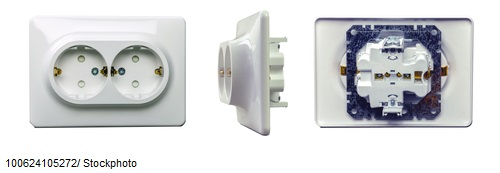
This standard was revised in 2019 and published as IS 1293:2019. Currently, both versions, 2005 and 2019 of IS 1293 are valid. They will remain valid until October 23, 2023, after which the 2005 version will be withdrawn, and the 2019 version will remain in force.
This document provides an indicative list for the coverage of connector types in the scope of IS 1293:2005 and IS 1293:2019 for the information of various stakeholders.
See table below
Connector varieties that fall within the scope of IS 1293:2019 and varieties that did not fall under IS 1293:2005 but are covered by IS 1293:2019.
It is also noted that there will be no further extension of the parallel validity of IS 1293:2005 and IS 1293:2019 after October 23, 2023.
All licensees are hereby informed to take necessary steps to ensure the implementation of the revised IS 1293:2019 within the time norms and to ensure that after October 23, 2023, the varieties which are not included in IS 1293:2019 are no longer available from the licensees and/or their dealers.
| Sr. No. | Product Description & Rating | IS 1293:2005 | IS 1293:2019 |
| 1 | 6A, 3Pin Socket (2P+E) | Included in Scope | Included in Scope |
| 2 | 6/16A Socket (2P+E) | Included in Scope | Included in Scope |
| 3 | 6A & 16A Plugs (2P+E) | Included in Scope | Included in Scope |
| 4 | 2.5 & 6A Plug portable (Non Rewirable ) | Included in Scope | Included in Scope |
| 5 | 16A Plug (Non Rewireable) | Not included in Scope | Included in Scope |
If you are interested in understanding what requirements are needed for your product to be imported into India, please do not hesitate to contact us by email or phone (Europe: +49-69-271 37 69 261, US: +1 773 654-2673). There is no cost or obligation for us to check for you. If a certification need is discovered we can provide a quotation to make sure that all your certification needs are covered.
If you have any questions you can also use our chat-window in the bottom right. (Please check your browser settings if you can’t see the window)
For more information about BIS certification, please refer to our free brochure “BIS Certification Made Easy“.
New IS Standards for BIS-ISI Certification for Footwear
On July 1, 2023 the revised versions of the orders “All-Rubber and all Polymeric material and its components (Quality Control) , 2022” and “Leather and other materials (Quality Control), 2022” were implemented by BIS (Bureau of Indian Standards). A total of 24 product groups of footwear are covered by these orders and require BIS certification. For some of the products for which the IS standards have been recently revised, there is an extension of the implementation period until the end of 2023.

For the manufacturers who produce the products according to these revised specifications, an additional period of 6 months is granted. This means that here the regulation will apply only from December 31, 2023.
| Current IS No. (Product) | Revised IS No. (Product) |
| IS 15844:2010 – Sports Footwear | IS 15844 (Part 1):2023 – Sports Footwear Part -1 General Purpose IS 15844 (Part 2):2023 – Sports Footwear Part 2 Performance Sports Footwear |
| IS 10702:1992 – Rubber Hawai Chappal | IS 10702:2023 – Hawai Chappal |
| IS 11544:1986 – Rubber Slipper | IS 6721:2023 – Sandal and Slipper |
| IS 6721:1972 – PVC Sandal |
If you are interested in understanding what requirements are needed for your product to be imported into India, please do not hesitate to contact us by email or phone (Europe: +49-69-271 37 69 261, US: +1 773 654-2673). There is no cost or obligation for us to check for you. If a certification need is discovered we can provide a quotation to make sure that all your certification needs are covered.
If you have any questions you can also use our chat-window in the bottom right. (Please check your browser settings if you can’t see the window)
For more information about BIS certification, please refer to our free brochure “BIS Certification Made Easy“.
The Period of Validity of MTCTE Phases III and IV Has Been Extended By the TEC (Telecommunication Engineering Centre)
In partial amendment to Notification No. 5-2/2021-TEC/TEC/131 dated June 13, 2022 relating to testing and certification of telecom equipment under Phase III and Phase IV of the MTCTE Scheme, as provided in the Indian Telegraph (Amendment) Rules 2017, several amendments have been made. Telecom equipment generally requires TEC certification to be approved for import and distribution in India.
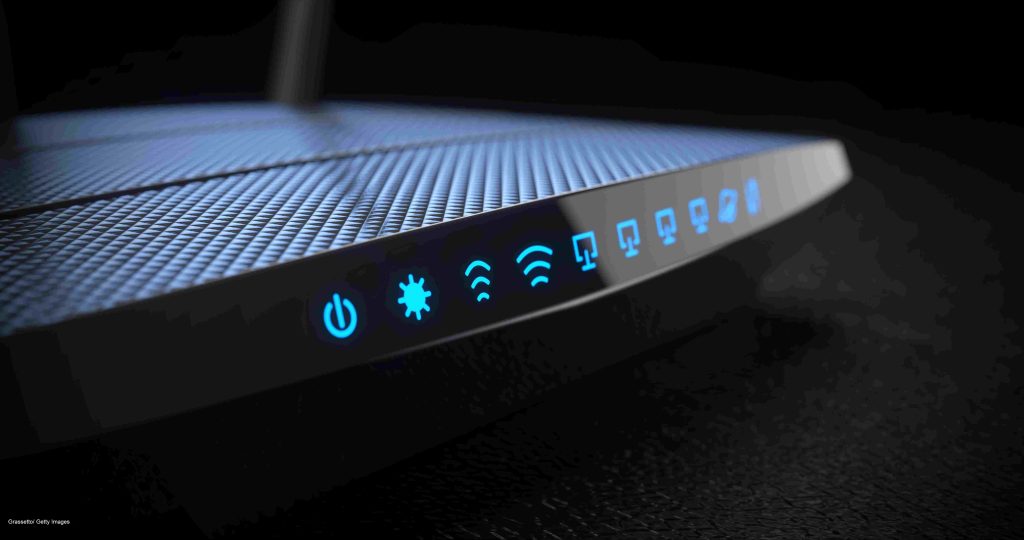
The changes come into effect with immediate effect and include as below:
- 32 product categories covered by Annex I have been extended for mandatory testing and certification until October 1, 2023 (3 months). These include products such as devices operating in the 2.4 and 5 GHz range, IoT gateways, LAN switches, routers, conferencing equipment, IP security equipment, location devices, transmission terminals-2 etc..
- For 12 product categories covered by Annex II, the testing and certification obligation has been extended until January 1, 2024 (6 months). These include products such as satellite communication equipment, fiber optic cables, base stations for mobile networks, compact mobile networks, etc..
- For 10 product categories covered by Annex III, the acceptance of test reports from ILAC accredited laboratories (countries without cross-border cooperation) for technical parameters has been extended until 1 January 1, 2024 (6 months). This includes products such as satellite communication equipment, fiber optic cables, base stations for mobile networks, compact mobile networks, etc..
If you are interested in understanding what requirements are needed for your product to be imported into India, please do not hesitate to contact us by email or phone (Europe: +49-69-271 37 69 261, US: +1 773 654-2673). There is no cost or obligation for us to check for you. If a certification need is discovered we can provide a quotation to make sure that all your certification needs are covered.
For more information about TEC certification, please refer to our free brochure “TEC Certification Made Easy“.
Improved Quality Control for Bolts, Nuts and Fasteners
New Delhi, 21 July 2023: To maintain quality standards and ensure consumer safety, the Ministry of Commerce and Industry has listed bolts, nuts and fasteners (quality control) in an Ordinance 2023. This quality control order, empowered by the Bureau of Indian Standards Act, 2016, prescribes stringent quality requirements for these important industrial components.
These products are required to carry the standard mark under a BIS license as per Scheme-I of the Bureau of Indian Standards (Conformity Assessment) Regulations (2018) and hence require BIS certification (BIS ISI).
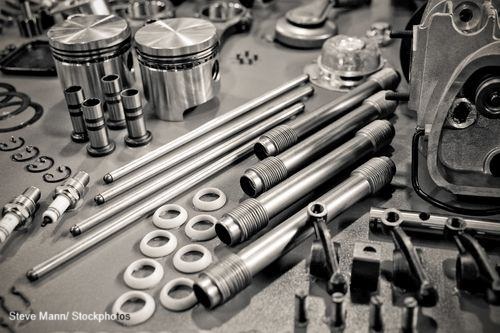
The regulation will come into force six months after notification, but with different deadlines for micro and small enterprises under the Micro, Small and Medium Enterprises Development Act of 2006: nine months for small enterprises and twelve months for micro enterprises.
Exemptions: The regulation does not apply to goods that are manufactured domestically for export, imported as part of finished goods or imported for export-oriented production. Micro and small enterprises that meet certain investment and turnover criteria are also exempt.
Any person who contravenes the provisions of this Ordinance shall be liable to prosecution under the provisions of the Bureau of Indian Standards Act, 2016.
| Goods or articles | Indian Standard | Titel of indian Standard |
| Bolts, Nuts and Fasteners | 1363 (Part 1):2019 | Hexagon Head Bolts, Screws and Nuts of product Grade C Hexagon Head Bolts (Size Range M 5 to M 64) |
| 1363 (Part 2): 2018 | Hexagon Head Screw (Size ranges from M 5 to M 64) | |
| 1363 (Part 3): 2018 | Hexagon Head Bolts, Screws and Nuts of product Grade C – Hexagon Nuts (Size Range M5 to M64) | |
| 1364 (Part 1):2018 | Hexagon Head Bolts, Screws and Nuts of product Grades A and B – Hexagon Head Bolts (Size Range M 1.6 To M 64) | |
| 1364 (Part 2) :2018 | Hexagon Head Bolts, Screws and Nuts of Product Grades A and B – Hexagon Head Screws (Size Range M 1.6 to M 64) | |
| 4621:1975 | Indicating Bolts for use in public baths and lavatories | |
| 5187:1972 | Flush Bolts | |
| 10238:2001 | Fasteners – Threaded Steel Fastener – Step Bolts for Steel Structures | |
| 12427:2001 | Fasteners – Threaded Steel Fasteners – Hexagon Head Transmission Tower Bolts | |
| 3757:1985 | High Strength Structural Bolts | |
| 204 (Part 2): 1992 | Tower Bolts- Non-ferrous metals | |
| 204 (Part 1):1991 | Tower Bolts- Ferrous metals | |
| Stainless Steel Sliding Door Bolts (Aldrops) for use With Padlocks | ||
| 2681:1993 | Non-ferrous metal sliding door bolts (aldrops) for use with padlocks | |
| 281:2009 | Mild steel sliding door bolts for use with padlocks | |
| 7534:1985 | Sliding locking bolts for use with padlocks | |
| 1284:1975 | Wrought Aluminium Alloy Bolt and Screw Stock for General Engineering purposes | |
| 15833:2009 | Stainless steel Tower Bolts | |
| 6623:2004 | High Strength Structural Nuts |
If you are interested in understanding what requirements are needed for your product to be imported into India, please do not hesitate to contact us by email or phone (Europe: +49-69-271 37 69 261, US: +1 773 654-2673). There is no cost or obligation for us to check for you. If a certification need is discovered we can provide a quotation to make sure that all your certification needs are covered.
If you have any questions you can also use our chat-window in the bottom right. (Please check your browser settings if you can’t see the window)
For more information about BIS certification, please refer to our free brochure “BIS Certification Made Easy“.
Clarification regarding IS 17043 : 2018 for Derby Shoes
Derby shoes will be required to have BIS certification starting July 1, 2023, according to the Leather and Other Materials (Quality Control) Order, 2022, based on the Standard IS 17043:2018.

Due to the ambiguity surrounding the term “Derby shoes,” there have been inquiries from stakeholders seeking clarification on whether the standard and quality control order (CQO) apply to all civilian shoes designed in the derby style, or those intended for use by the armed forces/police personnel, or both.
The clarification provided states that at present, the scope of IS 17043:2018 and the Leather and Other Materials (Quality Control) Order, 2022, only applies to Derby Shoes designated for use by the armed forces/police forces. Consequently, these specific derby shoes will be governed by the mentioned QCO, while civilian-use derby shoes are currently not subject to its application.
If you are interested in understanding what requirements are needed for your product to be imported into India, please do not hesitate to contact us by email or phone (Europe: +49-69-271 37 69 261, US: +1 773 654-2673). There is no cost or obligation for us to check for you. If a certification need is discovered we can provide a quotation to make sure that all your certification needs are covered.
If you have any questions you can also use our chat-window in the bottom right. (Please check your browser settings if you can’t see the window)
For more information about BIS certification, please refer to our free brochure “BIS Certification Made Easy“.
India Imposes New Import Restrictions on Digital Devices
The Government of India has recently imposed stringent restrictions on the import of Laptops, Tablets, all-in-one PCs, and certain other computer categories falling under HSN 8471. Laptops and similar products need a BIS certification in India. Even with the BIS-CRS certificates required for such products, an additional import License from the Directorate General of Foreign Trade (DGFT) is now mandatory. As per the notification released by the DGFT, products under specific HS codes, including 84713010, 84713090, and others, will now face import restrictions.
Furthermore, manufacturers aiming to import these devices must first obtain Equipment Type Approval and an Import License from the Wireless Planning & Coordination (WPC) wing. Notably, the Equipment type approval through self-declaration (ETA-SD) will no longer be considered valid for this process. However, there are exemptions to these new rules. Single units of laptops, tablets, and all-in-one PCs can be imported without these licensing conditions, though this does not apply to servers. Additionally, products imported for specific purposes such as R&D, testing, benchmarking, and evaluation, or those re-imported after overseas repairs, as well as products that are integral components of other capital goods, are also exempted from these conditions.
If you are interested in understanding what requirements are needed for your product to be imported into India, please do not hesitate to contact us by email or phone (Europe: +49-69-271 37 69 261, US: +1 773 654-2673). There is no cost or obligation for us to check for you. If a certification need is discovered we can provide a quotation to make sure that all your certification needs are covered.
If you have any questions you can also use our chat-window in the bottom right. (Please check your browser settings if you can’t see the window)
For more information about BIS certification, please refer to our free brochure “BIS Certification Made Easy“.
You can also find more information about WPC certification in our free brochure “WPC Certification Made Easy“.
Exemption of Repeater Parameters for Mobile Networks under MTCTE in India
A general exemption for the test parameters listed below relating to the essential requirements of amplifiers for mobile network products notified under the Mandatory Testing and Certification of Telecom Equipment (MTCTE) is granted till June 30, 2023 or further orders. Mobile network products usually require TEC certification or also WPC certification to be approved for import and distribution in India.

The Department of Telecommunications, Government of India, prepares Indian Standards (IS) for the import of non-Indian products. The test requirements are part of the standards.
| S. No | Product Name | Parameter Name (according to basic requirement) | Standard Name (according to basic requirement) |
| 1 | Repeater for cellular network | GSM Repeater Station Operation Frequency | NFAP.Annex-F |
| GSM Repeater Station Parameter | 3GPP TS51 .026 und TS 45.005. Annex-F6 | ||
| WCDMA Repeater Station Parameters | 3GPP TS 25.143. Annex-F7 | ||
| WCDMA Repeater Station Operation Frequency | NFAP.Annex-F | ||
| LTE Repeater Station Operation Frequency | NFAP.Annex-F |
If you are interested in understanding what requirements are needed for your product to be imported into India, please do not hesitate to contact us by email or phone (Europe: +49-69-271 37 69 261, US: +1 773 654-2673). There is no cost or obligation for us to check for you. If a certification need is discovered we can provide a quotation to make sure that all your certification needs are covered.
For more information about WPC certification and TEC certification, please refer to our free brochures “WPC Certification Made Easy” and “TEC Certification Made Easy“.
FAQ on the Quality Control Order for Footwear
As part of the mandatory BIS certification forfootwear starting in July 2023, the Bureau of Indian Standards (BIS) answered a number of frequently asked questions regarding the new QCO (Quality Control Order) also published in July of 2023.

BIS publishes a Quality Control Order (QCO) for all products requiring certification. After this publication the BIS-ISI certification ofthose products will be mandatory. After the QCO comes into effect, none of the affected products may be imported into India without first successfully completing the certification process.
Among other, the FAQ on “QUALITY CONTROL ORDERS FOR FOOTWEAR PRODUCTS” provides the following information:
- Which categories of footwear are affected by the QCO:
- Personal protective equipment
- Leather and other materials shoes
- Shoes made of solid rubber and solid plastic.
- Manufacturers of products with recently changed standards will be given 6 months implementation time to respond to QCO’s:
- Sports shoes (falls under IS 15844 (Part 1 and Part 2):2023)
- Hawaii Chappal (falls under IS 10702:2023)
- Sandal and slipper (falls under IS 6721:2023)”
- Manufacturers who have several production plants must have all plants certified in which shoes that are exported to India are produced.
Other questions answered in the FAQ include:
- Different types of shoes are manufactured in my factory. Do I have to apply for a separate certification for each model?
- Do QCOs only apply to finished footwear or also footwear components/materials?
- Do I have to test my certified shoes regularly after receiving the license?
- Do I have to do the tests mentioned in the Indian Standard myself or can I contract them out to a BIS approved lab?
- And more…
For more information, please contact us directly.
If you are interested in understanding what requirements are needed for your product to be imported into India, please do not hesitate to contact us by email or phone (Europe: +49-69-271 37 69 261, US: +1 773 654-2673). There is no cost or obligation for us to check for you. If a certification need is discovered we can provide a quotation to make sure that all your certification needs are covered.
If you have any questions you can also use our chat-window in the bottom right. (Please check your browser settings if you can’t see the window)
For more information about BIS certification, please refer to our free brochure “BIS Certification Made Easy“.
 We are part of the CERTANIA-Group.